
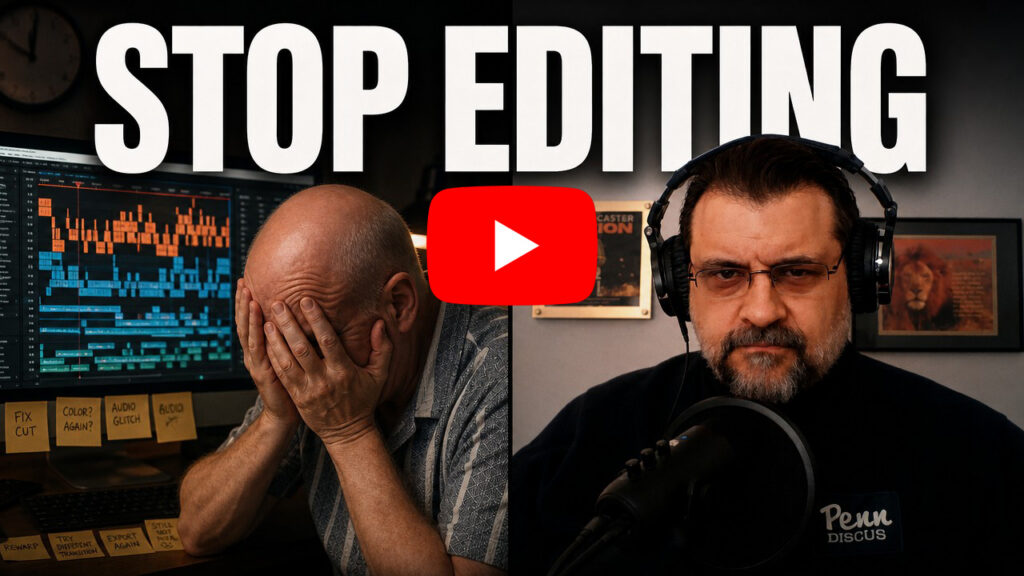
I remember when I used to spend hours tweaking my podcast audio levels. Maybe you spend three weeks meticulously tweaking the intro of your video. You log into your editing software and spend three grueling hours slicing out every single “um,” “ah,” or slight pause from an interview track because you want it to sound flawless. You refuse to launch your podcast or publish your book until you buy that $400 microphone or get your official business cards and LLC perfectly aligned.
You tell yourself it’s because you care about quality. You tell yourself that you are a true artist who respects the craft.
That endless obsession with polish isn’t commitment to your craft. It’s a shield. It is a highly sophisticated, socially acceptable tool for procrastination driven entirely by a fear of being judged.
When I sat down with Rory Paquette—a professional podcaster and coach who manages ten active, thriving shows. What Rory revealed turns the entire “expert” narrative of the creator economy completely on its head.
If you are a writer, filmmaker, podcaster, or creative who is tired of playing the role of the struggling artist, it’s time to look closely at the perfectionist trap.
1. Stop Buying Shovels
The loudest voices in the modern creative space love to tell you exactly what you need to succeed. They sell you the courses, the perfect virtual setups, the high-end audio mixers, and the viral video blueprints.
I said this on my show, and I believe it:
“The people who sell the shovels are the ones making the money. The people digging for gold are coming up with nothing and they keep going back to the guy selling shovels.”
If you think your lack of an audience or your lack of income is because you don’t have a fancy enough shovel, you are falling for the mirage. Audiences don’t connect with expensive lighting or flawless audio compression. They connect with raw, authentic human substance.
When Rory first decided he needed to get his voice out into the world to help other men and fathers navigate rock-bottom moments, he didn’t wait until he had a studio budget. He was coming off the heels of a collapsed business and a severe life crisis, working three jobs on just one hour of sleep a night.
His setup? A free recording software called Audacity and a cheap, $49 starter headset he ordered off Amazon.
It wasn’t polished. It sort of worked. But it was enough to launch a podcasting empire.
2. “I Don’t Edit Anything”
If you want a masterclass in breaking the perfectionist trap, look at Rory’s current production workflow for his ten active shows:
He doesn’t edit.
“I don’t edit anything,” Rory admitted. “If it’s a train wreck, I’ll re-record… But I don’t edit at all. Because I just can’t spend that kind of time trying to make something perfect. What I think is perfect, someone else isn’t going to think is perfect. So who am I doing all the editing for?”
Think about the sheer amount of creative energy, mental bandwidth, and time you burn trying to fix tiny, unnoticeable flaws in your work. When you spend three hours editing a 30-minute conversation to make it flawless, you aren’t actually improving the core message. You are just delaying the terrifying moment when you have to hit “publish” and see if the world cares.
3. The Counter-intuitive Truth About Losing Followers
The perfectionist trap often tightens its grip when creators finally do gather the courage to share their work, only to watch their numbers drop.
When you transition from being a regular person posting pictures of your dog or your family vacation to posting about your new book, film, or podcast, people will unfollow you. And according to Rory, that is exactly what is supposed to happen.
Your casual friends and acquaintances from high school are not your target market. When you begin sharing your true creative voice, the drop in your follower count is simply the algorithm weeding out the spectators so you can actually find your true audience.
Panic at this stage forces creators to pull back and stop. The successful ones recognize the trend, embrace the drop, and keep swinging.
4. Keep It Simple, Stupid
If you want to escape the struggling artist trap, you have to strip away the structural nonsense you use to complicate your life. You don’t need a flawless marketing rollout, a shiny automated email sequence, or custom business cards before you’ve even made anything.
Insecurity loves complexity because complexity gives us an excuse to hide.
The antidote is simple:
- If you want to write a book: Sit down, pick up a pen, and write.
- If you want to make a movie: Grab a camera, write a scene, and shoot it.
- If you want to start a podcast: Open your phone, hit record, and talk.
Put the work out there into the world while it is raw, honest, and full of friction. Once it exists, you can decide if it’s worth investing money to make it better. But until you actually hit publish, you aren’t an artist chasing excellence—you’re just an insecure creator hiding behind a beautifully edited curtain.
Leave a Reply