Independent filmmaking is a strange mix of ambition, math, delusion, and stubborn optimism. If you’re an artist trying to avoid the “struggling artist trap,” you already know the drill: big dreams, small budgets, and a whole lot of figuring things out as you go.
Recently, I found myself deep in that exact storm.
I had just finished a screenplay I’m genuinely proud of — A Good Man. It’s polished, emotional, and absolutely the kind of film I want to make. But it’s also expensive. As I said in the podcast, “I figured that movie, if I went nonunion as it’s currently written, it would probably cost at least $1.5 million.”
And as a first‑time filmmaker with limited industry connections, that price tag might as well be a brick wall.
So I sat down, scratched my head, and asked myself the question every indie filmmaker eventually faces:
What can I actually make right now?
The Harsh Math of Indie Film
The numbers aren’t kind. You’ve probably heard the statistic: 95% of independent films never make back their budget. It’s sobering.
If I’m going to make a movie, especially my first movie, it needs to be:
- Affordable
- Sellable
- Realistic to produce
- Likely to break even
That last one matters. It’s the difference between being a filmmaker once and being a filmmaker again.
Enter the Mockbuster
Mockbusters aren’t new or prestigious. They can be profitable though.
As I explained, “the whole mock buster thing is where they take a movie that’s going to be a big budget Hollywood movie, and they’re just going to create a micro-budget movie that has just enough in common that the marketing carries over to their smaller movie.”
Studios like The Asylum have built entire empires on this model. Sharknado didn’t happen by accident — it happened because they understand the economics of attention.
Mockbusters ride the wave of marketing dollars they didn’t have to spend. They’re scrappy, opportunistic, and often ridiculous. But they work.
And for a first‑time filmmaker…
Why Cinder Sparked the Idea
I started scanning upcoming releases, looking for something big enough to create a marketing wave, but far enough out that I could actually make a film in time.
That’s when I found it: Warner Bros.’ upcoming adaptation of Cinder, scheduled for late 2028.
Cyberpunk meets fairy tale retelling? Clean YA tone? Massive built‑in audience? Perfect!
As I said, “I could do that, and it fits in with my overall goals of doing clean, entertaining fiction… a PG to PG‑13 movie that is fairly clean that I could do.”
The Birth of Sleeping Cyborg
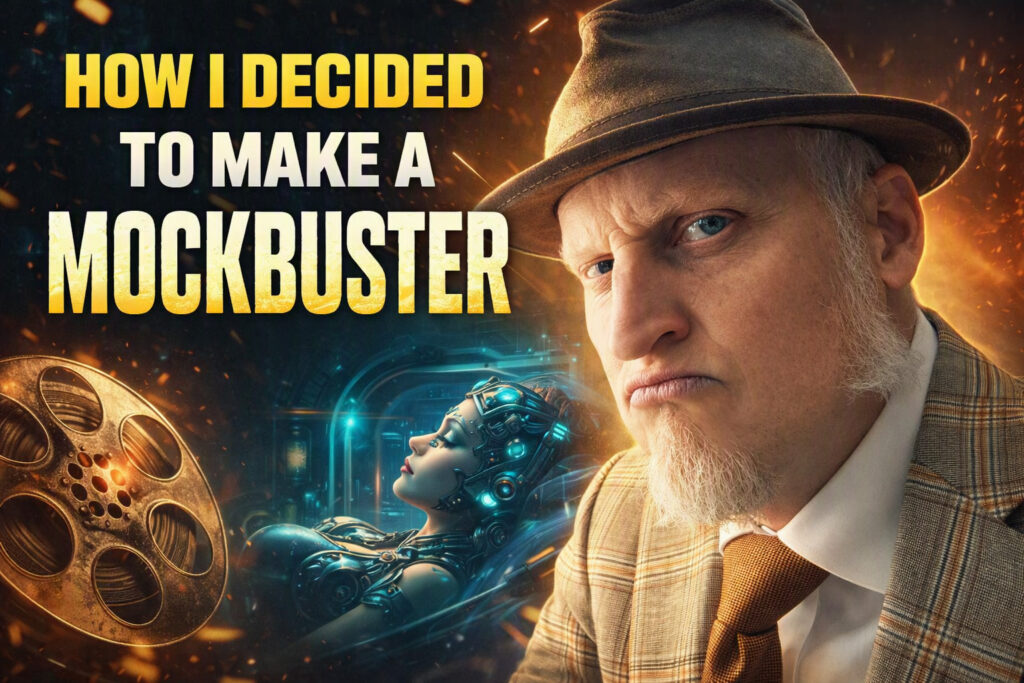
The working title is Sleeping Cyborg — a cyberpunk fairy‑tale retelling designed to echo the vibe of Cinder without copying it. It’s original, ambitious, and yes, the name might change. Mockbusters often do.
But the core idea is solid:
- Live‑action instead of animated
- Cyberpunk aesthetic
- Fairy‑tale DNA
- Microbudget production
- Release just before Cinder
- Ride the marketing wave without infringing on IP
This is the kind of strategic filmmaking that gives a first‑timer a fighting chance.
Building a $200,000 Movie on a $100,000 Budget
I knew I could raise around $100K. The problem? The film I envisioned needed closer to $200K.
So I did something uncomfortable: I asked for help.
I posted in a Utah filmmaking group, shared a mock poster, and waited. To my surprise, people responded. A lot of people. Mostly actors, but enough crew to make me believe this could work.
As I said, “I hate not paying my crew… but I’m going to give it a try, see if anyone is interested in this.”
To make it fair, I created a point‑based profit‑sharing model:
- 50% to financing
- 50% to production
- 30% crew
- 20% cast
If the movie makes money, everyone makes money. If it doesn’t, nobody does — including me.
It’s the fairest system I can offer at this stage.
Writing the Script in Five Days
This part still blows my mind a little.
I dictated the entire first draft in five days.
As I said, “I took an entire week, and I dictated the whole book in five days… Monday through Friday got it all dictated.” And that was done, almost entirely outside my normal writing hours.
That’s the power of the dictation method I teach in Drafting Out Loud, and it’s exactly why I wrote that book. If you’re at all curious about dictation writing, check it out, its coming out November 2nd!
Now I’m halfway through the rewrite, tightening the story, sharpening the beats, and preparing it for professional editing and a full table read.
The Road Ahead
Here’s the plan:
- Finish the rewrite by year’s end
- Professional edit + table read
- Form the LLC
- Finalize cast and crew
- Six months of pre‑production
- Shoot in 2–3 weeks
- Six months of post‑production
- Release just before Cinder hits theaters
It’s exciting. And it’s the first real step toward becoming the filmmaker I want to be.
As I said near the end, “You can’t plan for failure. You got to plan for success.”
Why This Matters
This isn’t just about Sleeping Cyborg. It’s about building a career — one microbudget film at a time. It’s about learning distribution, sales, marketing, and production from the ground up. It’s about proving I can make a movie, sell a movie, and repeat the process.
Mockbusters aren’t glamorous.
But they’re a start.
And every filmmaker needs a place to start.
Leave a Reply