
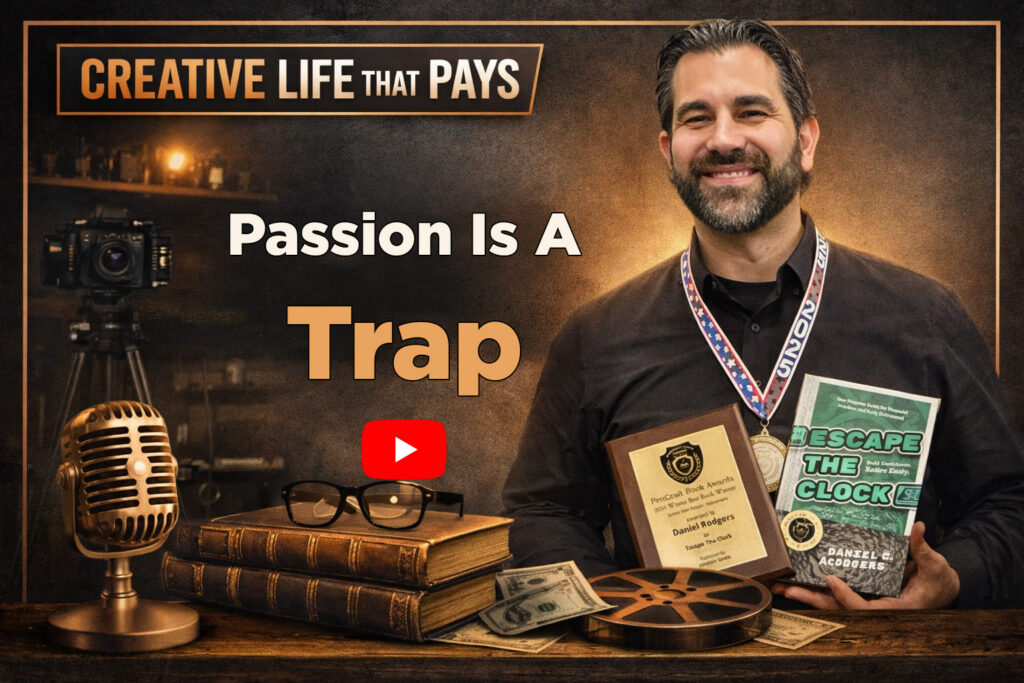
Art doesn’t always pay the rent. Daniel Rodgers traded his dream for the financial reality most of us have to deal with.
The thing is, he didn’t get stuck in a rut. He found an outlet for his creativity in his work, and later, focused that into art as he discovered his financial stability.
The Poor Years
He grew up sketching in the margins of his notebooks, chasing the kind of imagination that makes teachers sigh and parents worry. But when you’re born into poverty, passion isn’t a career path, it’s a luxury. So Daniel did what survival demanded: he traded art for a paycheck.
He was the first in his family to go to college. Debt already waited for him before graduation. So he typed “highest-paying degree” into Yahoo and landed on computer science. It wasn’t the life he imagined, but it was the one that paid the bills.
And yet, even inside the logic and code, he found something unexpected, creativity. Design pods, user experience, systems architecture, it was like art, hidden inside the science. He built programs at Microsoft and Google, but the artist in him never really left. It just learned to wear a badge.
Years later, his son Gavin picked up the pencil Daniel had put down. Born premature at two pounds, Gavin fought for his life in a NICU while Daniel read stories through the plastic walls of an incubator. That ritual of reading, imagining, and creating, became the heartbeat of their home. By seven, Gavin had written his first seven-chapter book. By nineteen, he’d published fifteen.
And Daniel? He became his son’s cover artist, watching the next generation do what he couldn’t. But the story doesn’t end with redemption. It ends with a warning.
Escape The Clock
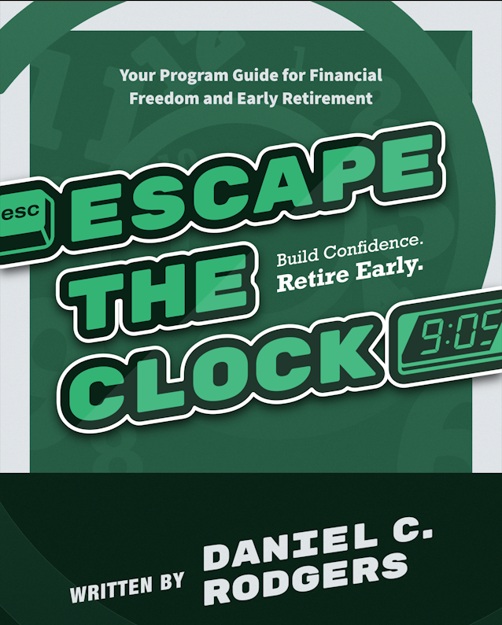
Daniel wrote Escape the Clock because he saw the same trap catching every creative he knew: the belief that passion alone will save you. This is not true.
He spent twenty years learning finance the hard way, cycling through seven financial advisors, building spreadsheets, and realizing most of them were selling products, not wisdom. He discovered that ignorance isn’t just expensive, it’s predatory. The system is designed to keep you leveraged, distracted, and broke.
His solution was a program plan for your own life, a kind of blueprint corporations use to hit impossible goals. Because when you treat your creative career like a business, you stop being a starving artist and start being a working one.
Daniel’s book became a bestseller and won multiple awards, but the real win was time. Financial independence isn’t about money, it’s about reclaiming the hours you’ve been giving away. It’s about creating before fate forces your hand. Because if you wait too long, you’ll get the wake-up call every human eventually gets: the realization that time is the only currency that matters.
So here’s the truth Daniel learned the hard way, and the one most creatives avoid until it’s too late: Passion without a plan isn’t noble. It’s a trap.
If you want to make art for the rest of your life, you need to learn how to make money first.
Not because money defines you, but because it buys you the one thing your art can’t survive without: time.
Leave a Reply