Sometimes I feel too busy chasing the my dream and shaping it into something real real, only to find that my dream and the truth bump into each other, and it’s not a gentle bump either. It’s more like walking into a glass door you didn’t know was there.
Talking with Ruth Douthitt brought that feeling back for me. I thought we were just going to talk about books and art and all the usual stuff. Instead, I came away with some really good tips that I want to incorporate into my business plan.
The Artist Who Never Planned to Be a Writer
Ruth didn’t grow up wanting to be a writer. She was an art kid. She wanted to teach art. Writing was just this side thing. From fourth grade book reports to poetry contests, it was there, but not important. But the little illustrated stories she didn’t think twice about eventually stuck and carried, even if subconsciously, forward into her adult career.
Years later, while her husband was deployed, she was alone in North Carolina, wandering the library like a lot of us do when we’re trying to figure out who we are. Well, I didn’t do that myself, not much. Okay, actually, I did do that quite a bit, I just forgot about that chapter of my life. I digress.
Ruth checked out books on illustration, scribbled down an idea about a boy and a dragon, then life piled on top of it for ten years.
Eventually she dug it back out of a filing cabinet and thought, alright, let’s see what this is.
She spent four years writing that book. After four years of late nights she finally typed “The End.” She had the same thought most of us have at that stage. This is it. This is the moment everything changes. Publishers are going to line up. People are going to see me.
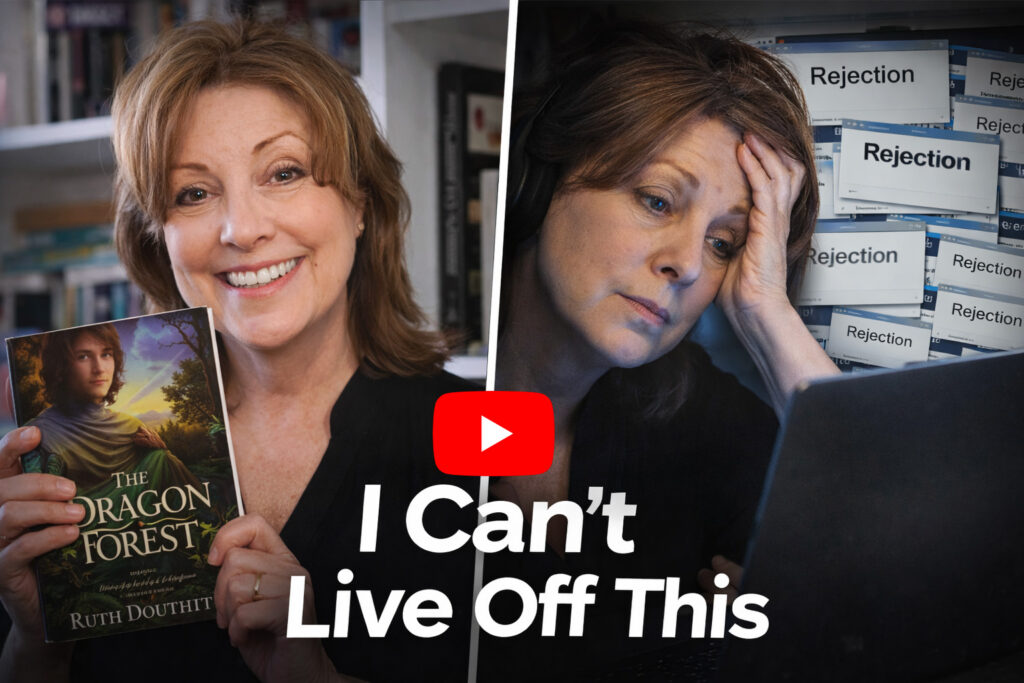
Instead, she got rejected. A lot. For years. Back then, self publishing wasn’t very respectable, mind you, not like it is today.
Then one day, a stranger in a chat room mentioned a small publisher looking for fantasy. She sent her manuscript. They loved it. They signed her for three books. And in 2011, she held her first published novel in her hands.
You’d think that would feel like the finish line. It wasn’t. It was the starting gun.
The Part Nobody Warns You About
Once Ruth stepped into indie publishing, she learned the thing every creative eventually learns. You’re not just the artist. You’re the marketing team, the accountant, the social media intern, the publicist, the everything. You’re the whole circus and the person sweeping up after.
She was doing all of it. Writing, posting, promoting, researching, festivals, algorithms, the whole mess. And she was tired. Really tired.
Then she noticed another author had a virtual assistant. Her first reaction was the same one I think most of us would have. That’s for real authors, not me. But she swallowed her pride anyway and hired one.
Suddenly things started working. Her sales went up. Her launches stopped feeling like a tornado. Her audience grew. She wasn’t drowning anymore.
This is when I thought, man, I should look into one of these myself. As of right now, I don’t have one, but I think I’d really like to figure out how to get one.
The Tools That Actually Work
Ruth said something has taken me quite a while to learn: Email newsletters still work. In a world where everyone is chasing the next algorithm trick, the old stuff is still the stuff that actually moves the needle.
She started using BookFunnel. Her list went from 800 to 4,400. Her sales followed. Not because she got lucky, but because she built a system.
The Fear of Being Pigeonholed
Ruth writes fantasy, suspense, women’s fiction, and Christmas novellas. She paints animals and makes coloring books. She’s basically a one-woman creative department.
But the world loves to tell creatives to pick a lane. Stay in your box and don’t confuse people. Then she interviewed Melody Carlson, who told her, “Write whatever you want to write.”
That cracked something open for her. And for me too. Because the truth is, creatives don’t fit in boxes. Leave that to the people who want a simple repeatable workflow. If you are creative and passionate, follow that passion and make something truly inspired.
The Financial Reality
Even with bestselling books, even with a growing audience, even with all the things we’re told equal success, Ruth still works a full time job.
She’s not failing either. Her plan is simple. Work now, retire soon, then spend the rest of her life writing, painting, coaching, creating.
What I Took From It
If I had to put it into words, I think Ruth reminded me that art doesn’t save you. Learning how to take care of it does. Talent is the engine. Discipline, systems, and audience are what supports it.
Ruth didn’t just become a working creative. She became a sustainable one.
Visit Ruth at: https://www.artbyruth.com/ Catch the whole interview at: https://brentxp.podbean.com/e/lightminded-arts-36-when-talent-isnt-enough/?token=665429634049e7959442947145c8ca78 Also, check out my books at www.LightmindedArts.com
Leave a Reply