
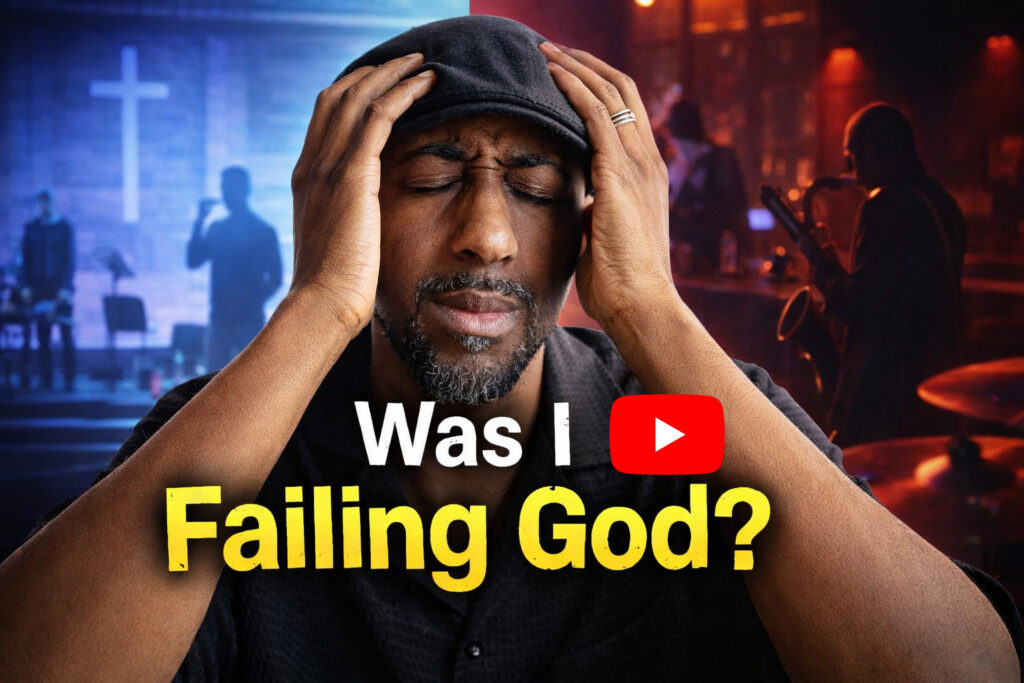
Talking with Allen C. Paul and we had a great discussion about hour our creativity fits into the value systems we have as followers of God.
Often you think of a follower of Christ being drawn into the ministry. For Allen, it was the opposite. He was being called out of it.
This is a question I’ve definitely wrestled with in my own career. Can I make the art I want, or do I have to use my art to preach?
The Childhood Blueprint
Allen grew up in this very structured world. His dad built a dental practice from scratch. His mom put him at a piano before he could form memories. Church was wrapped around all of it like a warm blanket and a rulebook at the same time.
And that’s where the trouble starts, right? Because when calling and faith and service all get braided together, you start thinking they’re the same rope. You tug on one and the whole thing moves. And maybe that’s true. But its also more complicated than that.
Somewhere in there, a lot of us pick up this belief that if our art isn’t explicitly spiritual, it must not count. Or worse, it must be wrong.
The Rule He Made Up Without Realizing It
At one point in the interview, Allen said he said he spent years avoiding secular music. Not because God told him to. Because he told himself to. How many rules have I invented for myself over the years. How many invisible fences have I built and then blamed on God or the industry or whatever else was convenient.
We do that. Creatives are great at building cages and then decorating them so they look intentional.
Allen tried all the respectable routes. Classical pianist. Band director. Worship musician. Full time ministry. All the things that make people nod approvingly. None of them fit. Not in the way that matters.
He hit that wall where you start asking if your calling is broken because your career doesn’t look the way you thought it would. That’s a rough place to stand. It’s also the place where things start to shift if you let them.
Calling vs Career
Allen said God didn’t call him into ministry. He called him out of it.
Not because ministry was bad or because gigs were better. But he had tied his identity to a role instead of a relationship
Your calling is the why. Your career is the how.
If you mix them up, everything gets weird. You start feeling guilty for charging money and taking gigs that don’t look spiritual enough. Anything that isn’t wrapped in scripture or symbolism beats on you.
You shrink your art to fit someone else’s expectations. You shrink yourself too.
And somewhere in that shrinking, you start believing God is disappointed in you for wanting to make things.
Allen walked into his first secular gig like he was sneaking into a crime scene. I laughed when he said that, but only because I’ve felt that same weird tension. Like you’re doing something wrong even though no one told you it was wrong.
But he found God there. Not in the lyrics or the atmosphere, but in the people. Turns out God doesn’t stay inside the walls we build for Him. He never has.
Allen says he’s not a guru. He’s a Sherpa. Someone who climbs the mountain, comes back down, and helps the next person up. He’s still creating, still performing, teaching, and serving. But now it comes from a place that isn’t trying to prove anything.
My Favorite Lesson
I keep thinking about the creatives who feel torn between what they love and what pays. What feels spiritual and what feels allowed. Balancing what people expect and what God actually wants.
My favorite thing I learned from Allen though, was his analogy of the shoemaker. The shoemaker doesn’t show his love to God by building a cross into every pair of shoes he makes. He shows it by making the best pair of shoes he can.
That will be my lesson going forward.
Leave a Reply