I sat down with Jay Corso. I didn’t know him beforehand, but this turned into an engaging and refreshing experience for me. We talked about things ranging from AI and creativity to identity.
If you didn’t check out the podcast, you should. Its so hard to capture the raw enthusiasm he portrayed here in a blog, but I’ll do my best.
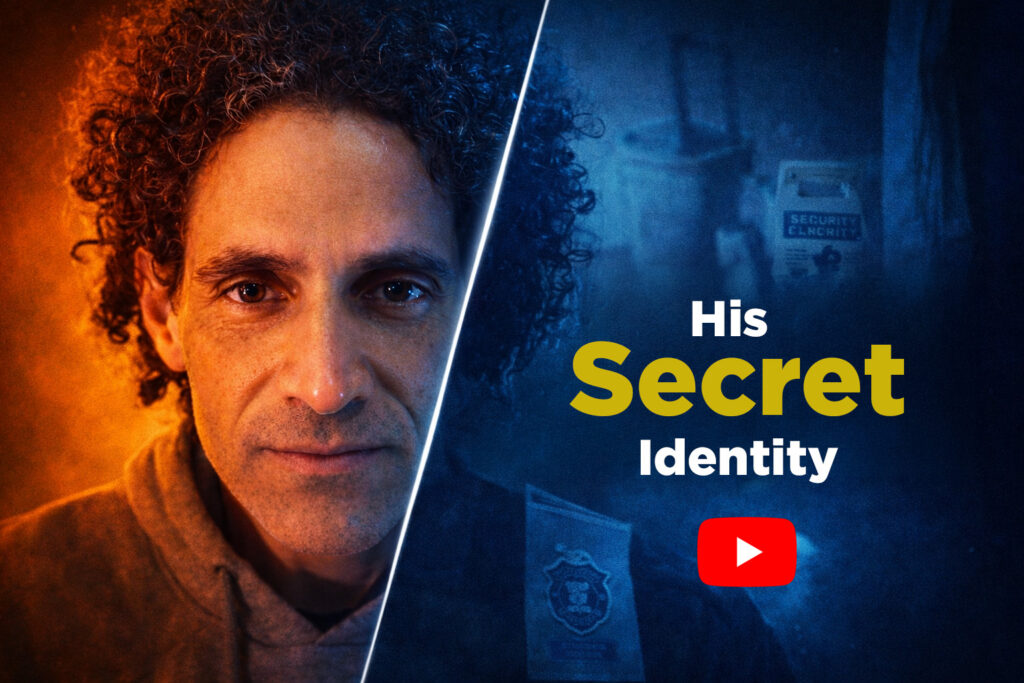
The Custodian With A Secret Identity
Jay works two jobs. Custodian during the week. Security on weekends. And in the cracks between those shifts, he’s building RoboPulp, a sci-fi pulp universe stitched together from the things he loves. Bradbury. Ellison. Gibson. Abandoned industrial photography. AI tools he refuses to pay for. The scraps and leftovers of his day.
He calls himself a scavenger. Hey we all get scrappy from time to time.
We talked about how strange it feels when someone asks, “So what do you do?” Because the answer you give is rarely the answer that matters. Jay says he usually tells people he’s a custodian. It’s easier. Most people don’t care about the thing that keeps you awake at night. They care about the thing that keeps your lights on.
I do the same thing. I default to contractor or investor or whatever feels least complicated in the moment. It’s not that I’m ashamed of the creative work. It’s that I don’t want to watch someone’s eyes glaze over while I talk about the thing that makes me feel alive.
Jay has a different way of dealing with it. He treats his creative identity like a secret agent file. Something you only slide across the table when you know the person on the other side will actually read it. He waits for the code phrases. Chandler. Dick. Gibson. If someone says one of those names, he knows he’s found someone from his tribe.
I love that idea. The quiet identity. The one you protect until you know it’s safe. I frankly want to go the other direction myself. I’d rather be superman who takes a break every now and then to put on my glasses and walk around as Clark Kent.
Jay’s Thoughts On AI And Time
Jay also talked about AI. He sees it like an exoskeleton. Something that amplifies what you already are. If you have intention, AI gives you reach. If you don’t, it gives you noise. He’s seen both. He’s made both. He’s learned to tell the difference.
But the part that stuck with me was his idea of micro focus.
Jay doesn’t have long stretches of time to create. He has ten minutes here, twenty minutes there. A quiet hallway. A slow moment at the clinic. A break between security rounds. He pulls out his phone, opens Google Docs, and writes. Not because the conditions are perfect. But because the conditions exist and there might not be another opportunity if he didn’t.
He said he used to resent his schedule, the jobs and the lack of time. But somewhere along the way he realized that waiting for perfect conditions is a trap. You wait and wait and wait, and the work never gets made. So he stopped waiting. He started conditioning his brain to create in the small windows most people waste.
You can wait for the retreat in the woods, or you can train yourself to work now. If you train yourself now, the retreat becomes a gift instead of a shock. You arrive ready.
The struggling artist trap isn’t just money or time or attention. It’s the belief that creativity only counts when the conditions are perfect. Jay reminded me that the conditions are never perfect. They’re just present. And that’s enough.
Key Take Aways
Your identity as an artist doesn’t disappear because you have a day job or two. It doesn’t disappear because you’re tired or busy or stretched thin. It’s still there. You get to decide when to reveal it. You get to decide who gets to see it.
And you get to decide when to create. Even if it’s ten minutes at a time.
Jay calls it micro focus. I call it survival.
That’s the real secret identity of the working artist. Not the job title, but the decision to keep making things in the small spaces. The decision to keep the creative part of you awake, even when the rest of your life is loud.
Jay’s building RoboPulp in those small spaces. I’m building LightMinded Arts in mine. And if you’re reading this, you’re probably building something too.
Keep going. The windows are small, but they’re yours.
Leave a Reply