Light Minded Arts

Light Minded Arts

  • B-Roll
  • Books
  • Videos
  • About
  • Contact

Home | Archives for Lexi Adams

Have you ever wondered how you can make it as an artist, and still provide financially for you and your family?

What if your career in the arts takes too much time to start getting noticed and generating money?

These are real world questions that all of us need to answer if we want to pursue a creative career, especially if it’s in a field that is struggling to make a profit, like today’s market.

These questions and more went into my decision to spend ten years preparing for my career in art. Let me share with you how I’m trying to mitigate some of those challenging risks as I go forward as an independent writer and movie producer.

  1. Don’t Rely On A Single Income Stream

Maybe money doesn’t matter to you. Perhaps you feel that the pursuit of cash is capitalist propaganda and is inversely correlated to the pursuit of happiness. I’m not like that.

At the same time, I’m not what I’d consider materialistic either. I’m fine driving a drab car, I’m okay with mediocre living conditions. I’ve been there. But I’ve also learned that money makes the world a much easier place to navigate when you have it, especially if you’re raising a family.

I was also painfully aware that if I pursued my dream of being a writer/producer, there would be a few years, where I likely wouldn’t make any money at all, perhaps I’d even lose money. Considering that movie making is an expensive way to express yourself, I didn’t want to start this career financially unprepared.

For that reason, my 10 year plan to get ready for this new endeavor, included finding ways so that I didn’t have to rely on my art to be financially independent. First off, I had to learn what could generate money for me when I made the switch, and which would still allow me to work on my writing and filming. At the time, I knew how to work hard, and that was about it. I didn’t know how to invest. So began my journey to becoming financially stable.

Over the course of those ten years, I learned as much as I could about the stock market, real estate, and business. Since I was in the home development and construction field, understanding how to invest in real estate became my first learn.

I learned that buying properties, improving them, and selling them quickly was one of the best ways to grow your money fast. I made a career out of buying vacant land, developing it into subdivisions, building homes on them, and selling them. It took a lot of work, and I had to reinvest every dollar I had into the next project, and I still had to take out massive loans to do these sorts of projects. All the while, I had to deal with market fluctuations. This is not a career that is risk free, especially since I know plenty of developers who went belly up over the same time period that I was doing this. But it forced me to save money, learn business and marketing skills, and get me on a good path.

The next real estate lesson I learned, was that buying and holding cash flowing real estate was a good long-term investment. Unlike buying, improving, then flipping properties, this one requires a much longer time frame, which can be hard if you don’t want to tie up your cash that long. Like the other, loans can be a helpful tool, as long as you’re smart with them, and don’t let them ruin you. The profitability here is smaller than flipping, but its a little more steady.

For me, I started by turning over my money as often as possible, but now that I’ve got a little saved up, I’m switching to building long term cash flowing rentals units. These should provide me with a steady stream of income to help keep me solvent, even if my studio doesn’t make any money for the first few years, or ever.

Another avenue of income is the stock market. It took me a while to figure this one out. I didn’t want to be a day trader, though that is always tempting, because I don’t want to spend every day, stuck in front of my charts when I could be writing or film-making.

So I learned how to trade options on a monthly basis, creating cash flow in a safer, steadier way. This is not without risk, but on average, I can make a profit over time, and I only have to check the markets for 15 minutes or so each morning, freeing me up to do what I really need to work on.

I’ve also come across other investment opportunities over the years that have intrigued me. I did some angel investing for a vitamin company, which turned out to be a great investment, and currently pays me over $4000 each month. I Also learned about investing in oil rigs, and other financial tools that can generate cash flow.

  1. Take The Time To Learn About Investing

There is no doubt that investing is a complicated world. There are many risks, which some people find too scary to get involved in. I have lost a lot of money in some of my investments. Some of that is the luck of the draw, and some of that turned into important learning opportunities.

What I could not have done, was any of this without taking the time to learn about it, and pinching every penny to put into it.

In the mornings, I worked on improving my art. Then I went to my day job for 10 hours each day. When I got home in the evenings, I spent a lot of time researching and learning. That’s even after I had my degree in finance. What I did not do, was go home and play video games and watch TV all night.

Nor did I spend hardly any money on frivolous things. For Christmas, especially early on, my wife and I gave ourselves a $25 budget for each other. You can’t imagine how creative we got, and those were fun memories. Even our Christmas tree was cut from the branches of a tree that had already blown over in a massive wind storm.

In the end, I wanted my ten years of prep to learn all I could about investing, but also have the money to put that knowledge into practice. Now, ten years later, I’m making the transition, and I’m incredibly grateful for my dedication to learning all this, and to my wife’s dedication to living a thrifty life. I’m in a great position to make a go at this artistic lifestyle that I’ve been preparing for, all these years.

If you want to learn more about how you too can safeguard your future, follow me here, or on my LightMinded Arts YouTube channel, where I’ll be sharing a lot of these life lessons and financial essentials. I’m putting this together for my wife and kids to learn, and I’m inviting you to join me for free.


Filed Under: Blog

If I was to die tomorrow, one of the biggest life lessons that I think my family, or anyone could benefit from, would be to develop a strong work ethic.

I’m not just talking about showing up and working a full 40 hour work week either. Rare is the week when I only work 40 hours. I’m talking about showing up for life with a burning desire in your gut to get to work.

This work ethic is doubly important for any of us looking to get into an artistic career, since many of us might need to work extra hard just to make ends meet.

  1. By The Sweat Of Thy Brow…

We read in the bible, that when Adam and Eve were cast out of the garden of Eden, God told them that “By the sweat of your brow you will eat your bread.” He basically says that they’re going to have to work for their sustenance. He wasn’t necessarily commanding them, but rather, letting them know how it was going to be.

If you think that you can coast by without learning how to work hard, you’re going to have a miserable time of it. But what about those who hate their work?

Well, if work was fun, it would be called play.

artist work ethic

Having said that, work doesn’t have to be terrible. In fact, I actually really enjoy working. I remember feeling some measure of anxiety over this when I was in high school, knowing that I was soon to be expected to assume the responsibilities of an adult and work full-time.

I couldn’t fathom the pressures of that much work. But I quickly found out, that when I was working, not only did I have more money in my pocket, but I felt a deep sense of satisfaction with the value that I’d created in the world.

One of my all time favorite quotes that I think everyone should have posted on their refrigerator, is by a prophet from the Church of Jesus Christ of Latter Day Saints:

 “Let us realize that the privilege to work is a gift, that power to work is a blessing, that love of work is success.” -President David O. Mckay

I can honestly attest to this philosophy as being one of the major guiding lights in my life, and I believe that if you were to embrace this also, that you would find a lot of success in your life as well.

  1. How Much Should I Work?

Having a strong work ethic doesn’t necessarily mean that you work every waking hour, though it can spill into that.

I remember a rich business man being asked how he balanced his work and family. He laughed and said that he didn’t believe in balance.

I tend to disagree with him, but I’ll admit that I too have been called a workaholic by some in my day. Balance is a tricky thing, because I know a very successful business man, who works a hundred hours each week, and considers his life and family life in perfect balance. And for them, it works.

For me, my wife made it clear that she was unhappy whenever I worked more than 50 hours a week. So I cut back my hours to accommodate my family’s needs.

But at home, I don’t consider my job done. I may not be working on my career, but I am working on my family. I want to teach my children, I want to do the chores that my wife would otherwise be left with, and I want to be there for them all.

Just because my day job ends at 5pm, doesn’t mean that I’m spent for the day. My wife is a stay at home mom, and do you think her job ends at 5pm? Not a chance. If she can remain productive, I can too, my responsibilities just change.

And the thing is, I love it. I find a great deal of satisfaction from all work I pursue. It feels so much better than idling my time away. And would you believe it, I still have time for play, for service, and for relaxing.

Having a good work ethic is about showing up, putting your all into whatever you’re doing, and being proud of it. If you’re struggling at finding the joy in working, maybe you’re in a toxic environment, or maybe you need a little tuning of your attitude towards it. I firmly believe that work can be a fulfilling part of your life, because it has been in mine.

And if you’re an artist, knowing how to work well, will increase your value to others who hire you for your artistic skills, and it will help you improve your art, rather than just coasting by on what you’ve already been give a talent for.

Plus, if you’re struggling to get your art sold, you might still need to have other work to get by, and it would sure be nice if you didn’t hate the fact that you had to do this extra work to support your art.

Filed Under: Blog

Why would I be asking this? First off, let’s clarify. There are many crowning achievements a man can strive for. For me, personally living a life in service of others, and eventually, being worth to return to my God and have him proud of how I tried to exemplify Christ would be the ultimate end goal for me.

But the question I’m asking is more career based. When someone has worked hard their whole lives, is finding and expressing themselves as artists a goal they should be working towards, or is art a waste of time for most people, and it doesn’t even register on their scale of importance?

For many of us, art is more than something we want to do, in a way, we feel that we have to do it. Even if we never get paid for it, its something we want more freedom to pursue. Whether its painting, crafting, writing, photography, filmmaking, or some other artistic expression; for me at least, these have often felt as if they needed to be earned.

But is that the best way to think about it?

  1. Where Is The Value In Art?

We all know about expensive paintings, people who make successful careers as writers and filmmakers. But what about us personally? Does anyone, let alone you, care about yourself as an artist?

I’ve spent the last 10 years of my life, working hard to get to the point, where I could go from a poor college grad to being a full time writer and independent filmmaker, but I recently just watched a movie called Loving Vincent, wherein it gave us a glimpse into the tragic life of Vincent van Goh.

Vincent was a man who struggled with self worth issues, to the point of wanting to harm himself at times. But what really stood out to me, was that for the last years of his life, living off other people’s dimes, he dedicated himself to the pursuit of his paintings.

In that time, he painted some 800ish paintings, and only ever sold a single one of them while alive. He died young, but eventually his paintings have become worth millions. But he never realized any of this success while alive. He painted every day, because he wanted to. 

So which is the better course for a person. If they want to express themselves creatively, should they go for broke and dedicate their life to it like he did, or play it safe, work hard, and eventually have the means to create art comfortably later in life?

I can only speak for myself, but I have always loved the arts. There is no way I would have been content to live my whole life as a poor artist though. For me, I was raised on the Biblical phrase, given to Adam and Even when they were cast out of the Garden of Eden: “By the sweat of thy brow, thou shall eat, all the days of your life.”

Growing up, I developed a strong work ethic. I learned to love that 80 hour work week. Productivity defined my every day. What was art? Definitely not productive. Art was something I enjoyed as a kid, then had to suppress as I became a responsible working adult. Maybe someday, when old and retired, I could pick it back up again, when I’d earned it.

  1. Can I Be A Working Artist?

My feelings and beliefs on being a working artist have changed over the years. Would I go back and start out all differently if given the choice?

No, I wouldn’t. But at the same time, I don’t think that being creative should reside only with children and retirees.

The other day I was thinking, and it occurred to me, that when you get a business degree from a school, the first level is called a “B.A.” standing for Bachelor of Arts. Every business out there, requires creativity, and what is creativity, if not art?

Is Apple really creating anything these days that other companies can’t? No, then why are they so successful? Its because they had a creative genius who turned the tech company into an artistic expression so powerful that people identified themselves with it, some even going so far as getting tattoos of their logo. Same thing with Harley Davidson, or other such brands. Creativity is essential when we want to connect our businesses to customers and stand out from the crowd.

So why does telling everyone that you paint, or write or something like that, feel so much less—worthy?

I think it boils down to value. How much value are you creating for others?

Does anyone criticize Steve Jobs for being creative? Probably not seriously.

What about Elon Musk? Yeah he gets criticized all the time, but does anyone think he doesn’t bring value to his companies? He and his creative self are what made his companies what they are.

What about your niece, who can’t hold a steady job, and got fired from the tattoo parlor for putting her own spin on someones tattoo of their dog? She may be creative, but where’s the value being added?

Often when we think of ourselves as artists, we don’t think of the Steve Jobs or Elon Musks of this world, we think of that black sheep in our family with black dyed hair, ghost-white make-up, and green lipstick.

  1. When Is It Okay To Be An Artist?

Here’s what I’ve come to decide for myself. Being an artist is something everyone probably is already. Some are hindered by how they view their place in the world. Others are freely expressing themselves, without even realizing it.

In the end, the artist you are, and how you express yourself, is in itself an art form. Some photographers make a career out of finding those people, and capturing a single frame that portrays the life that only that person could have lived.

I find great satisfaction in every day of my life that I consciously choose how I’m going to live my life. Even if nobody ever buys a book I write, or watches a video I produce, I have set up my career as an artist in such a way, that I can enjoy the journey of it, rather than need the financial results of it to find my peace.

That’s the key. Live your life with purpose. That purpose will define you. In that defining of yourself, you will discover the art of a life well lived. 

Filed Under: Blog

Ten Year Plan to Becoming a Full-Time Writer and Independent Filmmaker

About twelve years ago in 2013, I started writing my first book. About a year or two into that, and I found myself addicted. I had a promising career path ahead of me in the home construction world, but I’d just found a passion that was quickly eating at my ambition to be a general contractor for the rest of my life.

Don’t get me wrong, I was incredibly grateful for my work as a contractor. I learned so much, had a great time doing it, and it held the promise of bringing in a good stable income. But that annoying artistic bug had sunk it’s tick-like head into my skin, and I couldn’t help but want to make a run at creating stories.

So, unbeknownst to everyone else in my company, mostly family and close co-workers, I decided to put a plan together of how I would one day fulfill my budding dream of becoming a full-time writer, and since film was starting to grow on me, an independent filmmaker as well.

  1. How I Wanted To Prepare For a Career in Art

Back in 2015, I wasn’t aware of the movie world being in such distress as it is today. Yes, I knew that it often had its creative slumps that could easily last a decade, but at the time, Blockbuster had just closed its doors, and Netflix was on a spending spree.

However, I was very aware that books were struggling, and that struggle would only get worse. Self-publishing was becoming a big thing, and I’d experienced first hand, how easy it was to publish your own book without a need for all the gate-keepers. Plus, I’d seen how the digital revolution had thrown the music world for a loop over the proceeding years.

All in all, I had a funny feeling that if I wanted to become a self-published writer and independent filmmaker, I might have to plan on some very lean years for the first few years that I started. What I did not want to do, was to make the leap, then find myself crawling back to my construction job as a failure because I ran out of money and could no longer support my family.

For that reason, I decided to take the next 10 years, and prepare myself for the change. I figured this would give me enough time to prepare for what would be a major U-turn in my life. Now I know that some people would be less inclined to take the long approach like this. I consider myself a risk-taking sort, but there’s still a mean conservative streak that courses through my bones.

One of the problems with taking a long-term approach to something like this, is that at the end of 10 years, without proper resolve, you might find yourself exactly were you were when you decided that you wanted to make the change. That’s why setting clear goals and making processes for achieving them became a huge priority in my life. Eventually I even had to tell others of my plan to hold myself accountable.

In the beginning, I had a full time job, paying $45,000 per year. I had a wife and my first kid, with another one planned in the following year. I had also graduated college with a degree in Finance, and got my MBA. Luckily at this time, I had managed to pay off all my debts. That is a story for another day, but I’ll be happy to share that sometime with you also. Just know, it meant a lot of hard work, and eating nothing but eggs and rice for a couple of years.

Anyhow, to the goals, as it’s impossible to measure your progress without them:

  1. Goals:
  • Keep writing more books, and learn how to write better stories
    • This was important, because it was what I enjoyed doing, and I wanted to be the best I could be. After 10 years, I wanted to be able to have books that people would want to buy.
  • Learn Filmmaking
    • Once I caught the bug for turning my stories into movies, I had to take this step. When I was a kid, I always wanted to do something with movies, but never thought it was within my reach. But since I’d just finished my masters degree, was working full time, and raising my family, I didn’t have time to go to film school. Life was in full session. So I decided to create my own curriculum, which included:
      • Reading everything I could on how to make movies
      • Consuming everything YouTube had to offer on making movies
      • Breakdown/study the movies I liked the most
      • Study behind the scenes videos
      • Make some short films
      • Take acting classes
      • Start collecting the gear I would need
  • Learn the business side of Filmmaking
    • I already owned one small construction company, and was working for my families larger construction company, but I knew there were still things I didn’t know that I didn’t know yet, when it came to running a successful company.
  • Save and invest enough money to support my family and my career, assuming that the new career would make little to no money for the first few years.
    • This is one of the hardest parts of this plan. I had the financial understanding of how money works along with the self control to stick to a financial plan, but life can come at you fast, and so I had to be prepared as best I could, and I had to better my circumstances, as I was only making $45k a year. One thing that also helped, was that my wife is a very frugal person. She never needed the latest and greatest of everything, and she loves shopping for our needs at the second-hand store. Even though she was/is nervous about my goal to become an artist, she has supported my vision from day one. I don’t think I could do this without her.
  1. How to Prepare Financially

Learning how to write better, and to make movies was never going to be the hardest part for me. I still needed goals there, I knew how to push myself, and I was having too much fun learning about it all to slacken my resolve there. What I needed to focus on most, was my finances.

Now, I did get my degree in finance, as I mentioned. I also had my MBA, but that didn’t mean that I could easily apply all those skills yet. Luckily, in my family’s larger construction company, I was currently on a career path that would lead me into the upper management of the company over the coming years.

This is originally why I joined the company, because when I got my finance degree, I was actually pursuing a goal to work on Wall Street. However, when my dad asked me to join the family business, I decided that learning some valuable business skill by doing them, would be immeasurably valuable. I was right. But he started me at the bottom, and had me work my way up. I became very handy, learned about quality control, customer relations, employee relations, bidding, bookkeeping, marketing, accounting, and financing. Those were good skills that over the course of my ten year plan, I would have needed to learn anyways.

What I couldn’t learn at work, was some of the investing/financing that I felt I’d need to really secure my future. I didn’t want to pay a financial planner for something that I had gone to school to learn, and so I started slowly dabbling and learning how to invest each year.

Stocks were always going to be a part of my plan, so I reserved a little money to work on that. My biggest investment though, was in my family’s company. Every nickel I could spare, I re-invested back into that company, effectively becoming a real-estate investor.

At first, it seemed like my investments were so small and pointless. But each year, they got bigger. As I earned more money from the company, and was able to pour it back into the business, I think around year five, my investment hit the 7 figure mark.

They always say, that 1st million is the hardest. Boy, I felt that. I remember back in my early twenties, my goal was to have $1,000,000 by the time I hit 30 years old. I worked hard at that too, but it took me till I was about 35 years old. Looking back, I have to say, not bad. It came from making a lot of good choices, working hard, saving, investing, and frankly, a little bit of luck. Though I tried my best to live by the philosophy that we have a huge influence on our own luck.

If I didn’t have access to the family business also, I think I would have still found a way to reach that milestone in my life. Though it might have been on Wall Street, or it might have been in creating a startup. I was very ambitious then, and I was very goal oriented, as you may have noticed by now.

Granted, I know others have made lots more than me by that point in their lives, but there’s always going to be a bigger fish out there who made it happen bigger and faster than me or you. Good for them! Maybe good for you…

If that first million seems completely out of reach for you, then I would suggest finding a mentor, someone who is making good money. Learn from them. The only reason someone can’t thrive, especially in America, is because they are trapped in a culture that prevents it. I’ll have to do a posting on just culture one of these days, because I firmly believe that anyone can find success, but not everyone will believe that this success mindset applies to them personally.

Before I digress, lets finish this out. At five years into my plan, and one million worth of investments, I still had a long way to go. But you have a million bucks? Why not start now?

Because a million bucks isn’t what it used to be, and making movies is expensive. Raising a family is expensive, too. Some people might be willing to dive off that cliff, but I needed a better safety net. I needed to get to the point, where my investments paid me to run a losing venture. How do I mean?

Its like this: If you have 1,000,000, the most you’ll likely get as a return on it if investing is close to $100,000 per year, assuming you’re getting a 10% return on your investment. After taxes, you’re probably closer to $70,000. In truth, that’s not nearly enough to get by on with this plan, so you’d really end up spending the money you’d want to use as an investment. If I only had $1m to start with, I knew I’d run out of money in 2-3 years, because you will not only have your family expenses of living, which when you consider inflation, keep going up. Then you have the costs of running a business, which include your payroll, payroll taxes, marketing, office overhead, tools of the trade, and the expenses of actually producing movies, which hit hard and fast.

I did the math, and realized I wanted a lot more. Everyone is different, and your goals might be different from mine. You might be more comfortable asking others for money to invest in your film projects, and you can eventually bootstrap your business that way. In that case, that first million might be just fine as an investment seed, but you’ll be strapped.

For myself, my goal was to have enough investments, that I could start a studio business that didn’t have to make money to break even. For me, that meant actually owning a studio, and to pay for it by having other commercial buildings that I could rent out, then using that rental income to pay for my studio building.

That meant that around year 8, I needed to buy some property, and start developing it for these rentals and my studio. The money was very tight, but I was able to pick up 4 acres of commercial property at that time. I couldn’t afford to develop it yet, but getting the permitting and plans through the city would take another year at least, time enough to keep working on my finances to that when I did get my approvals, I could afford to built it.

If you recall, I also mentioned that stocks would be a large part of my investing strategy. At year eight, I was still struggling to get any kind of return on my stock investments, however, I knew that it could be done. Since I planned on my commercial properties paying for my studio building, I was depending on my stock investing to pay for my living wages.

So for the next two years, I spent hours each day, studying the stocks, bonds, and futures markets. I bought courses from trading gurus, I tried trading real and fake money, using every bit of advise I was learning, trying desperately to figure out what would work for me.

It took until the end of year 10 in my ten year plan when everything seemed to finally click on my stock trading. Year 10 was my very first profitable year in the stock markets, using a strategy that fit my schedule and style. It was a lot of hard work, but I finally got that piece of the puzzle figured out.

That brings me to now, the end of my 10 year plan. You’re all caught up on how I got to the point where I’ve started stepping back from my family construction business, and leaning full time into my writing and filmmaking career.

I still give the construction company a couple days each week, since I still have investments tied up in there, and I want to make sure that they can make a smooth transition from needing me there all the time. Also, I’ve been held up on permitting for my commercial property, so I don’t have a new office to move into just yet. Plus between surgeries and moving into a new house this year, year 11 has been more of a limbo/transitional period.

But its given me a soft exit and entrance into this new venture.

There you have it folks. This is how I’ve decided to follow my dream. I get that its not for everyone, and it takes a lot of dedication, and hard work. For some of you, you might be in a position where you can jump right in at the ground floor of some production studio, eventually working your way up, or finding a niche that you like within the ranks. For me, I wanted full ownership, full control, and freedom to pursue the kind of projects that interest me. This meant sacrificing ten years and using that time to the very best of my ability, pushing myself to meet every goal I made early on and as my plan evolved.

Well, I’ve laid myself pretty bare for you here, but this is all just a 1000 ft view of my journey thus far. If you’re like I was ten years ago, wondering how you can go from being a broke college grad, or maybe you haven’t even gone to college yet, but are wondering how you could possibly turn an artistic life into your mainstay, then stick around. Subscribe to my blog and my YouTube Channel. I am so grateful for the life I’ve lived thus far, and the things I’ve learned along the way. And while I may not have any great tutorials or workshops to share, I do plan to share as much of my journey as possible, so that if you can find any way of gleaning something from my experience and lessons learned, then maybe you too can find the success you need as a creative.

Filed Under: Blog

Often when it comes to plotting your stories, you hear people talking about the beats of the story. For me this was incredibly confusing. I’d google story beats, and get no clear answers.

Yet, everyone seemed to know what they were and how to use them. Was I just so stupid that I couldn’t grasp what was so obvious to others? Was this some industry secret?

If you’re in the same boat I was, let me tell you, this is a topic that we could go very deep into, but I’ll do my best to keep it clear and concise.

The Music of Plotting

When you think of beats, your mind might conjure up that term in a musical sense. But for the written word, there is no music. Stories do however have a sort of rhythm to them—a flow that if done well can make them have power. This power lies within the beats of a story.

In my previous article, we talked about structure. Structure and beats work together, but are not the same thing. In a song, the music is contained within a structure of chorus and verse. In a novel or screenplay, the structure is contained within acts. The beat is what carries you through the different parts of those acts, and they vary depending on the genre. In music, you have a different sort of beat for jazz, rock, basa, waltz, etc. Stories are the same, you have different beats for the various genres of horror, romance, detective, fantasy, etc.

Knowing these beats will help you craft a story that has the best punch. You have to be careful though. If followed perfectly, the beats can lead your story to being too predictable, tropie, or cliche. The idea is to learn the beats, then find subtle ways of twisting them to give the audience a story they can understand, relate with, and still be surprised by.

When I’m plotting out a story, I’ll often write down all the beats that I want to hit, and arrange them in order of where they should occur within my story structure. Then when I’m done writing my book, I can review those beats, compare it to my rough draft, and see how well I crafted my story around them. Sometimes, I find that I veered off the path, and need to modify my story. Other times, I adjust the beats and see if they still work.

Often you can combine beats to tell a more engaging story. In fact, I think that often times, if you aren’t doing this, your story will be lost within the slush pile of other genre stories that failed to add a little more flare to their stories as well.

What are the Beats for the Various Genres?

I can’t tell you all of them, but I can help you figure out how to find them. Lets start by breaking down a story that many of us might have seen. Keep in mind, that a popular and successful story, probably got the beats right, in order for it to have become so popular. You’ll also find that as you study one successful story, you’ll see how another successful one in that same genre matched those same beats pretty closely. You’ll also start to see how stories that combined multiple genres were able to blend the various beats for a more dynamic tale.

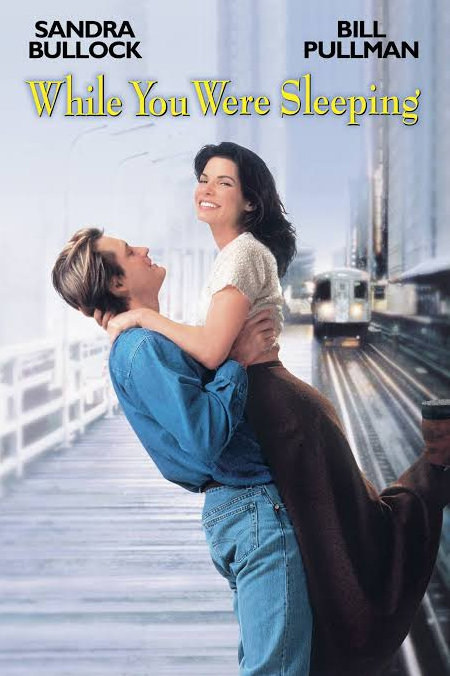
I could have chosen a bunch of films, but I wanted to try my hand at a genre I don’t delve into much, so that you can see how I would find the beats and maybe we can learn a little together. If you haven’t seen this, I suggest you watch it before it give it all away. Lets do the romcom: While You Were Sleeping.

While You Were Sleeping

Preface: This is a romantic comedy genre film. The beats within this story can be found in most successful romance comedies, at least that’s going to be our assumption. There will be spoilers here. (FYI, I don’t write much romance, so I’m breaking this down the best I can. It would probably do me good to break down more, and make sure my beats all matched, so I might miss something. If you think of something I missed, let me know on my Youtube comments page.

  • Meet the main character and discover what they need.
    • For this, Lucy (Sandra Bullock) is clerk at the metro, and is secretly in love with Peter (Peter Gallagher) he is not her need, her need is what we learn about her through the opening scenes: In this case, she is all alone and needs a family.
  • The main character enters into some kind of deception. In this case, she makes everyone believe that she’s engaged to him.
  • Main character is placed in a situation that she actually meets her true lover. In this case, this it will be Peter’s brother, Jack (Bill Pullman).
  • The main character becomes entrenched in the lover’s world.
  • We learn of the lover’s need. Jack needs to find independence from his fathers business and become his own man.
  • The main character and lover hate each other. In this case, its because jack isn’t buying into her scam.
  • The main character and lover fall in love. In this case, he now falls for her scam.
  • An opponent gets in the way. For Lucy, this is her neighbor, a greasy low brow dude, who Lucy really just tolerates, but who Jack feels threatened by.
  • The main Character and lover need to have some scenes together, where their relationship strengthens.
  • Another opponent arises. In this case, it’s Peter, waking from his coma. He’s different from the 1st opponent, and harder to ignore. They both agree to marry each other.
  • The main character give up the scam at the last possible moment and the true lover, Jack overcomes his weakness too. They come together to live happily ever after.

I may have missed some beats, but if you compare this to other romcoms, you’ll find similarities between the beats. This one twisted one of the beats near the beginning. Rather than meeting Jack first, she seems to have met Peter first, making you think early on that he really could be her lover. But in reality, she never met him until after he awoke from the coma, bringing the true beats back into harmony. See how that beat was manipulated and made the story unique, rather than tropish?

Next, find another romcom that you can pick apart and see if it has the same beats within it. Maybe it does, maybe you discover another beat, or you are able to see how they moved or twisted one of the beats to make it a little different.

I would recommend taking a few stories in this genre and dissecting them all before settling on your definitive list of winning beats for this genre. I think I’ll take the beats I got from that, and compare it with another movie that I watched some time ago, and which was filmed decades apart: Some Like It Hot. Already from what I remember, there is a relationship built on deception, there is conflict, and the gig isn’t up until the near end. I’ll have to re-watch it though to remember all of it, but I think you can see where I’m going with this.

Whatever genre you prefer to focus on, sit down, watch some movies in that genre, or read several books in that genre. See what they all appear to have in common, then apply that to your story, and see if it doesn’t make yours better.

Find ways to manipulate the beats and combine them with other genres. Have fun with this.

I’ve just barely skimmed the surface of story beats with you. If you want to learn more, and I recommend you do, then check out my favorite source for learning and understanding story beats: John Truby. He has several books and classes on understanding and incorporating genre beats into your story. Visit him at https://truby.com/

FYI, I don’t get paid anything to endorse him, I have just found his insights to be incredibly helpful.

Also, check out my YouTube video on this subject at https://youtu.be/lw2ep0xxaIM 

As with most of my YouTube videos, I try to throw in some fun skits as well.

Filed Under: Blog

Whether you’re writing a poem, short story, book, church talk, school lesson, song, or screenplay, crafting your story is an art that if you master, will elevate your story to incredible heights.

It’ll make your corporate meetings more engaging, you’ll sell more product, you’ll inspire more students, and your children will want to spend more time with you, listening to you.

Humans are the only thing out there who depend on story for learning how to survive in this world. Why else is it, that art speaks to us on such a deep level? The most published book in the history of the word, the bible is a construction of mostly stories, rather than a list of simple instructions.

There are very few instances where learning to craft stories will not improve your life and that of those around you. So whatever your chosen path, you can benefit from expanding your knowledge of this craft.

Why Should You Study Story?

Many of us learn this skill at some level as we grow up. When we meet up with family or friends, we tell stories, mostly true. What happened over the weekend; What I did on vacation; You won’t believe who my sister is dating now; Etc, etc.

Some of us, learn to tell stories more fluently and engaging than others. You’ve met these people before. They command the attention of the whole room. They often get their way, and not because they’re more popular or more deceptive, but because they’ve learned to tell stories that make you buy into their perspective.

So how can you learn to engage an audience with that sort of ability and fluency?

If you’re unlucky enough to not be naturally charismatic, which lets admit, a lot of us aren’t, then don’t despair. Like any skill, you can work on this. I’m a firm believer that some of us are gifted with talents, and others have to work at developing them. 

Back when I was in school, all growing up, I met lots of people. I was never the popular one, but I couldn’t help but notice the popular people and wonder what it was that made them special.

I found two types of popular people. The first were those who looked great and knew it. They had confidence, which is a topic for another day, but is equally important. This group of people were able to leverage their genetics to win adoration from so many.

Then there were the others, still popular, but with serious attractive deficiencies. Either they were too fat, too ugly, too pimpled, and so on. They found their popularity and confidence, not by looking hot and handsome, but rather by developing their personality.

Ask yourself this question: Would you rather surround yourself by beautiful people who were utterly boring, or people who weren’t attractive, but super engaging to be around, who would you pick?

Granted, this is an oversimplification, because it doesn’t universally apply, though during my younger years, it seemed statistically consistent. So the idea is, that anyone can find success, in this case we’re talking popularity, but in life we’re talking about much more.

As a writer and filmmaker, I don’t want to fall into the trap of learning how to compose amazing videos, that have lack-luster stories. I love watching movies, but it seems that lately, we’re in a creative slump as Americans.

The big studios are churning out amazing eye candy, expensive as can be, but not really that engaging or memorable. Hollywood goes through these creative slumps occasionally. Movies cost so much to make, and so they try to play it safe, but in doing so, they forget to tell the sort of stories we want to pay $20 per ticket to see in the theater.

I’ve seen super low budget movies that blew my socks off. They weren’t filmed with the finesse that a bigger budget movie receives, but they were so much more entertaining, proving you don’t need big budgets to make quality art.

Then again, I’ve also seen low budget crap. You’ll find stuff all over the spectrum. The difference between a fantastic film and a flop, regardless of the budget, is the quality of the story itself, that part of the craft that happens before anyone even thinks about what camera or actor to use.

How Study Story

Do you have an uncle to tells amazing stories. Listen to how he tells them.

Who was/is your favorite teacher? Think of how they engaged you.

What are your favorite movies? Turn the volume off, and pull out a pen and pad. Take notes about how they told the story. See if there are any similarities between and across multiple films you loved.

What books do you love? What is it about their storytelling style that gets you hooked?

Whatever you like, you can find a way to break it down into manageable chunks, then start really finding and practicing on your own, the theoretical techniques you’re finding.

If you feel stumped on this, Let me recommend a few books that I found very helpful when I was trying to study story:

The Writers Journey, by Christopher Vogler

Save The Cat, by Blake Snyder

The Anatomy of Story, by John Truby

There are so many books that talk about structuring your story, but another place that I found incredibly helpful was the Timpanogos Storytelling Festival, held each year in Utah. There are other such festivals out there, and these are for in person, oral storytelling.

Wanna know who I found most of their patrons to be? School Teachers. These dedicated teachers were attending the conferences held by these storytelling festivals to improve their abilities to connect with their children. Amazing! I love it when I come across people with such dedication to their craft, that they use their free time to learn how to be better at what they do.

How can storytelling help you, in your career or family?

As a writer and filmmaker, its clear to me. But I also have a romantic idea that as a father figure in my house, I should be able to sit my kids down in front of the hearth and tell stories from my childhood that bring our family together.

Example of the Power of Amazing Storytelling Skills

Before you leave, check out this amazing story. I’ll show two versions of it. One comes straight from the Bible, so its a good story, and many of us have heard it all growing up.

Then I’m going to show you the same story, told by an expert storyteller, and you can ask yourself what each means to you. Does one resonate with you differently? Does one capture your attention more and make you think? Why?

When you’re done reading this, check out my latest book, One For The Money, Two For The Soul. You can also check out my YouTube channel, where I share my personal storytelling journey. I’d love to hear your thoughts on the Jonah story on my YouTube comments where we discuss this topic at: 

Book of Jonah, King James Version of the Bible:

Now the word of the LORD came unto Jonah the son of Amittai, saying, Arise, go to Nineveh, that great city, and cry against it; for their wickedness is come up before me.

But Jonah rose up to flee unto Tarshish from the presence of the LORD, and went down to Joppa; and he found a ship going to Tarshish: so he paid the fare thereof, and went down into it, to go with them unto Tarshish from the presence of the LORD.

But the LORD sent out a great wind into the sea, and there was a mighty tempest in the sea, so that the ship was like to be broken.

Then the mariners were afraid, and cried every man unto his god, and cast forth the wares that were in the ship into the sea, to lighten it of them. But Jonah was gone down into the sides of the ship; and he lay, and was fast asleep. So the shipmaster came to him, and said unto him, What meanest thou, O sleeper? arise, call upon thy God, if so be that God will think upon us, that we perish not. And they said every one to his fellow, Come, and let us cast lots, that we may know for whose cause this evil is upon us. So they cast lots, and the lot fell upon Jonah.

Then said they unto him, Tell us, we pray thee, for whose cause this evil is upon us; What is thine occupation? and whence comest thou? what is thy country? and of what people art thou?

And he said unto them, I am an Hebrew; and I fear the LORD, the God of heaven, which hath made the sea and the dry land.

Then were the men exceedingly afraid, and said unto him, Why hast thou done this? For the men knew that he fled from the presence of the LORD, because he had told them. Then said they unto him, What shall we do unto thee, that the sea may be calm unto us? for the sea wrought, and was tempestuous.

And he said unto them, Take me up, and cast me forth into the sea; so shall the sea be calm unto you: for I know that for my sake this great tempest is upon you.

Nevertheless the men rowed hard to bring it to the land; but they could not: for the sea wrought, and was tempestuous against them.Wherefore they cried unto the LORD, and said, We beseech thee, O LORD, we beseech thee, let us not perish for this man’s life, and lay not upon us innocent blood: for thou, O LORD, hast done as it pleased thee.

So they took up Jonah, and cast him forth into the sea: and the sea ceased from her raging. Then the men feared the LORD exceedingly, and offered a sacrifice unto the LORD, and made vows.

Now the LORD had prepared a great fish to swallow up Jonah. And Jonah was in the belly of the fish three days and three nights.

Then Jonah prayed unto the LORD his God out of the fish’s belly, And said, I cried by reason of mine affliction unto the LORD, and he heard me; out of the belly of hell cried I, and thou heardest my voice. For thou hadst cast me into the deep, in the midst of the seas; and the floods compassed me about: all thy billows and thy waves passed over me. Then I said, I am cast out of thy sight; yet I will look again toward thy holy temple.

The waters compassed me about, even to the soul: the depth closed me round about, the weeds were wrapped about my head. I went down to the bottoms of the mountains; the earth with her bars was about me for ever: yet hast thou brought up my life from corruption, O LORD my God. When my soul fainted within me I remembered the LORD: and my prayer came in unto thee, into thine holy temple. They that observe lying vanities forsake their own mercy. But I will sacrifice unto thee with the voice of thanksgiving; I will pay that that I have vowed. Salvation is of the LORD.

And the LORD spake unto the fish, and it vomited out Jonah upon the dry land.

And the word of the LORD came unto Jonah the second time, saying, Arise, go unto Nineveh, that great city, and preach unto it the preaching that I bid thee.

The Sermon (Extracted from Moby Dick), by Herman Melville:

Father Mapple rose, and in a mild voice of unassuming authority ordered the scattered people to condense. “Star board gangway, there! side away to larboard- larboard gangway to starboard! Midships! midships!”

There was a low rumbling of heavy sea-boots among the benches, and a still slighter shuffling of women’s shoes, and all was quiet again, and every eye on the preacher.

He paused a little; then kneeling in the pulpit’s bows, folded his large brown hands across his chest, uplifted his closed eyes, and offered a prayer so deeply devout that he seemed kneeling and praying at the bottom of the sea.

This ended, in prolonged solemn tones, like the continual tolling of a bell in a ship that is foundering at sea in a fog- in such tones he commenced reading the following hymn; but changing his manner towards the concluding stanzas, burst forth with a pealing exultation and joy-

The ribs and terrors in the whale, Arched over me a dismal gloom, While all God’s sun-lit waves rolled by, And lift me deepening down to doom.

I saw the opening maw of hell, With endless pains and sorrows there; Which none but they that feel can tell- Oh, I was plunging to despair.

In black distress, I called my God, When I could scarce believe him mine, He bowed his ear to my complaints- No more the whale did me confine.

With speed he flew to my relief, As on a radiant dolphin borne; Awful, yet bright, as lightning shone The face of my Deliverer God.

My song for ever shall record That terrible, that joyful hour; I give the glory to my God, His all the mercy and the power.

Nearly all joined in singing this hymn, which swelled high above the howling of the storm. A brief pause ensued; the preacher slowly turned over the leaves of the Bible, and at last, folding his hand down upon the proper page, said: “Beloved shipmates, clinch the last verse of the first chapter of Jonah- ‘And God had prepared a great fish to swallow up Jonah.’”

“Shipmates, this book, containing only four chapters- four yarns- is one of the smallest strands in the mighty cable of the Scriptures. Yet what depths of the soul Jonah’s deep sealine sound! what a pregnant lesson to us is this prophet! What a noble thing is that canticle in the fish’s belly! How billow-like and boisterously grand! We feel the floods surging over us, we sound with him to the kelpy bottom of the waters; sea-weed and all the slime of the sea is about us! But what is this lesson that the book of Jonah teaches? Shipmates, it is a two-stranded lesson; a lesson to us all as sinful men, and a lesson to me as a pilot of the living God. As sinful men, it is a lesson to us all, because it is a story of the sin, hard-heartedness, suddenly awakened fears, the swift punishment, repentance, prayers, and finally the deliverance and joy of Jonah. As with all sinners among men, the sin of this son of Amittai was in his wilful disobedience of the command of God- never mind now what that command was, or how conveyed- which he found a hard command. But all the things that God would have us do are hard for us to do- remember that- and hence, he oftener commands us than endeavors to persuade. And if we obey God, we must disobey ourselves; and it is in this disobeying ourselves, wherein the hardness of obeying God consists.

“With this sin of disobedience in him, Jonah still further flouts at God, by seeking to flee from Him. He thinks that a ship made by men, will carry him into countries where God does not reign but only the Captains of this earth. He skulks about the wharves of Joppa, and seeks a ship that’s bound for Tarshish. There lurks, perhaps, a hitherto unheeded meaning here. By all accounts Tarshish could have been no other city than the modern Cadiz. That’s the opinion of learned men. And where is Cadiz, shipmates? Cadiz is in Spain; as far by water, from Joppa, as Jonah could possibly have sailed in those ancient days, when the Atlantic was an almost unknown sea. Because Joppa, the modern Jaffa, shipmates, is on the most easterly coast of the Mediterranean, the Syrian; and Tarshish or Cadiz more than two thousand miles to the westward from that, just outside the Straits of Gibraltar. See ye not then, shipmates, that Jonah sought to flee worldwide from God? Miserable man! Oh! most contemptible and worthy of all scorn; with slouched hat and guilty eye, skulking from his God; prowling among the shipping like a vile burglar hastening to cross the seas. So disordered, self-condemning in his look, that had there been policemen in those days, Jonah, on the mere suspicion of something wrong, had been arrested ere he touched a deck. How plainly he’s a fugitive! no baggage, not a hat-box, valise, or carpet-bag,- no friends accompany him to the wharf with their adieux. At last, after much dodging search, he finds the Tarshish ship receiving the last items of her cargo; and as he steps on board to see its Captain in the cabin, all the sailors for the moment desist from hoisting in the goods, to mark the stranger’s evil eye. Jonah sees this; but in vain he tries to look all ease and confidence; in vain essays his wretched smile. Strong intuitions of the man assure the mariners he can be no innocent. In their gamesome but still serious way, one whispers to the other- “Jack, he’s robbed a widow;” or, “Joe, do you mark him; he’s a bigamist;” or, “Harry lad, I guess he’s the adulterer that broke jail in old Gomorrah, or belike, one of the missing murderers from Sodom.” Another runs to read the bill that’s stuck against the spile upon the wharf to which the ship is moored, offering five hundred gold coins for the apprenhension of a parricide, and containing a description of his person. He reads, and looks from Jonah to the bill; while all his sympathetic shipmates now crowd round Jonah, prepared to lay their hands upon him. Frightened Jonah trembles. and summoning all his boldness to his face, only looks so much the more a coward. He will not confess himself suspected; but that itself is strong suspicion. So he makes the best of it; and when the sailors find him not to be the man that is advertised, they let him pass, and he descends into the cabin.

”’Who’s there?’ cries the Captain at his busy desk, hurriedly making out his papers for the Customs- ‘Who’s there?’ Oh! how that harmless question mangles Jonah! For the instant he almost turns to flee again. But he rallies. ‘I seek a passage in this ship to Tarshish; how soon sail ye, sir?’ Thus far the busy Captain had not looked up to Jonah, though the man now stands before him; but no sooner does he hear that hollow voice, than he darts a scrutinizing glance. ‘We sail with the next coming tide,’ at last he slowly answered, still intently eyeing him. ‘No sooner, sir?’- ‘Soon enough for any honest man that goes a passenger.’ Ha! Jonah, that’s another stab. But he swiftly calls away the Captain from that scent. ‘I’ll sail with ye,’- he says,- ‘the passage money how much is that?- I’ll pay now.’ For it is particularly written, shipmates, as if it were a thing not to be overlooked in this history, ‘that he paid the fare thereof’ ere the craft did sail. And taken with the context, this is full of meaning.

“Now Jonah’s Captain, shipmates, was one whose discernment detects crime in any, but whose cupidity exposes it only in the penniless. In this world, shipmates, sin that pays its way can travel freely and without a passport; whereas Virtue, if a pauper, is stopped at all frontiers. So Jonah’s Captain prepares to test the length of Jonah’s purse, ere he judge him openly. He charges him thrice the usual sum; and it’s assented to. Then the Captain knows that Jonah is a fugitive; but at the same time resolves to help a flight that paves its rear with gold. Yet when Jonah fairly takes out his purse, prudent suspicions still molest the Captain. He rings every coin to find a counterfeit. Not a forger, any way, he mutters; and Jonah is put down for his passage. ‘Point out my state-room, Sir,’ says Jonah now, ‘I’m travel-weary; I need sleep.’ ‘Thou lookest like it,’ says the Captain, ‘there’s thy room.’ Jonah enters, and would lock the door, but the lock contains no key. Hearing him foolishly fumbling there, the Captain laughs lowly to himself, and mutters something about the doors of convicts’ cells being never allowed to be locked within. All dressed and dusty as he is, Jonah throws himself into his berth, and finds the little state-room ceiling almost resting on his forehead. The air is close, and Jonah gasps. Then, in that contracted hole, sunk, too, beneath the ship’s water-line, Jonah feels the heralding presentiment of that stifling hour, when the whale shall hold him in the smallest of his bowels’ wards.

“Screwed at its axis against the side, a swinging lamp slightly oscillates in Jonah’s room; and the ship, heeling over towards the wharf with the weight of the last bales received, the lamp, flame and all, though in slight motion, still maintains a permanent obliquity with reference to the room; though, in truth, infallibly straight itself, it but made obvious the false, lying levels among which it hung. The lamp alarms and frightens Jonah; as lying in his berth his tormented eyes roll round the place, and this thus far successful fugitive finds no refuge for his restless glance. But that contradiction in the lamp more and more appals him. The floor, the ceiling, and the side, are all awry. ‘Oh! so my conscience hangs in me!’ he groans, ‘straight upwards, so it burns; but the chambers of my soul are all in crookedness!’

“Like one who after a night of drunken revelry hies to his bed, still reeling, but with conscience yet pricking him, as the plungings of the Roman race-horse but so much the more strike his steel tags into him; as one who in that miserable plight still turns and turns in giddy anguish, praying God for annihilation until the fit be passed; and at last amid the whirl of woe he feels, a deep stupor steals over him, as over the man who bleeds to death, for conscience is the wound, and there’s naught to staunch it; so, after sore wrestling in his berth, Jonah’s prodigy of ponderous misery drags him drowning down to sleep.

“And now the time of tide has come; the ship casts off her cables; and from the deserted wharf the uncheered ship for Tarshish, all careening, glides to sea. That ship, my friends, was the first of recorded smugglers! the contraband was Jonah. But the sea rebels; he will not bare the wicked burden. A dreadful storm comes on, the ship is like to break. But now when the boatswain calls all hands to lighten her; when boxes, bales, and jars are clattering overboard; when the wind is shrieking, and the men are yelling, and every plank thunders with trampling feet right over Jonah’s head; in all this raging tumult, Jonah sleeps his hideous sleep. He sees no black sky and raging sea, feels not the reeling timbers, and little hears he or heeds he the far rush of the mighty whale, which even now with open mouth is cleaving the seas after him. Aye, shipmates, Jonah was gone down into the sides of the ship- a berth in the cabin as I have taken it, and was fast asleep. But the frightened master comes to him, and shrieks in his dead ear, ‘What meanest thou, O, sleeper! arise!’ Startled from his lethargy by that direful cry, Jonah staggers to his feet, and stumbling to the deck, grasps a shroud, to look out upon the sea. But at that moment he is sprung upon by a panther billow leaping over the bulwarks. Wave after wave thus leaps into the ship, and finding no speedy vent runs roaring fore and aft, till the mariners come nigh to drowning while yet afloat. And ever, as the white moon shows her affrighted face from the steep gullies in the blackness overhead, aghast Jonah sees the rearing bowsprit pointing high upward, but soon beat downward again towards the tormented deep.

“Terrors upon terrors run shouting through his soul. In all his cringing attitudes, the God-fugitive is now too plainly known. The sailors mark him; more and more certain grow their suspicions of him, and at last, fully to test the truth, by referring the whole matter to high Heaven, they all-outward to casting lots, to see for whose cause this great tempest was upon them. The lot is Jonah’s; that discovered, then how furiously they mob him with their questions. ‘What is thine occupation? Whence comest thou? Thy country? What people? But mark now, my shipmates, the behavior of poor Jonah. The eager mariners but ask him who he is, and where from; whereas, they not only receive an answer to those questions, but likewise another answer to a question not put by them, but the unsolicited answer is forced from Jonah by the hard hand of God that is upon him.

”’I am a Hebrew,’ he cries- and then- ‘I fear the Lord the God of Heaven who hath made the sea and the dry land!’ Fear him, O Jonah? Aye, well mightest thou fear the Lord God then! Straightway, he now goes on to make a full confession; whereupon the mariners became more and more appalled, but still are pitiful. For when Jonah, not yet supplicating God for mercy, since he but too well knew the darkness of his deserts,- when wretched Jonah cries out to them to take him and cast him forth into the sea, for he knew that for his sake this great tempest was upon them; they mercifully turn from him, and seek by other means to save the ship. But all in vain; the indignant gale howls louder; then, with one hand raised invokingly to God, with the other they not unreluctantly lay hold of Jonah.

“And now behold Jonah taken up as an anchor and dropped into the sea; when instantly an oily calmness floats out from the east, and the sea is as Jonah carries down the gale with him, leaving smooth water behind. He goes down in the whirling heart of such a masterless commotion that he scarce heeds the moment when he drops seething into the yawning jaws awaiting him; and the whale shoots-to all his ivory teeth, like so many white bolts, upon his prison. Then Jonah prayed unto the Lord out of the fish’s belly. But observe his prayer, and learn a weighty lesson. For sinful as he is, Jonah does not weep and wail for direct deliverance. He feels that his dreadful punishment is just. He leaves all his deliverance to God, contenting himself with this, that spite of all his pains and pangs, he will still look towards His holy temple. And here, shipmates, is true and faithful repentance; not clamorous for pardon, but grateful for punishment. And how pleasing to God was this conduct in Jonah, is shown in the eventual deliverance of him from the sea and the whale. Shipmates, I do not place Jonah before you to be copied for his sin but I do place him before you as a model for repentance. Sin not; but if you do, take heed to repent of it like Jonah.”

While he was speaking these words, the howling of the shrieking, slanting storm without seemed to add new power to the preacher, who, when describing Jonah’s sea-storm, seemed tossed by a storm himself. His deep chest heaved as with a ground-swell; his tossed arms seemed the warring elements at work; and the thunders that rolled away from off his swarthy brow, and the light leaping from his eye, made all his simple hearers look on him with a quick fear that was strange to them.

There now came a lull in his look, as he silently turned over the leaves of the Book once more; and, at last, standing motionless, with closed eyes, for the moment, seemed communing with God and himself.

But again he leaned over towards the people, and bowing his head lowly, with an aspect of the deepest yet manliest humility, he spake these words:

“Shipmates, God has laid but one hand upon you; both his hands press upon me. I have read ye by what murky light may be mine the lesson that Jonah teaches to all sinners; and therefore to ye, and still more to me, for I am a greater sinner than ye. And now how gladly would I come down from this mast-head and sit on the hatches there where you sit, and listen as you listen, while some one of you reads me that other and more awful lesson which Jonah teaches to me, as a pilot of the living God. How being an anointed pilot-prophet, or speaker of true things and bidden by the Lord to sound those unwelcome truths in the ears of a wicked Nineveh, Jonah, appalled at the hostility he should raise, fled from his mission, and sought to escape his duty and his God by taking ship at Joppa. But God is everywhere; Tarshish he never reached. As we have seen, God came upon him in the whale, and swallowed him down to living gulfs of doom, and with swift slantings tore him along ‘into the midst of the seas,’ where the eddying depths sucked him ten thousand fathoms down, and ‘the weeds were wrapped about his head,’ and all the watery world of woe bowled over him. Yet even then beyond the reach of any plummet- ‘out of the belly of hell’- when the whale grounded upon the ocean’s utmost bones, even then, God heard the engulphed, repenting prophet when he cried. Then God spake unto the fish; and from the shuddering cold and blackness of the sea, the whale came breeching up towards the warm and pleasant sun, and all the delights of air and earth; and ‘vomited out Jonah upon the dry land;’ when the word of the Lord came a second time; and Jonah, bruised and beaten- his ears, like two sea-shells, still multitudinously murmuring of the ocean- Jonah did the Almighty’s bidding. And what was that, shipmates? To preach the Truth to the face of Falsehood! That was it!

“This, shipmates, this is that other lesson; and woe to that pilot of the living God who slights it. Woe to him whom this world charms from Gospel duty! Woe to him who seeks to pour oil upon the waters when God has brewed them into a gale! Woe to him who seeks to please rather than to appal! Woe to him whose good name is more to him than goodness! Woe to him who, in this world, courts not dishonor! Woe to him who would not be true, even though to be false were salvation! Yea, woe to him who as the great Pilot Paul has it, while preaching to others is himself a castaway!

He drooped and fell away from himself for a moment; then lifting his face to them again, showed a deep joy in his eyes, as he cried out with a heavenly enthusiasm,- “But oh! shipmates! on the starboard hand of every woe, there is a sure delight; and higher the top of that delight, than the bottom of the woe is deep. Is not the main-truck higher than the kelson is low? Delight is to him- a far, far upward, and inward delight- who against the proud gods and commodores of this earth, ever stands forth his own inexorable self. Delight is to him whose strong arms yet support him, when the ship of this base treacherous world has gone down beneath him. Delight is to him, who gives no quarter in the truth, and kills, burns, and destroys all sin though he pluck it out from under the robes of Senators and Judges. Delight,- top-gallant delight is to him, who acknowledges no law or lord, but the Lord his God, and is only a patriot to heaven. Delight is to him, whom all the waves of the billows of the seas of the boisterous mob can never shake from this sure Keel of the Ages. And eternal delight and deliciousness will be his, who coming to lay him down, can say with his final breath- O Father!- chiefly known to me by Thy rod- mortal or immortal, here I die. I have striven to be Thine, more than to be this world’s, or mine own. Yet this is nothing: I leave eternity to Thee; for what is man that he should live out the lifetime of his God?”

He said no more, but slowly waving a benediction, covered his face with his hands, and so remained kneeling, till all the people had departed, and he was left alone in the place.

Filed Under: Blog

Coming up with a good plot for your story is one of the most essential things you can do for your book. Of course there’s other things too, like developing a good character, world building, and so on, but without plot, your book or film is dead on arrival.

Coming up with a good story plot however doesn’t happen easily. Some plots are also going to be more suited for certain genres, some for long form stories, some for short.

Then there’s also the debate over whether or not you should follow a specific structure or outline that is based off of someone’s “proven” method. Others will say that if you’re following any story structure at all, then you’re not being true to yourself as an artist.

I have some real thoughts here, and I’ll share those with you today, I’ll be mostly talking with you about the structure aspect of plot.

How Important Are The Guru’s Story Structures?

If you haven’t heard of them yet, you doubtless will as you progress, but there are many guru’s out there who will tell you how to structure your story. From Blake Snyder’s “Save The Cat” to Joseph Campbell’s “The Hero’s Journey,” and several others between and around, you’ll find definitive methods for what to say on which page of your book or screenplay.

You’ve also heard of the 3 act story structure, the wheel, and possibly others. Who is right?

Can’t you just start writing your book, pantsing your way through until you come to the end of the story?

Here’s the thing, experimental story structure is ok, if you want to experiment. If you want to make money on your stories, adhering to a proven structure, even if loosely is going to be important.

Human’s are story loving creatures. We’ve been conditioned over thousands of years to respond to stories. If your story doesn’t receive the sort of response you think it deserves, then maybe your structure is too outside the norm for most people to relate with.

For this reason, I believe that following proven methods are important. I don’t think a strict and rigid adherence is completely necessary, but a story should have a beginning, middle, and end. But every form of art should tell some story.

How would you apply the Hero’s journey to a painting? Or Save The Cat to a sitcom, song, or novel? What about short stories? There is not single approach that hits all of these different story forms. But understanding that your plot still needs a recognizable format is still essential if you are to find any impact with your audience. At least its important if you want to make any money with your art.

How to Structure Your Plot

Have you ever heard the saying, “Only once you’ve learned the rules, can you break them.”

This is how structure works. When I’m plotting a book, I’ll find a structure that suits the format of my story. I’ll then lay out the essential beats of that story in a way that best tells the story in the genre that I’m going for.

By the way, if you’re like me, and you hear the term “Beats” and it confuses you, I get it. It took me a long time before I understood what that meant. I’ll discuss that in my next article, so check back next week for more on that, but for now, we’ll stick with structure.

Once I have my book outlined, with the structure that makes the most sense, I’ll start writing. One thing I’ve learned though, is that even if you have what seems like a perfect structure, by the time you finish your rough draft, it doesn’t always feel right, yet.

That is because my original plot either had holes in it, or as I was writing, my imagination took me in a few different directions that either helped or hurt the story, but now need to be reconciled in the greater whole.

This happens whether you are plotting your way through a story or pantsing your way through it. If you haven’t realized by now, I tend to work more on my plot before I write, rather than just taking an idea and writing by the seat of my pants (pantsing).

So my ugly rough draft is done, and this is where I take my rough draft and turn it into my first good draft. I’ll read through it, outline what is happening in the book, and making judgments based on what I know of story structure, plots, and beats, to make a story that works.

I think of it like this. My rough draft is like going to the quarry and chiseling out a large block of stone.

My next draft, is where I take that stone, roughly the right dimensions, and I chisel out the majority of waste till I have a very rough shape of my statue.

From there, future drafts will be honing the statue into its most pure form, but I have to get the thing looking roughly like it should first.

Then once you’ve got the shape of your story, you are ready to add color and edit it. A note on breaking the rules. This can be a fun way to subvert expectations, and give the reader something unpredictable. Be careful though. This isn’t something that you should do, willy-nilly. Especially as a beginner, you need to know how breaking those rules might affect your audience.

Often transcending any given story structure is less about being experimental, than it is about adding layers of depth to your story.

Where To Start Learning About Structure

If you’re a beginning writer, keep it simple. The 3-act story structure is the most proven out there. Frankly, a lot of other story structures, if inspected, are still 3-act structures. Base your plot on the following:

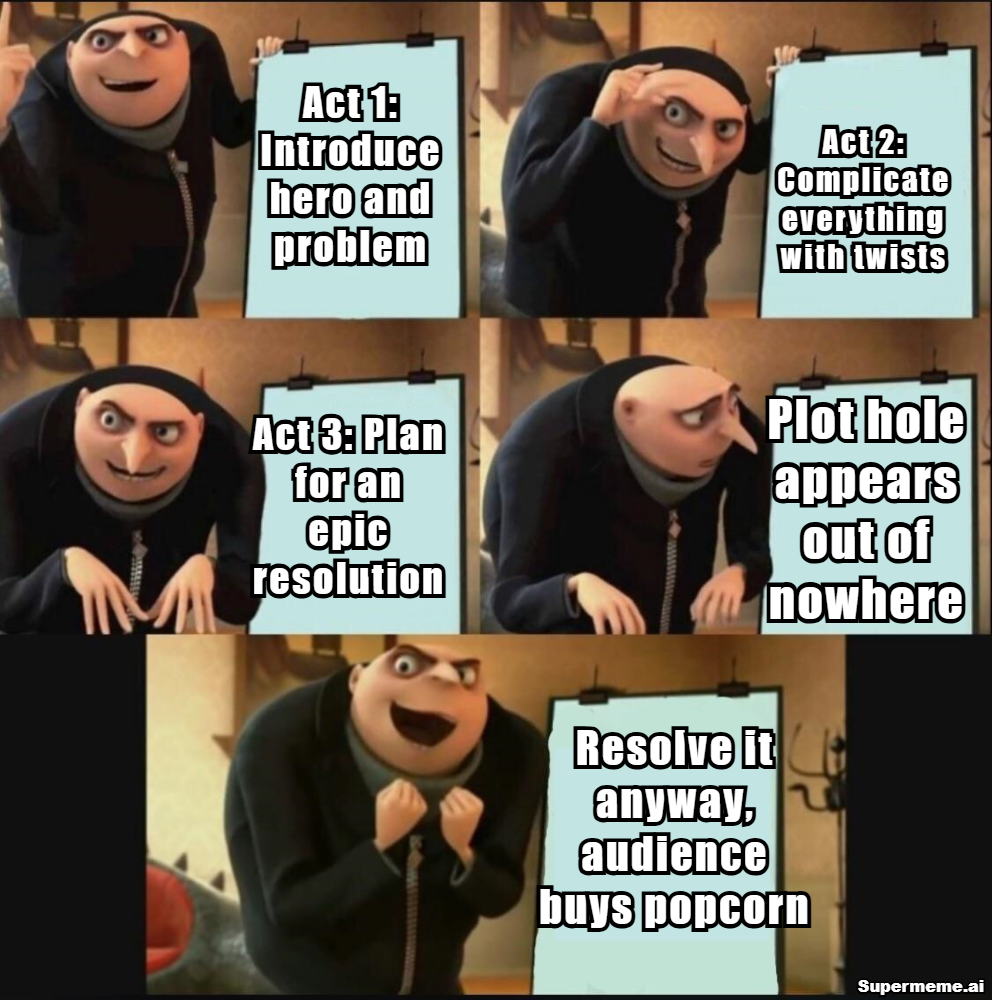
Act 1: Beginning. You learn about your character

You have some sort of inciting incident

You have some way of breaking into act 2

Act 2: Fun and Games. Your character hits multiple obstacles, each leading up to

Act 2: Midpoint. This is some kind of twist. Followed by more obstacles. 

At the end of Act 2, you find some sort of climax

Act 3: You work through your climax, but don’t solve it yet. You need to enter that “Dark night of the soul, when things are at their worst.

Then you can find a way to overcome all, and wrap up your story.

Act 1 should last about ¼ of your story. Act 2 should be a good ½ of your story. Act 3 should last about the last ¼ of your story.

Another type of story structure you could look into are circle stories, where the story ends where it began. Let me know if you have any other structures you like to tell stories in.

Regardless of your genre, this will get you started. The next thing to learn will be genre beats. Entire books have been written on this topic, and many people confuse structure with beats. So in a future article, I’ll point you in the right direction, but if you’ve gotten this far, good job. Learning to tell your story based off proven methods isn’t discounting yourself as an artist. Even an oil painter needs to know their technique before they can create art. They might add their own flare eventually, but technique is still a part of any art form, including story structure and plot.

To find more, visit my YouTube channel on this topic at: https://youtu.be/UBL8fyOwqW8

Filed Under: Blog

Last time, we talked all about the costs involved in writing and finishing your book. If you missed that article, check it out, it goes into the financial costs of self-publishing your own book.

Today though, we have the monumental task of breaking down the biggest problem of all, marketing your book. Because let’s face it, with time and expense you put into your book, you really ought to get something out of it, right?

But wait, where do you start? How do you budget this? Can you track it?

It’s not at all simple, but you don’t have to be a professional marketer to do it either. Just keep in mind, that this isn’t your primary job. That belongs to writing. This is just one of those essential tasks that needs to happen to get eyeballs on your book.

Self-Marketing Your Self-Published Book

Marketing your self-published book could take up many articles, and maybe we’ll discuss this more in some future posts, however, today, I want to focus on the financial aspects of marketing.

From Part 1 of this financial study, you may remember that we estimated your theoretical writing career to cost approximately $33k per year. The goal here, is to make enough money to break even, then start generating a profit. To do this, we have to understand how much money we’re actually making.

When I publish my novels, I try to keep their price competitive with the market. That means that I often only have a profit margin of between $1.75 to $2.00 (we’ll stick with $1.75/book for now) per book sold. That doesn’t sound like a lot, but if you were to be traditionally published, that would go down to about $0.35 to $0.45. The difference is, they can print and sell more volume.

That brings us to your goal, sell enough volume that we can be happy with our return. There’s two ways to do this, well, l three actually, but I don’t recommend the third.

Three ways of Selling your book:

  1. Setting a target for number of books sold. This means you put a goal out there, and work backwards from that to get to your budget number.
  2. Set a marketing budget, and add money to it as you see results.
  3. Print as many books as you can afford, then sell them in person.

The reason I don’t like this third option, is because it involves hassling friends, family, and becoming a door-to-door salesman. It can work, but it turns you into a salesman rather than a writer, and once you’re done, you’re done. There are no algorithms to push your books to other interested parties, there’s no repeat business, it’s over.

Option number one, isn’t bad either, however, it works best, once you’ve already figured out a strategy for predictable sales, given your style of marketing.

That is why I prefer to start out with the second option. So lets break it down.

Budgeting and Exploratory Marketing

You have $1.75 per book to work with. So it makes sense that you won’t want to spend all of that profit on marketing. What is the happy medium? For me, if I were to make half of that in profit, so $0.88, that would mean that I would have to sell 37,500 books to break even. That sounds doable to me.

Keep in mind, that we aren’t targeting 37,500, we’re just saying that we think that is achievable, given the market our book might be selling in. You might adjust this contribution according to your personal thoughts on the matter, but we’ll stick with this for this example.

So if we are making $0.88 per book, that means that we are willing to spend $0.87 for every book sold. That is great, because we now have a budget we are comfortable with.

Let’s next look at how to spend that $0.87.

Let’s start with the cheapest forms of marketing, and work our way up. Keep in mind that all of this still requires some time from you, and my biggest word of caution, I’ll say it again, don’t let the task of marketing take over your career of writing. Budget your time accordingly.

First- Get your metadata right when you fill out your ISBN and distribution information. It only takes minutes to do, but it should be accurate.

Friends and Family- This can be by word of mouth and social media. Obviously, enlisting them if possible, will be a great way to get started. It’s free, but it doesn’t have a very far reach. Chances are, you’re not going to sell more than a couple hundred books this way, and even that is only likely if you’re well connected and liked.

Goodreads- I’m not talking about pitching your book to every group on there. But rather, go to their give-a-ways section. That’s right, I’m asking you to give away some of your books. The reason is, that people on Goodreads, love to read, a lot. And when you sign up to possibly win a free book on Goodreads, if they’re actually interested in it, they’ll add it to their wish list, and if they lose the bid, they might still see the book and decide to buy it later. But also, winners are highly encouraged to leave reviews, which in turn can help drive your sales. This can be free too, if you’re giving away ebooks. However, if you also try to give a few physical copies away, you tend to get more interest in your book, but that costs money and you need to be careful. I’ve done this and been dinged by high shipping costs to international destinations. But for now, we’ll call this a free option.

Book Bloggers- Now we’re starting to get into spending. Look for bloggers who review books  like yours, and ask them to read yours. They’ll charge you a little for their review, though some might do it for just a physical copy, the ones with influence will probably cost at least $200. Keep in mind though, the ones with good followings can really help push your book to a large audience, if the blogger actually likes it. Keep in mind, if only your mother liked this book, you might not want to have it reviewed, as these people will give their honest opinion.

Paid Online and Social Media ads- These are usually sent through Facebook, Google Ads, Goodreads, and others. They are keyword driven, and demographics driven. You may think it’s creepy that marketers all seem to know who you are, but now you get to leverage their massive databases to your advantage. Start small, give yourself a little budget and experiment. Do a weeklong ad campaign and see if your sales and budget align. If you find that you’re spending more than $0.87 for each sale, then change it up. This is where you need to experiment a little until you find a sweet spot where your spend is under your budget for the number of books you sell. So keep a spreadsheet, and track your ad spend and your books sales on a weekly basis so you know what is and isn’t working for you.

Billboards, Radio, Talk Shows- Are you comfortable shelling out more money and playing with the big boys? Getting on the Today show might catapult your book, unless you find yourself completely uncomfortable in front of a camera. Radio is easier, because you can pre-record your ad, or you can join in as a special guest. Both of these will cost you money to get into. You might need to hire a publicist for the talk shows, but for radio, you can set a budget and a campaign. Depending on the radio station and its reach, you should probably plan a minimum budget of $2000, with an upper limit of $10,000. Keep in mind that if you pay $10k, it had better result in at least 11,500 sales to make it worth the spend. If you don’t think that station has that kind of influence, spend your money elsewhere. Billboards are similar. In a high traffic area, you might spend between $8,500 to $10,500 per month, less if you get on a digital billboard that rotates through other people’s ads every 30 seconds. This is good, as it creates repetitive views, but only about 5% of billboards are designed in a way that actually works, so be very sure that you have what it takes to design a winning billboard if you go this route.

The Numbers Can Lie

Marketing is so hard. As the saying goes, “Only half of it works, I just don’t know which half.” Plus, some effort you put in one area may take time to be effective, and you may attribute your current sales to the wrong marketing model.

One thing is clear though, marketing is a necessary evil. Take your time. Don’t rush it, keep track of your budget, and increase it as your books sell. Also, as you keep writing new books, the old books will start to serve as marketing for newer books. Your fans will start to generate their own marketing for you. But even then, it won’t be over. Then you’ll want to do books signings and make other efforts to strengthen them. The time you decide you don’t need to market your books anymore, is the time your sales will start to fall again.

Check out my video on this topic at: https://youtu.be/bXJXhF9fsB8

Filed Under: Blog

If you’ve been following my other posts, you should have a pretty good idea of my process for writing and publishing a book. That’s all good to know, even if you have a process that differs from mine.

What you don’t know yet, is how the financial side of all this works out, because let’s face it, the world revolves around money, and when you create works of art for income, you have to look at the business of this, too.

Buckle up, because this is going to be full of numbers, and if you’re not comfortable with that, then it might take a few reads to get familiar with this. Keep in mind that these numbers can vary depending on you, who you hire, and other factors.

Hard and Soft Costs

First, let’s distinguish between hard and soft costs. What do I mean by a hard cost? Well, this is any cost that you actually have to shell out cash for. This is going to be for people you hire to edit your book, or costs to print copies of your book—things that actually require money in the bank to honor.

Soft costs are those incurred by you spending your time working on them. Let’s face it, time is money, and even though you aren’t paying yourself to write, your time spent on that book does come at a cost. After all, you could be spending that time working a part-time job, or doing something else. Your time is worth something.

There is one other cost that we should probably consider, though I don’t think I’ll be able to put a number on everyone’s situation perfectly, but it something you can factor in the back of your mind, and that is Overhead costs. This includes things that I’ll assume you already have, like a computer, and the software needed to write your books. It includes the electricity to run your office, even if it’s a home office. 

The Breakdown

Overhead: If I write $0 here, it’s because I’m assuming you already own this and can use it, rather than buying new.

Computer- $0

Word processing software- $0

Adobe creative suite- $60/month or $720/yr

Electricity- $0 (judge whether or not you’d be using similar power when not writing)

Educational books- $50/yr (I recommend reading as much as you can about your craft)

Overhead subtotal = $720/yr

Hard costs of 1 book. (Assume it is a 100,000 word book. Adjust yours accordingly)

AI subscription- $0 (because you shouldn’t be using this to write your book!)

Copy edit- $4000 ($.03 to $.05 per word, depending on who you hire)

Proof edit- $2000 (this is about half the cost of a copy edit, if you hire someone)

Print proofreading manuscript- $40 (I like to do this for my proof editing)

Print proofreading manuscript again- $40 (because you missed stuff in your first proof edit)

Cover art- $500-$750

Hire Voiceover artist $1600 (optional but highly recommended)

ISBN numbers- $75 (buy in bulk and you get them for cheap)

Copyright submission- $45

Print review copy of book- $25 (includes shipping)

Print final copy of books- $100 (assuming you order a few copies for family/friends)

Subtotal Hard costs of making a book = $8425

Soft Costs of 1 book: (assuming you write 800 words/day or 2 hours/day, 5 days a week and your time is worth $25/hr)

1st Draft- $1250 (aprox 1 month) rough draft

2nd draft- $1250 (aprox 1 month) plot fixing draft

3rd draft- $625 (a couple weeks) early polishing draft

4th draft- $1250 (approx 1 month) after getting it back from copy edit)

5th draft- $625 (a couple weeks) revising and polishing

6th draft- $625 (a couple weeks) polishing draft

7th draft- $625 (a couple weeks) proof editing (if done by you)

8th draft- $625 (a couple weeks) proof editing again (because you will have missed stuff)

Other drafts – we’ll assume you’re good now, but I’ve done up to 12 drafts before.

Finding voiceover, Listening to, and noting edits for audiobook- $300

Organizing in Indesign- $200

Assembling cover art in photoshop- $200

Submitting manuscript to the Copyright office and the Library of Congress- $50

Filling out forms for ISBN numbers, Print on Demand, and Audiobook metadata- $100

Subtotal of soft costs = $7725

Assume that on this schedule you are writing two books per year. I assume this, because if you’re just starting out, you’re probably doing this all part time, and not full time, so this might be all the time you can afford to write your books.

Total costs (hard and soft + overhead) = $33020

Writing Books is Not Free From Costs

Thats a lot of money. Even if you only include the hard costs, that can add up pretty quickly.

If you’re like most of us, and just starting out, it’s easy to ignore the costs of our time, and focus on the hard costs. This is fine in the beginning, especially if you have a more steady income. But don’t shortchange your time spent writing either. Especially as you start doing more of it.

We haven’t even talked about the costs of marketing your book yet. Because making a profit on $33k worth of books in a given year won’t happen until you can start selling your books.

A lot of this work will also involve soft costs and hard costs. But I worry that I’ve overwhelmed you with the sheer cost of writing a book. So let’s save the marketing discussion for next time.

Check out the video I made for this topic. As I often do, I put a fun skit in there too: https://youtu.be/io0AgEhRxQQ

Filed Under: Blog

I used to read, a lot. Eventually, life started to get in the way of my pleasure reading. I’d still read to learn in the evenings, but reading for entertainment sake got harder as the years went on.

First there was work, then family, then more family and more work. Did I mention homeownership? Maintaining a house takes up a lot of time too. Good grief, how does anyone find time to read for pleasure anymore?

Then audiobooks came along. Granted, there were always books on tape or cd, but now they are digital. You can have them on your phone, wherever you go. It’s amazing.

These days, rather than listen to the radio, I listen to audiobooks while I’m commuting. I have to admit, that I find myself beginning to get too lazy to sit down and read a regular book.

In fact, I believe that audiobooks are cannibalizing the written book market to a large extent. So as a writer, what do you do about it?

Make audio books or get left behind

As a self-published author, you’ll find that getting your book turned into an audiobook is not all that difficult compared to getting your book published in print. However, it can still cost a little more time and money to get done.

If your publishing process is at all like mine, then you’ve likely already spent somewhere between $2000-$4000 getting your book made. That includes sending it out to editors and getting covers designed.

Hopefully when you got your cover designed, you also had them make you square version of your cover, since the standard rectangle for your book is not the same format used for your audiobook thumbnail, and let’s face it, stretching your image to fit a square format looks stupid.

To get your audiobook recorded, you should also plan on spending another couple thousand dollars for a professional voiceover artist. You could try AI, though last I checked, not all platforms that sell audiobooks will allow AI recorded books. Another thing I’ve noticed, when I’ve listened to AI recorded audiobooks, is that while the AI can get really close to sounding authentic, there’s always a few spots in every chapter where the inflections are slightly off, or words are pronounced weird, and it tends to throw me out of the story when I hear them.

That’s why I encourage hiring a voice actor. Now you can do this in two different ways. One is by offering them royalties on every download, and another way is to pay them a one-time fee to produce your novel.

For me, I prefer to do the one-time fee. That way, I don’t have to keep track of my sales and royalty payments. Authors with a larger customer base might warrant getting a voice actor to charge a royalty, but I’m going to assume that if you’re self-publishing that you don’t want to go this route. While sticking to a single platform like ACX might help with royalties (might being the key word, because I don’t know this for sure), the method I use and recommend is a little harder to automate royalty payments.

My Process

Generally, around the time that I start working on my cover art for my book, I start looking for a voiceover artist. If you don’t know my self-publishing method, check out my last article on publishing.

Anyhow, by starting this early, I’m able to give my voiceover artist time they need to record, and then my distribution provider time they need. Funny thing is, sometimes the distribution needs as much or more time than the voice actor.

My first two attempts at recording my book went poorly. First, I had a family member who offered to do this for me. He’d never done it before, but he had a dynamic voice and enthusiasm to accomplish the project.

He’d occasionally give me updates, until he didn’t. After a few months, I realized that he lost his drive to make it happen. The novelty had worn off, and I think he may have realized that my book at the time wasn’t all that worthy of his time, especially since I don’t think he planned on charging me for it. I think he just wanted to see if he could do it. I don’t fault him for giving up on it, especially after my second attempt to get it recorded.

For my second attempt, I tried recording it myself. Something you learn very quickly, is that no matter what time of day you decide to record, someone is going to start up a lawn mower near you, or drive a loud motorcycle past your street, or one of your kids is going to start making a racket. Then when you’re sure you have the time and quiet, your voice gives out. Unless you have a sound studio in your house, it can get really hard to record good audio. It takes planning and know-how.

So my first two attempts failed, and I gave up on that book. The third time I decided to do this the right way.

I hired a voice artist. I really like Voices.com for this. They have several voice actors, all with searchable characteristics and samples of their work. I used them to find a great voice actor for my book, One For The Money, Two For The Soul.

She was able to take my book and have it recorded and back to me in about a week. I listened to the files, added a file of my own “from the author” and had her fix a couple minor spots, then it was ready. Also, she recorded it in a format that would be acceptable on all platforms, and most importantly, Amazon’s Audible platform, which has some specific quality requirements.

Next I chose to use FindawayVoices.com for my distribution. I could have just used audible, but like my book publishing philosophy, I really like being available on as many platforms as possible, not just Amazon’s exclusive stuff.

With Findaway, I was able to get mass distribution to everyone, including Audible, however you need to have everything uploaded, and finalized with a release date posted at least a month or two at the minimum in advance, because it does take some time for all the retailers of your book to get the listing from Findaway on their databases.

Once you’ve completed this step, congratulations, you’ve done it. You now have your book published in print, digital, and audio formats. What’s left?

Well, there’s two things. Marketing and doing it all over again. But those are topics for another discussion.

For more fun and helpful content, visit my YouTube channel. This topic, along with a short skit, can be found at: https://youtu.be/1k8kqJTkyOk

Filed Under: Blog

  • « Previous Page
  • 1
  • 2
  • 3
  • 4
  • 5
  • 6
  • …
  • 8
  • Next Page »

Recent Posts

  • The Money Mistake Creatives Keep Making (and What Sheila Slick Wants You to Know)
  • Escaping the “Struggling Artist” Trap: What Authors (and Creatives) Can Learn from 25 Years in Publishing
  • How Russell Van Brocklen Turned Dyslexia Into a Creative Superpower: Tactical Lessons for Creatives
  • If Life Has Felt a Little Too Weird Lately… You Might Need This Book
  • What a Cop-Turned-Author Taught Me About Not Being a Struggling Artist

About Me

The art of storytelling has always fascinated me. When I think back and imagine a world before modern media, I imagine a parent entertaining their kids around the hearth with fantastic tales true and/or whimsical. Never mind the accuracy of this vision, it’s the way I choose to think of it. It’s also the inspiration for my work, to tell stories that captivate, stories that the whole family can enjoy together.

Contact Us

Menu

  • B-Roll
  • Books
  • Videos
  • About
  • Contact

Recent Posts

  • The Money Mistake Creatives Keep Making (and What Sheila Slick Wants You to Know)
  • Escaping the “Struggling Artist” Trap: What Authors (and Creatives) Can Learn from 25 Years in Publishing
  • How Russell Van Brocklen Turned Dyslexia Into a Creative Superpower: Tactical Lessons for Creatives
  • If Life Has Felt a Little Too Weird Lately… You Might Need This Book
  • What a Cop-Turned-Author Taught Me About Not Being a Struggling Artist

Blog Updates


  • YouTube

Copyright © 2025. All Rights Reserved. Light Minded Arts

2026

Light Minded Arts

All Rights Reserved

Site by PDM