
Light Minded Arts

Light Minded Arts

  • B-Roll
  • Books
  • Videos
  • About
  • Contact

Home | Archives for Lexi Adams

When it comes to filmmaking, there is so much gear out there, and its easy to get caught up in the latest and greatest. But there’s another side to gear for creatives, that is important to take into consideration, and that’s the ability to travel with it, and setup and take down when you’re a one person show.

I’ll admit, that I too get caught up in my gear. Whenever I have a big project, I’ll often use that as an excuse to invest in some more gear to help me make that a better production. But if I was to take all of that on a shoot, it would fill up my truck and take hours to pack and unpack. So I needed a very portable setup. Here it is, and best part is, I can carry it all on my back.

  1. For The Single Person Film Shoot

If you haven’t seen any of my videos, you should check out my YouTube Channel at: https://www.youtube.com/channel/UCosUlYjbzVQ4_Zv9xFNVOqQ there you’ll find a bunch of my videos, and in those videos near the beginning, I like to add in a short skit. Most of these are done all by myself, or with the help from my wife.

The problem with being a new content creator, is that your channel may not be monetized yet. So how can you afford to pay for help? You can’t. So you make due with as little as possible, and hope that eventually you can afford to hire crew.

Most of my skits were filmed almost entirely with this simple setup (keep in mind, I’m not an affiliate for any of this, so I’m just giving my honest opinion on these things):

A Kemimoto hunting duffle bag. Cost was: $90 on Amazon.

  • This thing is amazing. It has duffle styled straps to hand carry it, but also has backpack straps to hike with. In addition to that, it has several pocket for organizing stuff, and my favorite thing, the bottom unzips, and where it would normally hold guns, now becomes a perfect spot to hold tripods, umbrellas, and light stands.
  1. Inside my bag

FHI, most of these prices were as of early 2025.

I have a Panasonic HC-VX981K camera $800 from B&H (most everything else I got was from B&H, so I’ll just mention this the one time.)

  • Not my favorite camera ever, but its lightweight, has great autofocus, and some manual functions. Honestly it does the job, and I use it a lot.

DJI Osmo Gimbal. It also came with a Hohem mic-01 $268.

  • I haven’t had a chance to use the gimbal much, but I’ve really liked the Hohem mics. Their sound is a lot better than my Tentacle lav, and so I use this quite a lot, and especially if I’m using my android phone to do video, I can plug it right into that and get great audio.

Sennheiser AVX-ME2 mic $800.

  • This is really handy, as I can plug it into my Panasonic camcorder hot shoe, though you still need to plug the jack into the mic receiver on the camcorder. I don’t care as much for the audio on this as I do for the Hohem, but its still good, and might sound better with your voice than mine. It’s very sensitive, and often I like to use it as a hidden microphone in nearby plants or other things, not just on my person.

Smallrig RC100B lights at $200 each.

  • These are great. They’re small, lightweight, bicolored, and using my goldmount adapters ($80 each) I’m able to keep all my batteries here and in my nicer filming gear the same format. I’ve got these mounted to some umbrella foots which were about $25 each, and that allows me to quickly set them up and attach one of 3 of my umbrellas that fit in the gun case portion of the bag. As you may know, those umbrella lights are pretty cheap, but very effective. I’ve got a white translucent umbrella, a silver reflector umbrella, and a deeper white reflector umbrella. In total, those 3 cost about $65, and they take up hardly any room.

Also in the gun case portion of the bag, I’ve got three 7 ft Westcot light stands at $55 each.

  • I like these, because they don’t weigh much and they fold up really tight. For the lights I’m putting on them, they are perfect.

My kit would not be complete without my dummy head. $35ish from Amazon.

  • When that first showed up at my house, my family was pretty weirded out by it. I think it would be fun to put it in someone’s bed for them to wake up next to, but I haven’t gotten around to that prank yet. But I use this head on a tripod that I got from AliExpress $20 for almost every skit I shoot. In fact, I sometimes wonder how I ever got by without it.
  • I use it for shaping light where I’m going to stand. I use it when I’m pulling manual focus, and I need a stand in. I use it also if I want to do a quick color grade clip. Of all the high tech gear I own, that has quickly become one of the most useful tools I own.
  1. How much did it all cost?

Don’t worry about going back through with a calculator. I’ve already summed it up for you. I spent about $2512 before tax. Shipping was mostly free. Then again, there are a few things I forgot to add into this. Like the misc grip gear, maybe $100. SD cards, another say $50. My gold mount batteries, would have cost a pretty penny too, but I have a bunch of those lying around from my normal film gear, but if I were to buy them, that would probably add another $81 per battery, so about $240 for an equivalent setup. I had a 5 in 1 reflector and a GoPro 360 camera that I threw in there too. I don’t recommend the GoPro. If I could justify the cost, I’d probably trade it in for an Insta360. But you don’t really need that, and I rarely use it. Oh, and don’t forget to buy an extra battery for your camera. That comes in handy too. I don’t remember how much that cost me. Lets just say $100 to round it all out.

That would bring the final price of my kit to about $3000.

So while there might be some cost savings still available, I can tell you that I’ve spent more than that on a single piece of equipment that gets used far less than this entire kit.

And while I won’t be wowing anybody with my fancy gear, I can get quite a bit done with this simple setup, and if I wanted, I could even go back country, by myself, which I have done in a skit for an upcoming video, and still have everything I needed.

If you want to see how this all fits together, check out my YouTube Video, where I show this kit in all it’s glory: https://youtu.be/fL_vqdK-kPM

Filed Under: Blog

Book 1 in the GearLock Series

Do you like the hard-boiled mysteries of Raymond Chandler? Do you like the whimsy of Terry Pratchett? How about the swords and swagger of Xena? Well, this has a little bit of all of that. It even has an emerging element of steampunk.

Hey all my friends and fans, I’m so excited to share with you the release of my first book of a brand-new series: The GearLock Series.

This is so much fun, I’ve been waiting to let you all know about it for some time now. And best part is, if you want to help spread the word and leave reviews, you might be able to get a copy before its released (details to follow).

Big Trouble In Spur Central

In the gritty human city of Spur Central, trouble is brewing. It always is.

The entire Cosmos is about to ratchet its Great Gears and pit all sentient animals against each other in a long-awaited war to see who gets to ascend to the next realm. None of that matters to Dick hu’Mar, a private investigator that’s too good for his own good. When he and his sour-faced partner, an ugly stinking cat, get hired by two dames in dire need of a mystery solved, they find themselves plunged into the politics and danger of this pre-steampunk world, where highly leathered brawn beats against brains every day.

With little time: love, life, and money, (most especially money) are on the hook, and hu’Mar must solve the case, if he can, and avoid getting killed in the process.

Is This Book For You?

As you know, I strive to provide clean fiction to all my readers. For that purpose, any explicit material is mild, but don’t let that fool you into thinking this book is weak sauce. Dick hu’Mar is one tough detective, and the cast of characters in this series are about as raw and rotten as they come.

In this book, I make no excuses for showing my characters at their worst. After all, a good hard-boiled novel needs a little bit of grit. And grit we get, with a world where nearly every animal is sentient, and willing to war over a common prize, a prize that has dire implications for those who attain it, and those who miss out.

If you’re ready for a truly unique tale, full of mystery, mayhem, and fantasy, give this book a try. It is the first in what I expect will be a 6-book series, where I’ll try to release the next installment every year. Don’t miss out on this!

Release Date

This book is expected to be released March 2, 2026. There are plans to have it available in print, ebook, and audiobook. You can pre-order Now at Amazon.com by following the link:

Or at Barns and Noble:

https://www.barnesandnoble.com/w/hard-boiled-cabbage-brent-lindstrom/1148353176

Or any other book seller you prefer.

If you are a book reviewer with over 100 subscribers, you may qualify to receive a free copy before the official release. If you think you qualify, fill out my contact page, and let me know how you’d be able to promote the book.

Filed Under: Blog

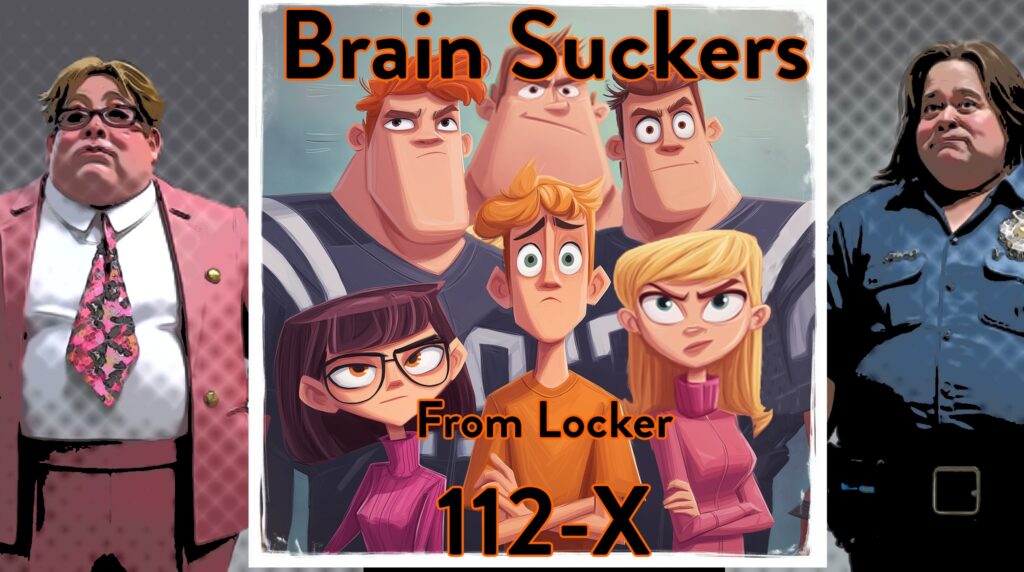
(an old fashion radio-drama styled story, with the help of AI)

Have you ever listened to the old-time radio dramas? I went on a kick one year where I listened to a whole bunch of them. They were pretty fun in a retro sort of way. Everything had to be done without visual aids, so that a radio audience could understand the story. This led to a little extra dialog that conveyed the story, something you might avoid in a movie, but I decided to try writing and producing one myself. And since I’ve been pushing the limits of AI, to see if it can help creatives or just replace them, I used several AI tools to see how far they could take me.

Who Is This For?

This was written for kids and families. The 38-minute story follows several kids as they discover a portal to Dimension X inside one of the lockers at school. It’s full of teasing and fun. Perfect if you’re on a drive and need something to distract your kids with for a little while. Some adults might enjoy it too, but it was mostly made for early teens and pre-teens.

How I Used AI To Make This?

This was actually one of my simpler projects. I spent about an hour writing it for a couple of weeks, then did two edits, one on my own, then one using Sudowrite to see if it could offer any helpful suggestions. Sudowrite is an AI writing tool, one that I’ve been experimenting with a little. I don’t use AI to write any of my stories. I’ve tried to see what kind of stories it can write, and they are all terrible. Instead, I use AI to help edit and suggest fixes. Even then, it’s not something I can just feed it, and expect it to hand back a polished draft.

The role of AI when I’m editing, is more to help me come up with ideas on how to improve a draft, either by adding more description in areas, or finding areas that I can elaborate on. Usually what happens when I do an AI edit, is that it reproduces my work, with slight changes, always shortening and destroying my work too much to make sense with the overall story. So I have to go through its version, and cherry pick the items that strengthen it. It’s very laborious, but it is helpful. If you’re a writer though, I wouldn’t worry about AI taking your love of writing away just yet. It’s not really anything close to reliable in crafting a quality story yet, especially in longer form content.

As I made this, I used one other AI tool. Since this project had a $0 budget, I couldn’t hire actors to voice all the characters. However, I do have a subscription to Elevenlabs. This was instrumental in helping me bring the story to life. But AI voices, like AI writing tools, are still not there yet.

I first tried text-to-speech. The problem with that, was that it couldn’t get the inflections and acting right. And true, you could spend a lot of time encoding pauses, and whispers and things into it, but then you end up spending so much more time on it. So rather than waste my scarce hours on that I recorded every line of dialog myself, acting out all the parts.

I’d go through the script and do a file with all of one character’s voices on that, then go through the script and do all the next characters dialog. Then I took that over to Elevenlab’s voice changing tab. This provided a much more reliable sounding script, that matched fairly close to my acting job, but in all the different voices. That however was not void of its own issues either. There were some areas that I had to re-record and send through the AI generator again to get right.

I think that stems from it converting my voice, into text, then using a different voice to follow that text, but with the rhythm cues from my recording. This was mostly effective, but it did change some of the words in the process, and it muted some of the reactions. Also, not all voices on Elevenlabs are created equal. You’ll notice when you listen to this show, that the jocks’ voices came out a lot dirtier than some of the other characters, and some of the characters sound more boxy or muted than others. You have to really work on finding the best quality of voices to get the best quality of voice changes.

It was all a fun exercise to learn more of what AI can and can’t do. To be honest, getting real actors is still the best way to approach a project where quality counts. But without AI, I wouldn’t have been able to do something like this without help.

Do I Like AI?

For the last several months, as I’ve been experimenting with AI, I’ve come to see where AI really is, versus where the hype is. Not long ago, I was terrified that AI was going to come for my new career and kill it before I even got it started. But AI isn’t really there yet.

It has its uses, but it has major limitations still. There is a lot of AI hype in the market right now. I’ve got dozens of subscriptions to all the latest AI tools, just to put them through the ringer, and since I’m not paid to promote any of them, I’m happy to say that most of them are not worth the trouble.

But there are some that do make life easier from a budget producer’s standpoint. I’ll do an entire article on all my pros and cons of AI later, and what I’d actually recommend, but for now, I hope you enjoy this radio drama. It’s been fun to make, and I’m releasing it right in time for Halloween. 

Filed Under: Blog

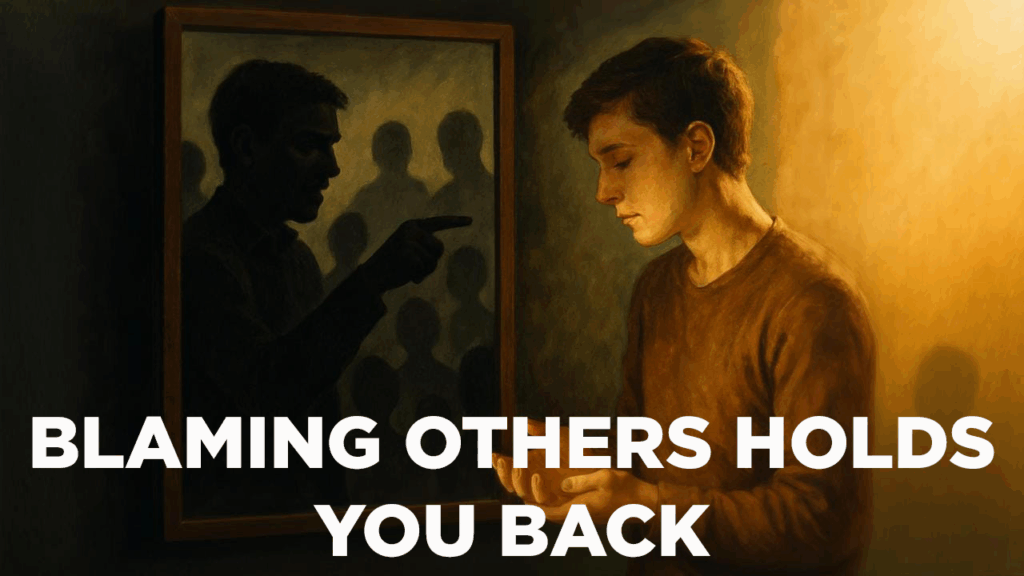
Don’t you hate it when someone does you wrong? Who wouldn’t hate that? Should you blame them for the mistreatment. Sure, why not, if that’s a fair assessment.

But wait, the title of this is called, “Don’t Blame Other” so what gives?

Ok, ok. Blame is a probably the wrong word. Sometimes, other people are truly at fault for wrong doing. You can’t always turn a blind eye to that. But lets look at this from the perspective of accountability. Not theirs, but yours.

No, no, they did…

Please, if you’re going to be successful in life, you can’t let other people’s decisions run your life. Let me explain.

  1. How We Allow Others To Hold Us Back

You have dreams, you have goals. Depending on who you ask, they might be realistic or far-fetched. It doesn’t matter. What matters is our actual decisions. When we fail to act on our goals, the only person we have to blame is ourselves. So who do we blame? Usually, someone else.

Why do we do that?

Sure, maybe it was someone else who cheated us out of the money we needed. Maybe it was someone else who asked us to help them out with a different project and put off doing our own. Maybe it was someone else whose opinion really matters to you, and they thought your ideas were frivolous.

There’s a lot of reasons we might find blame in others when it comes to accomplishing our dreams. If we can’t find anyone personal, then we tend to go impersonal. We blame YouTube for not showing our videos to very many people. We blame publishers for not even reading the book we submit to them. We blame the government for our poor health because they allowed GMO foods into our grocery stores.

Lets not forget God. Often we blame him for anything and everything that goes wrong in our lives, especially when we can’t find anyone else to blame. Why did I get this disease? Why did he take my loved ones. Why are his followers such hypocrites.

Have you noticed the single person in here who we don’t blame? That’s right. Its ourselves. We’re always happy to take all the credit for any good accomplishment in our lives, but we hate accepting blame for ourselves.

But legitimate things do affect our success in life. I’m not arguing that. When my pool business failed and I lost $500,000, as much as my house was worth at the time, I tried for weeks to find someone or something else to blame. Was it my partners, was it my employees, was it the market, my customers? I could write a list of all the things that went wrong, and happily assign blame. What hurt most, was seeing how other pool companies were starting up at the same time and succeeding.

That pain came from knowing that some other entrepreneur was successful, and I was not. In the end, I had to place the accountability squarely on my own shoulders. Once I did that, I was able to re-contextualize all the things that went wrong. I turned those failures into learning experiences, so that next time around, I would know where my blind spots were. As a business owner, the buck starts and stops with you. Sure you need to assemble a good team around you, if you can, but if you’re risking your hard earned money, or that of someone else, you are responsible. So accept that responsibility, and get to work!

  1. How To Break Your Cycle Of Blame

Is it too hot outside to work? Do your feet hurt too much to work? The easy answer will always be yes.

I’ve been blessed that one of my superpowers is to always take the hardest way possible. Maybe you’re saying that doesn’t sound like a superpower, more like a weakness. Sometimes I might agree with you. But here’s the thing, I don’t always like working in less than ideal conditions, but I always love looking back on my accomplishments, seeing the hard that I pushed through, and feeling proud of it.

It’s like hiking a mountain. I went on a hike once, worst hike of my life. I was with two other guys, one who was an athlete, one who never got off his butt and away from his computer screen for more time than it took to go to the bathroom.

So we start hiking this mountain, one of the tallest ones around us. It was to be a half day hike. I’m pretty good at hiking. I’ve done enough of it, am conditioned for it, and I was looking forward to it. Our pale friend who just saw the sun for the first time that year, was not so conditioned.

While me and my athletic friend had planned accordingly and brought enough water for ourselves, probably a liter or two each, the other guy had instead brought a backpack with a 12-pack of Gatorade. That in itself wasn’t terribly odd. What was odd, was that within the first hour of the hike, before me and the other guy had even touched our own waters, and before we were even a quarter of the way up the mountain, he had drank all his Gatorade.

It wasn’t long after that, when he started showing major signs of fatigue and heat exhaustion. Not wanting to turn back, he insisted on continuing. Knowing that I could probably handle the hike with less water, I gave him most of mine, saving just enough to wet my throat for the remainder of the hike up, where I would refill my water on a snow-cap.

I underestimated the length and difficulty of the hike. The last quarter of the hike became more of one where we had to crawl on all fours, just to make the final ascent safely. By the time I got to the top, he had drank all my water, was about to have heat stroke, and I was now entering heat exhaustion also.

Luckily, we found the snow-cap at the top and replenished our water, but if you’ve ever been heat exhausted, you might know that it doesn’t go away once you’ve cooled down. We rested for a good hour up there, and the one friend was ready to give up and die up there. I was feeling pretty miserable too, but we talked him into going down, and would you believe it, going down, because of our conditions, was harder than going up.

There were times that I, in no good shape myself, had to help the other guy down, as he was pretty well shutting down. By the time we got back to the car, I was about to start dry heaving, and he was nearly comatose.

Here’s the thing though, I’m glad I did that hike. I’m glad that I was in a position to help that other friend make it down the mountain. I’m glad I made it to the peak. Could I have blamed him for not being in shape? Or for not turning around? Or for taking all my water?

Sure, but what good would that have done. I saw a lot of beautiful country and wildlife, had fun with friends, and I survived with a cool story to tell. I felt so miserable and sick, and maybe I even entertained blaming him for a while, but I was the one who chose to give him my water. I was the one who, even though I felt miserable, was still able to get him back off the mountain. I pushed through the pain and did something good.

Through it all, I became more experienced, gained a little more wisdom, and became a little more resilient to hardship.

That’s the trick, push through the hard times. Difficult things refine us. They keep us from being overwhelmed. They let us know that our limits really are more than perhaps we give ourselves credit for.

And if we do have legitimate limitations to our abilities, we can always use that creative brain of ours to find a work-a-round to accomplish our goals. The adage: Where there’s a will, there’s a way, has endured through the generations because it is true.

Don’t blame anyone but yourself, and reach a little further. Let your ambition take accountability for itself, and you can do wonders.

Filed Under: Blog

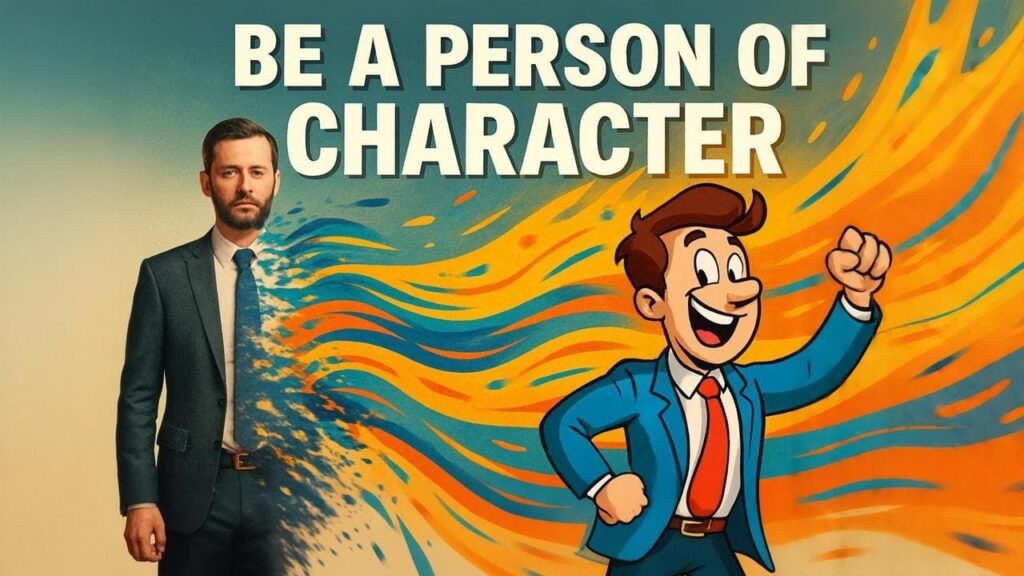
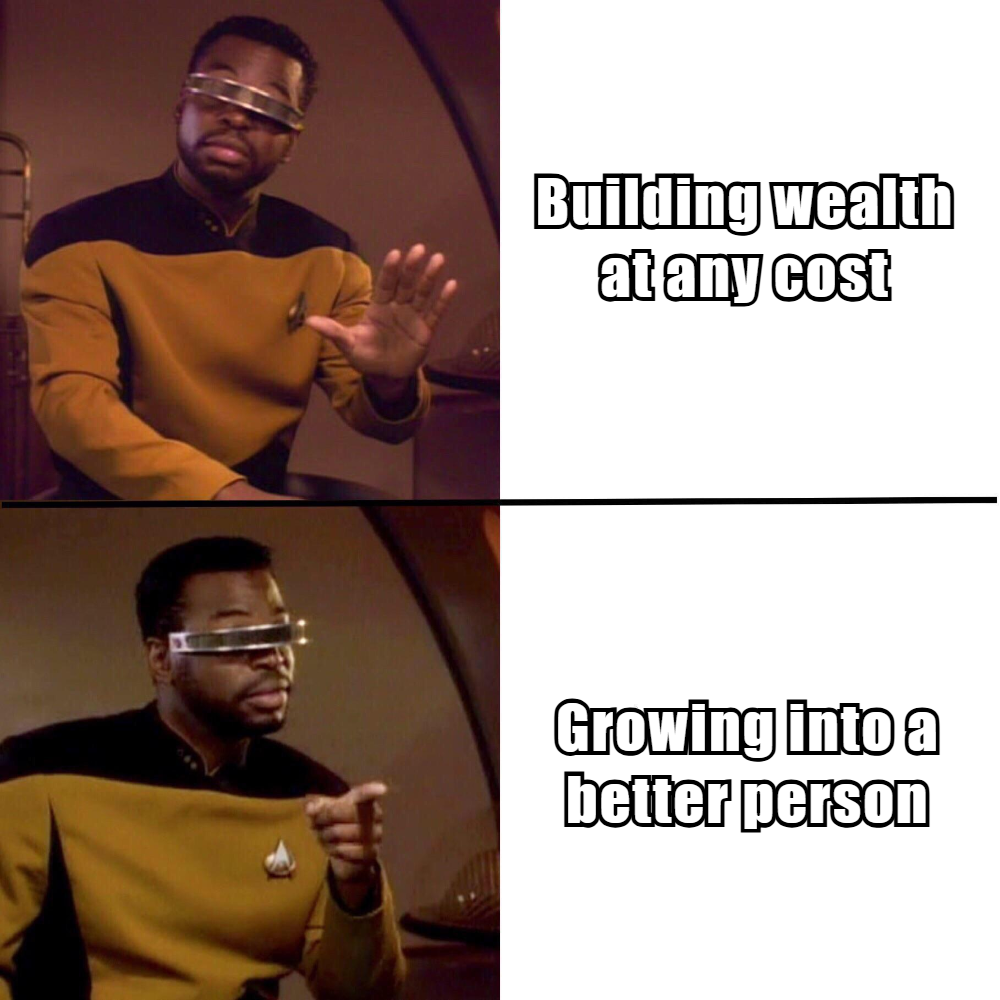
As I kick off the important lessons I’ve learned over the last 10 years of getting ready for my major career change, I knew that I’d be doing you a disservice if I jumped straight into the financials and skipped the character building skills you’ll need to be successful.

Warren Buffett, when asked what you should invest in first, made a point that you should invest in your education. Making money, and making businesses that are successful, takes more than just marketing know-how.  They take leaders, people who have character.

So what does a person of character look like? And how can I be that person?

  1. Changing Your Personality Is Impossible

Lets face it, there is nobody else just like you. And just as you are unique, there is no reason that you should try to be someone else’s uniqueness. If you try, you’ll fail. You don’t need to be somebody else. You can build character by being the best you that you have ever been.

This is called being genuine.

So how does one move on from there, and become more than they currently are? It comes from doing the hard work of self-evaluation, and self-improvement. Trust me, this is monumentally difficult. But it is in doing difficult things, that we find the most growth.

Back when I started my 10 year prep plan to becoming a writer/independent filmmaker, I read a few books by John C. Maxwell. I strongly encourage you to pick up some of his book. In them, he emphasizes creating a growth plan.

This isn’t just something where you say I’m going to be better this year than I was last year, no, this is an actual goal-based plan that you can measure track, and evaluate. I was so inspired by this at the time, that I became a religious growth plan fanatic.

On my computer at work, every day, my screen would first boot up with my growth plan. I’d see an inspirational quote that applied to me at that time. I would read it, and try to live it. Often it was a verse or set of verses from the scriptures.

Then there was my spreadsheet, because I’m big into spreadsheets. In that spreadsheet, I had yearly, monthly, weekly, and daily goals. I updated this thing every month, and worked on the habits and attributes that I most wanted to solidify in my life.

Every year, I evaluated my progress, added new qualities that I wanted to have in my life, and made new goals and plans on how to achieve those things. There were multiple categories too. Some were spiritually based, some were character based, and some were family based. Few of them were financially based. My goal with this was to become the best person I could be.

I never wanted to be just like anyone else, because I loved who I was. Keep in mind, that I was an introvert, never popular, and often unsure of myself. You don’t have to be the most charismatic person in the world to love who you are. I’m still introverted. I’m still not a popular person. But I can talk to people. I’ve learned to be a salesman. I’ve learned to be articulate when the time comes for it. But for many of the qualities that I don’t have, I had to work hard at them, and I had to push myself beyond my comfort zone to achieve any level of proficiency in them.

I’m still the same me I was before, I’m just a better me for all that effort.

  1. What Characteristics Should You Focus On?

Just as in my growth plan, I suggest you break this down into categories. Keep in mind that even though I place some of these in one of the categories, working on them doesn’t just benefit that category, most of these cross into all categories. The categories are more to help you brainstorm ideas that you might not normally consider applicable to your overall goals, yet if you think about it, they impact every aspect of your life considerably.

  1. Business

Salesmanship, marketing, integrity, work ethic, service, organization, customer relations, employee relations, problem solving, etc.

  1. Spiritual

Sympathy, meekness, desire for righteousness, mercy, purity, peacemaker, long-suffering, charity, virtue, honesty, sincerity, love, faith, etc.

  1. Morals

Accountability, courage, boldness, compassion, discipline, adaptability, creativity, appreciation, assertiveness, authenticity, collaboration, confidence, kindness, wisdom, ambition, etc.

You can make other categories up if it helps you come up with character traits that you find admirable and would want to incorporate into your life. This is just an example.

  1. Why Go Through All That Effort?

Life is about growth. We want a growing family, a growing business, a growing economy. Humans are programmed to feel better about themselves when they have a growth mindset.

When we grow our personal strengths and character, we find more joy in every day living. Our family and friend relationships a more fulfilling, and we discover that success is more attainable in business and in life, if for no other reason than we have a positive outlook on where we are now, and where we are going.

One of the most depressing things in the world, is stagnation, and backtracking. These things can be addictive and harmful, but all too easy, whereas character growth is hard but rewarding in so many ways. Everything worth doing, generally is hard.

After just coming out of foot surgery, one of the 1st things that I’m required to do is start stretching and strength training. Sometimes it hurts. Sometimes I’m tired and don’t want to do it. But as I stick to my physical therapy, my foot gets increasingly better, I become more mobile, and I’m able to do more than I did the week before.

If you can learn to adopt a growth mindset, even establish a growth plan to keep you on track, and constantly work on adopting and improving all those desirable characteristics that define a good person, you’ll find that the world opens up to you.

Pessimism, depression, and anxiety lose their control over you. Grace, defined as enabling power, starts to take real hold in your life.

Filed Under: Blog

Let’s take a trip down memory lane for a minute. What was your childhood like?

Assuming you came from a good family and life was mostly non-chaotic, you probably had a pretty good childhood. Of course that is assuming a lot. We didn’t all grow up with the ideal circumstances. And if that is you, do you have kids now that are growing up with more stable foundations? Or do you know of someone with kids that are doing good?

Here’s the thing, kids are amazing. They embody everything innocent, curious, and fun that life has to offer. They are sponges, always trusting and eager to learn. They are the epitome of a positive thinking human.

Is it any wonder that Jesus Christ urged all his followers to be more childlike?

At some point in our lives, the wonder and amazement of living starts to take a turn towards the cynical and sometimes pessimistic thinking that we often see around us. But this doesn’t happen to all of us. Some of us still maintain that positive outlook on life. These people are truly lucky. Lets talk about why.

  1. Why Is Being Optimistic, Positively The Best Mentality To Own?

There’s a lot that can get us down. Sometimes its the unforeseen consequences of our actions, regardless of how well intentioned they started out. Sometimes life is just hard, for no fair reason at all. There are a lot of people who can tell you a lot of reasons why their life is so difficult, but you don’t want to listen to that, because your challenges are just as, if not infinitely worse off.

The more we dwell on the guilt, the hardness, the unfairness of everything, the more it leads us into depression and anxiety. Then there are those annoying people, who are always chipper. They have it all going for them. Trouble seems to bounce off them, like they were some Marvel comic hero.

How is it that they got so lucky? Here’s the truth, they have just as much crap happening in their life as you do. For whatever reason they have somehow managed to adopt an attitude of gratitude, an outlook of optimism, a patter of positivity.

This mentality allows them to see the good in every situation. Negative consequences for their actions turn into meaningful learning experiences. Illness and tragedy help them see the value in their relationships all the more. There is one other thing that they get, that negative thinking can never grant, and that is a higher degree of success in all their activities.

Rather than feeling overwhelmed by tasks that seem insurmountable, they dive in and get the work done. Employers trust, hire, and promote them over negative thinking people, because even if they are just as good if not worse than others, they don’t complain and they lift the mood of the company culture. Their attitude puts them in a position to learn and grow more quickly.

Positive thinking also helps you out in your family. People want to be around others who lift them up and make them happy. You cannot do this if you are always focused on the negative.

  1. What About Being Realistic?

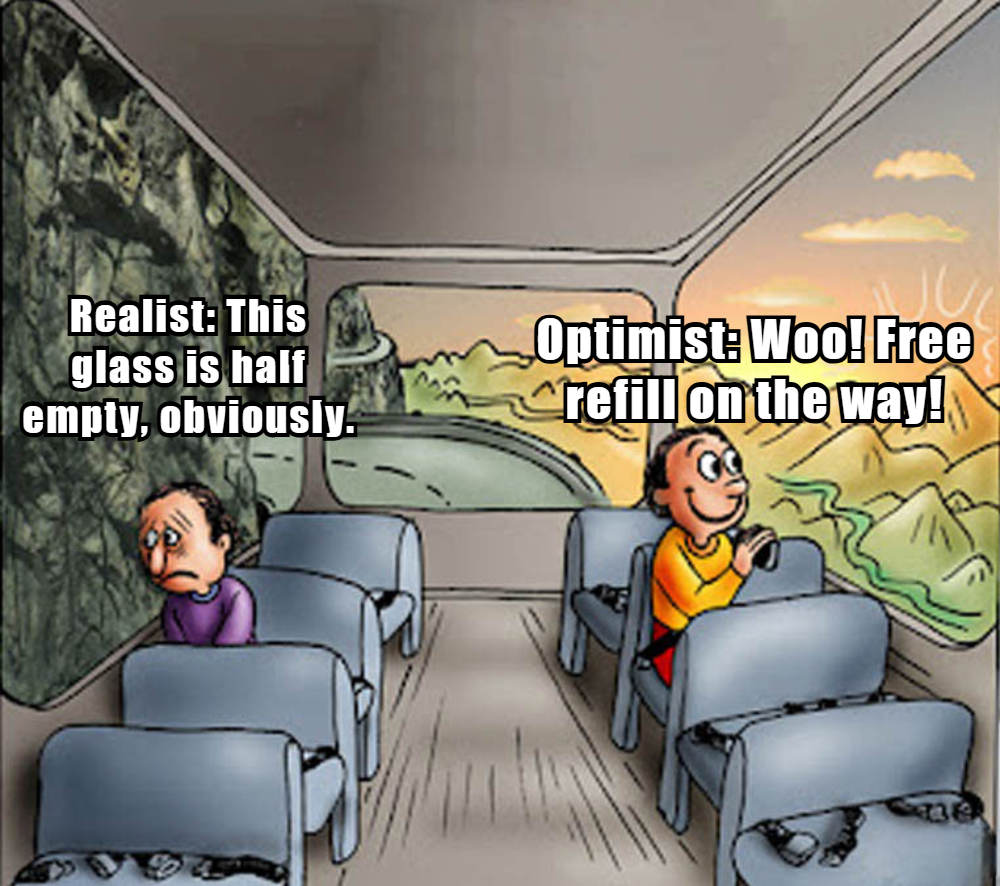
There is a real place for being realistic, even for the perpetually optimistic. Sometimes, too much optimism can lead to overconfidence and error. Tempering positive thinking with a degree of realism should always be considered, however, it can be all too easy to allow realism to morph into pessimism.

Was realistic thinking a factor in Amazon’s founder—Jeff Bezos career? He thought outside the box and created a hugely disruptive company. How about the Wright Brothers? The examples are too numerous to expound upon.

Did they still face a huge amount of risk in their endeavors? Of course, but risk isn’t always bad. Stupid risk is bad. Climbing a cliff without any safety gear, I would argue that is stupid risk, even if it is highly optimistic of the free climber to do.

I was blessed with an optimistic outlook on life. I think my faith in God had a lot to do with it. Not ever fully growing up helped a little too. Being a positive thinker is what attracted my wife to me. Being a positive thinker is what allowed me to rebound after I lost $500,000 in a failed business launch.

I’ve got two foot surgeries this year that are crippling me for 4-6 months each, with about 2 years of physical therapy to look forward to after that before I can be truly recovered, and where everyone else is offering their sympathies, I’m looking forward to it. I’ve prepared my life for the disruptions, so that even when I’m stuck in bed for months at a time, I’ll have work to keep busy with, and no reason to feel frustrated, confined or sorry for myself.

This positive thinking has been a huge superpower in my life, but what if you struggle with this?

  1. How To Overcome Negative Thinking

This is so hard to do. We all know and want to be better, but our feelings are so ingrained in our subconscious, that it’s next to impossible to reach in there and flip it like a switch.

So can it even be done? Absolutely. There are multiple methods. I would suggest that one of the strongest sources of healing from this type of thinking can be achieved through faith in a power that is higher than us. Yes I’m talking about God.

Faith in a God that has a plan for us, can proffer a powerful change in how we think and feel.

Also, creating an actual goal based growth plan can help. I’ve done this, and it can really change your life. Rather than listing out your problems, because you’re already very familiar with those, list out the good qualities you already have, the blessings you’ve already received. These are the things, especially as we compare ourselves with others, that we tend to forget about.

Then once you see all the good in your life, create goals around the good you still want to add to your life. Make the goals small enough that you can achieve them, but big enough that you have to stretch for them.

Create pre-programmed responses for when common disappointments happen. Craft these responses in a way that you think should make you feel better, even if in the beginning it doesn’t work.

Talk to yourself as if you were already there. The lies you tell yourself will eventually become the truth you tell yourself. It may sound funny, but your subconscious can be convinced by your conscious persuasions, though some might take longer than others to convince.

In the end, it truly is a blessing to have a positive outlook on life. But if you feel that you’ve lost that, for any reason at all, find a way to gain it back. Lost loved ones want you to be happy, your employer wants you to be happy, your employees want you to be happy, and your living friends and family want you to be happy.

You can do it, I believe in you!

Don’t forget to check out my YouTube Channel. I have a fun skit about being positive:

https://youtu.be/0TS9WEe9-1o

Filed Under: Blog

When you think about culture, what crosses your mind? Do you think of nationality? Race? Identity?

Often we think of culture as sacred, something that is meant to be preserved, no matter what. There is however another side to culture that we should consider, a darker side.

I’m talking about successful vs unsuccessful cultures.

But wait, isn’t he definition of culture, a pattern of behaviors that has lasted for generations?

Yes, but that doesn’t mean that they are all as good as the other when it comes to helping you as an individual. I don’t plan on breaking down any culture in particular, but I do want to address some of the things you should be looking into when evaluating your own culture.

This is hard stuff, because culture is so ingrained in our subconscious mind, that we might know readily see it, but lets try.

  1. Is Your Culture Holding You Back?

I’m sorry, but this is who I am, and its who my parents were before me, and so on. This is and always will be a terrible excuse.

If you ever find yourself playing the blame game, chances are, you’ve adopted a toxic culture. You are assigning all your problems to someone else, and then living with those circumstances. Blame is something we bestow on others to make ourselves feel better about the woes that beset us.

Sometimes this blame game can also be played against ourselves. When this happens, we find ourselves with the next cultural problem, self-doubt. We can’t ever get anywhere, because we aren’t good enough, or every time we try, we mess it up. We shame ourselves and our decisions. We learn that we are never going to be good enough.

Why is that even a cultural thing? Because if you’re telling yourself you’re not good enough, it’s likely because the people in your life were the same ways as you are. They might be supportive in all you do, they most likely love you, but their toxic self-doubts about themselves only perpetuates that sort of thinking in you.

The people in your life can also, unintentionally also act like crabs in a bucket. Maybe you’ve heard that if you put crabs in a bucket, they’ll keep pulling each other back down, so that none can escape. We do the same thing with those we love most.

Maybe we have an idea, maybe its a good one, maybe its ambitious. Great! Your family and friends admit as much. Maybe they also admit that it would be cool if somebody did that idea some day. By this, they mean somebody who is not you.

Subliminally, they are casting doubt on your plans.

I remember in my childhood, I told a family member that I wanted to be a filmmaker. “That’s great,” they said. “Only, we don’t know anyone in that business, and you have to know the right people.”

As a young kid, that short forgotten conversation meant a lot to me. It was the day my dreams were crushed. I lived with that, clear up until about 10 years ago, when I rediscovered my desire to be a filmmaker. Only this time, I had the confidence to break free from that doubt.

What sort of shackles of the mind are holding you back from chasing your dreams?

Chances are, they’re so strong and tied to your upbringing, that your ambitions might feel next to impossibly to achieve.

  1. How To Break Free

So how do you go about fixing the negative aspects of your culture? Should you run away from all your family and friends and start over?

Chances are, you’ll take that culture with you. In fact, if running away sounds like a good option, look back and see if any of your family and friends ever did something similar. This little exercise might surprise you.

So what do we do?

As a religious man, I’m exposed to several inspiring messages on a regular basis, one of them is from the leaders of the Church Of Jesus Christ Of Latter-Day Saints. They have often invited people to come to Christ, not to leave their culture behind, but to bring the best of their culture with them, and allow the church to add more to their lives.

I love this line of thinking. When we are looking to change our culture into something that better benefits us and our children, look for the good in the culture you have. Acknowledge the bad, but focus on the good, and figure out what you can add to it, that will improve it. Otherwise, you might get stuck right back where you started, blaming your culture, and turning your back on all that is good in your life.

The world is so full of good examples, inspiring people, and worthy pursuits, that you should never find yourself at a loss when it comes to seeking self improvement. A lot our circumstances can be directly affected by our mindset. If you take yourself, where-ever your culture has placed you, and work on improving your mindset, you can create a whole new world of possibilities that your current mindset never before dreamed was possible.

Filed Under: Blog

Today’s article might be a little different. I dive into my own goals and processes to find my way. Follow along and see if this line of thinking can be valuable to you, as you work towards your goals as well.

For this topic, I’ve been I’ve been asking myself a lot lately, who cares about me? I’m not talking about whether someone should care about you as a person, just in the goals you’re working towards selling them on.

For over ten years now, I’ve been learning how to write novels and make movies. It’s my dream job. But with so much entertainment out there in the book and video world, how is anyone going to find me, let alone want the art I’m creating?

As I get started into this new career, I’ve been taking 2025 as a transitional period. I’ve been stepping back from my construction job a little, and been focusing more on my writing and film making.

Granted, I’ve also been getting two major foot surgeries this year, one in April, and one in September, which have prevented me from being terribly mobile. So aside from my writing, I’ve bee working on building a YouTube Platform.

If you’ve ever done anything like this, you probably know, it can be a little disheartening. Lets talk about it.

  1. Getting Noticed Amidst All The Noise

When I first started self publishing my books, I was doing so under the pen name of B.C. Crow. This was because they were my first books, and I felt they weren’t going to be up to the standard that I wanted to write at. So I chose to publish them, in hopes of recouping some money. I was able to sell several copies, though I quickly lost ambition to sell more, because I felt they needed to be better, and I didn’t want somebody to pay good money for less than stellar storytelling.

Flash forward to today, my writing has improved markedly. But did I spend a lot of time promoting my last book? No. In fact, I almost published it silently, hoping instead for a slow and steady buildup of momentum, because I didn’t want to sink a lot of marketing into that book, only to have it go wasted for my readers by not having another good book published and waiting for them.

I am getting closer to having that next book ready for publication, and will thus be starting a larger marketing push, however there’s still that nagging fear in the back of my mind, will anyone buy it?

This is the same with my YouTube channel. I’ve been pretty steady about posting content that I think would be helpful for someone wanting to follow in my same footsteps. However, starting out from nothing, hoping it turns into something is tough.

I often ask myself, am I doing something wrong, right, or does it just take time to get noticed? Will it ever get noticed?

These doubts can easily get a person down if they’re not careful.

  1. How To Keep On Keeping On

There’s a couple of thought I have on this. First is that you need to make sure that what you’re doing is relevant, that it solves a need that someone else has. The question is, how do you know what their needs are?

I often feel like most marketing advice is telling me to read my audiences mind, when in fact, I barely even know who my audience is. In fact, I feel I have two separate audiences. One that should be interested in my style of fiction, both literary and visual, and then there’s the people like me, who were enjoying their jobs, life, etc, but then got addicted to writing and film-making, and wanted to someday make a career out of it.

What I don’t know, is how many people out there are there like that? Also how many of them are willing to test out my works of fiction? I don’t know.

I can guess there’s a healthy amount, because some of the places I’ve learned from or been inspired by on YouTube, have had decent sized audiences, but are they all tapped out? Will they find my content valuable?

A lot of marketing advice seems centered around people who already have some track record, not those who are starting from scratch.

My other thoughts on figuring this all out, is to ignore all the noise and do what you’re passionate about. Passion often creates its own momentum. The problem with this line of thinking is that you could get trapped in a long-term play that never pans out.

The passion project though, does merit some consideration. By enlarge, despite diversified tastes, a lot of people are more similar than you might think. We all face many similar challenges with work, money, family, health, and confidence. If there’s something you’re passionate about, chances aren’t too far off that there are others with similar tastes, even if they don’t know it yet.

I think finding a marriage between knowing and catering to your audience, combined with following your passion is helpful. The trick is, doing what you’re passionate about, then finding your audience and guiding them to see why your perspective is relevant to them.

  1. Using The Tools Available

YouTube is not the endgame for most of us, its a tool. All the marketing subscriptions to help leverage your YouTube Channel are tools as well. Blogs and Facebook and so many other things out there will likely never be your endgame, they just help you find and understand your audience.

So for me, and maybe for you, the game isn’t about having the biggest social media following. The goal is to know who I can provide value to, and then to supply them with that special brand of value that I’m so passionate about creating, without wasting tons of money and effort chasing down the wrong audience.

Getting monetized on YouTube is not what I want to pay my bills with. Getting monetized on that platform would for me, serve only to justify that I’ve found my market, and to help support my development of that audience.

So as I evaluate my current strategy on YouTube, I realize that since I want to make my career from writing books and making movies, that the content I create on YouTube might not develop that type of audience, since my content is just trying to help the people on my same journey.

Perhaps some of them will appreciate my stories as well, but there is a disconnect. So would it be smart of me to change my tactics?

Probably. 

Could I pursue both at this time?

Sure, but it won’t likely forward my end goal.

So what should I do?

I’m conflicted here. I know what I should do, I should harmonize my content that I put out there, with the fiction I want to be writing. At the same time, there’s a lot of important lessons that I want to produce content over, for no other reason than the fact that my family has expressed an interest in learning what I know about finance and other things that could help them in their lives.

Whenever I’ve tried to teach them about the things they want to know, the lessons get long and they get overwhelmed. So breaking them down into 10-15 minute YouTube videos, with some fun skits mingled in, is an easily digestible way of teaching them.

So yes, I want to keep producing the YouTube content and Blogs that I want them to learn from, but at the same time, I need to find a better connection with my audience.

I—in fact, had not come to this conclusion prior to starting this article. You have just witnessed my self-revelation in the making. So the next step for me, if I choose not to foolishly ignore my own advice, would be to find ways to change my approach.

Can I still make content for my family and storytellers like me?

Yes, I believe so, but I need to be more strategic about how I do this. The first thought that comes to mind, would be to lean more into my skits, and less into my lectures at the end of the skits. Kind of like when you watch a movie, then stick around to hear the commentary or behind the scenes that went with that.

This creates another problem, finding the time and budget to make skits that are more than 1 or 2 minutes long is hard. At some point, I’ll have to start hiring someone to help me, rather than just doing them all myself, with the occasional help from my wife.

That or I can take another approach, and forget about my plans to teach my family and followers from my YouTube content, opting instead to talk about fiction, and movies, and such.

I guess I’ve got some thinking to do. But for now, I hope this exercise has helped you see some of the questions you could ask yourself as you’re looking to discover your audience and connect with them.

As for me, for the near term, I’ll keep posting as I’ve planned, but I might start making some small pivots to be more relevant.

If you have any thoughts, comments, questions, please address them to the comments section in the YouTube Video associated with this topic at:

Filed Under: Blog

Have you ever wondered how you can make it as an artist, and still provide financially for you and your family?

What if your career in the arts takes too much time to start getting noticed and generating money?

These are real world questions that all of us need to answer if we want to pursue a creative career, especially if it’s in a field that is struggling to make a profit, like today’s market.

These questions and more went into my decision to spend ten years preparing for my career in art. Let me share with you how I’m trying to mitigate some of those challenging risks as I go forward as an independent writer and movie producer.

  1. Don’t Rely On A Single Income Stream

Maybe money doesn’t matter to you. Perhaps you feel that the pursuit of cash is capitalist propaganda and is inversely correlated to the pursuit of happiness. I’m not like that.

At the same time, I’m not what I’d consider materialistic either. I’m fine driving a drab car, I’m okay with mediocre living conditions. I’ve been there. But I’ve also learned that money makes the world a much easier place to navigate when you have it, especially if you’re raising a family.

I was also painfully aware that if I pursued my dream of being a writer/producer, there would be a few years, where I likely wouldn’t make any money at all, perhaps I’d even lose money. Considering that movie making is an expensive way to express yourself, I didn’t want to start this career financially unprepared.

For that reason, my 10 year plan to get ready for this new endeavor, included finding ways so that I didn’t have to rely on my art to be financially independent. First off, I had to learn what could generate money for me when I made the switch, and which would still allow me to work on my writing and filming. At the time, I knew how to work hard, and that was about it. I didn’t know how to invest. So began my journey to becoming financially stable.

Over the course of those ten years, I learned as much as I could about the stock market, real estate, and business. Since I was in the home development and construction field, understanding how to invest in real estate became my first learn.

I learned that buying properties, improving them, and selling them quickly was one of the best ways to grow your money fast. I made a career out of buying vacant land, developing it into subdivisions, building homes on them, and selling them. It took a lot of work, and I had to reinvest every dollar I had into the next project, and I still had to take out massive loans to do these sorts of projects. All the while, I had to deal with market fluctuations. This is not a career that is risk free, especially since I know plenty of developers who went belly up over the same time period that I was doing this. But it forced me to save money, learn business and marketing skills, and get me on a good path.

The next real estate lesson I learned, was that buying and holding cash flowing real estate was a good long-term investment. Unlike buying, improving, then flipping properties, this one requires a much longer time frame, which can be hard if you don’t want to tie up your cash that long. Like the other, loans can be a helpful tool, as long as you’re smart with them, and don’t let them ruin you. The profitability here is smaller than flipping, but its a little more steady.

For me, I started by turning over my money as often as possible, but now that I’ve got a little saved up, I’m switching to building long term cash flowing rentals units. These should provide me with a steady stream of income to help keep me solvent, even if my studio doesn’t make any money for the first few years, or ever.

Another avenue of income is the stock market. It took me a while to figure this one out. I didn’t want to be a day trader, though that is always tempting, because I don’t want to spend every day, stuck in front of my charts when I could be writing or film-making.

So I learned how to trade options on a monthly basis, creating cash flow in a safer, steadier way. This is not without risk, but on average, I can make a profit over time, and I only have to check the markets for 15 minutes or so each morning, freeing me up to do what I really need to work on.

I’ve also come across other investment opportunities over the years that have intrigued me. I did some angel investing for a vitamin company, which turned out to be a great investment, and currently pays me over $4000 each month. I Also learned about investing in oil rigs, and other financial tools that can generate cash flow.

  1. Take The Time To Learn About Investing

There is no doubt that investing is a complicated world. There are many risks, which some people find too scary to get involved in. I have lost a lot of money in some of my investments. Some of that is the luck of the draw, and some of that turned into important learning opportunities.

What I could not have done, was any of this without taking the time to learn about it, and pinching every penny to put into it.

In the mornings, I worked on improving my art. Then I went to my day job for 10 hours each day. When I got home in the evenings, I spent a lot of time researching and learning. That’s even after I had my degree in finance. What I did not do, was go home and play video games and watch TV all night.

Nor did I spend hardly any money on frivolous things. For Christmas, especially early on, my wife and I gave ourselves a $25 budget for each other. You can’t imagine how creative we got, and those were fun memories. Even our Christmas tree was cut from the branches of a tree that had already blown over in a massive wind storm.

In the end, I wanted my ten years of prep to learn all I could about investing, but also have the money to put that knowledge into practice. Now, ten years later, I’m making the transition, and I’m incredibly grateful for my dedication to learning all this, and to my wife’s dedication to living a thrifty life. I’m in a great position to make a go at this artistic lifestyle that I’ve been preparing for, all these years.

If you want to learn more about how you too can safeguard your future, follow me here, or on my LightMinded Arts YouTube channel, where I’ll be sharing a lot of these life lessons and financial essentials. I’m putting this together for my wife and kids to learn, and I’m inviting you to join me for free.

Filed Under: Blog

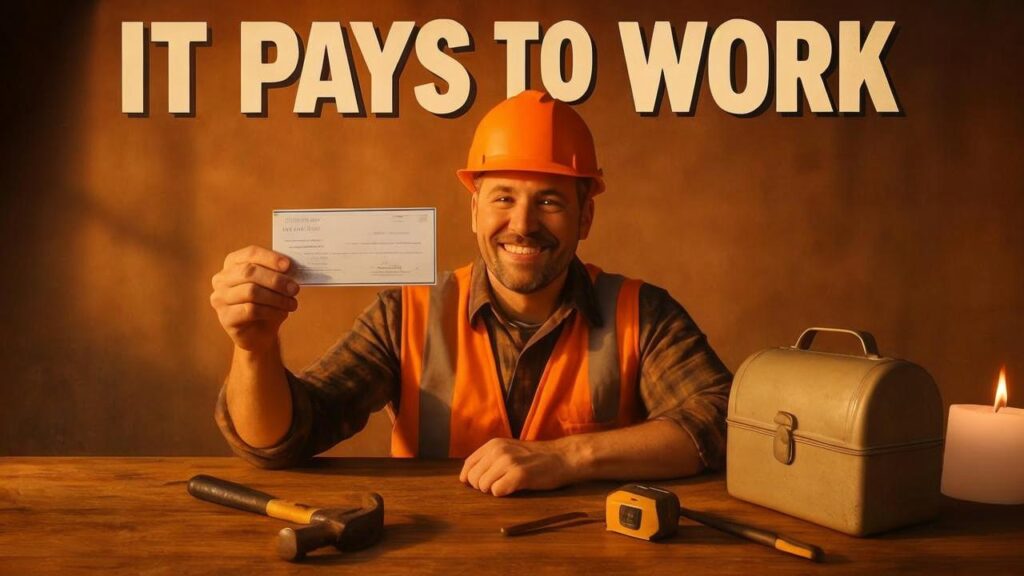
If I was to die tomorrow, one of the biggest life lessons that I think my family, or anyone could benefit from, would be to develop a strong work ethic.

I’m not just talking about showing up and working a full 40 hour work week either. Rare is the week when I only work 40 hours. I’m talking about showing up for life with a burning desire in your gut to get to work.

This work ethic is doubly important for any of us looking to get into an artistic career, since many of us might need to work extra hard just to make ends meet.

  1. By The Sweat Of Thy Brow…

We read in the bible, that when Adam and Eve were cast out of the garden of Eden, God told them that “By the sweat of your brow you will eat your bread.” He basically says that they’re going to have to work for their sustenance. He wasn’t necessarily commanding them, but rather, letting them know how it was going to be.

If you think that you can coast by without learning how to work hard, you’re going to have a miserable time of it. But what about those who hate their work?

Well, if work was fun, it would be called play.

artist work ethic

Having said that, work doesn’t have to be terrible. In fact, I actually really enjoy working. I remember feeling some measure of anxiety over this when I was in high school, knowing that I was soon to be expected to assume the responsibilities of an adult and work full-time.

I couldn’t fathom the pressures of that much work. But I quickly found out, that when I was working, not only did I have more money in my pocket, but I felt a deep sense of satisfaction with the value that I’d created in the world.

One of my all time favorite quotes that I think everyone should have posted on their refrigerator, is by a prophet from the Church of Jesus Christ of Latter Day Saints:

 “Let us realize that the privilege to work is a gift, that power to work is a blessing, that love of work is success.” -President David O. Mckay

I can honestly attest to this philosophy as being one of the major guiding lights in my life, and I believe that if you were to embrace this also, that you would find a lot of success in your life as well.

  1. How Much Should I Work?

Having a strong work ethic doesn’t necessarily mean that you work every waking hour, though it can spill into that.

I remember a rich business man being asked how he balanced his work and family. He laughed and said that he didn’t believe in balance.

I tend to disagree with him, but I’ll admit that I too have been called a workaholic by some in my day. Balance is a tricky thing, because I know a very successful business man, who works a hundred hours each week, and considers his life and family life in perfect balance. And for them, it works.

For me, my wife made it clear that she was unhappy whenever I worked more than 50 hours a week. So I cut back my hours to accommodate my family’s needs.

But at home, I don’t consider my job done. I may not be working on my career, but I am working on my family. I want to teach my children, I want to do the chores that my wife would otherwise be left with, and I want to be there for them all.

Just because my day job ends at 5pm, doesn’t mean that I’m spent for the day. My wife is a stay at home mom, and do you think her job ends at 5pm? Not a chance. If she can remain productive, I can too, my responsibilities just change.

And the thing is, I love it. I find a great deal of satisfaction from all work I pursue. It feels so much better than idling my time away. And would you believe it, I still have time for play, for service, and for relaxing.

Having a good work ethic is about showing up, putting your all into whatever you’re doing, and being proud of it. If you’re struggling at finding the joy in working, maybe you’re in a toxic environment, or maybe you need a little tuning of your attitude towards it. I firmly believe that work can be a fulfilling part of your life, because it has been in mine.

And if you’re an artist, knowing how to work well, will increase your value to others who hire you for your artistic skills, and it will help you improve your art, rather than just coasting by on what you’ve already been give a talent for.

Plus, if you’re struggling to get your art sold, you might still need to have other work to get by, and it would sure be nice if you didn’t hate the fact that you had to do this extra work to support your art.

Filed Under: Blog

  • « Previous Page
  • 1
  • 2
  • 3
  • 4
  • 5
  • …
  • 8
  • Next Page »

Recent Posts

  • How Russell Van Brocklen Turned Dyslexia Into a Creative Superpower: Tactical Lessons for Creatives
  • If Life Has Felt a Little Too Weird Lately… You Might Need This Book
  • What a Cop-Turned-Author Taught Me About Not Being a Struggling Artist
  • From Hammer to Hollywood: What Max Shippee Taught Me About Story, Survival, and the Creative Life
  • From Hammer to Human Connection: What I Learned Talking with Wes Towers

About Me

The art of storytelling has always fascinated me. When I think back and imagine a world before modern media, I imagine a parent entertaining their kids around the hearth with fantastic tales true and/or whimsical. Never mind the accuracy of this vision, it’s the way I choose to think of it. It’s also the inspiration for my work, to tell stories that captivate, stories that the whole family can enjoy together.

Contact Us

Menu

  • B-Roll
  • Books
  • Videos
  • About
  • Contact

Recent Posts

  • How Russell Van Brocklen Turned Dyslexia Into a Creative Superpower: Tactical Lessons for Creatives
  • If Life Has Felt a Little Too Weird Lately… You Might Need This Book
  • What a Cop-Turned-Author Taught Me About Not Being a Struggling Artist
  • From Hammer to Hollywood: What Max Shippee Taught Me About Story, Survival, and the Creative Life
  • From Hammer to Human Connection: What I Learned Talking with Wes Towers

Blog Updates


  • YouTube

Copyright © 2025. All Rights Reserved. Light Minded Arts

2026

Light Minded Arts

All Rights Reserved

Site by PDM