
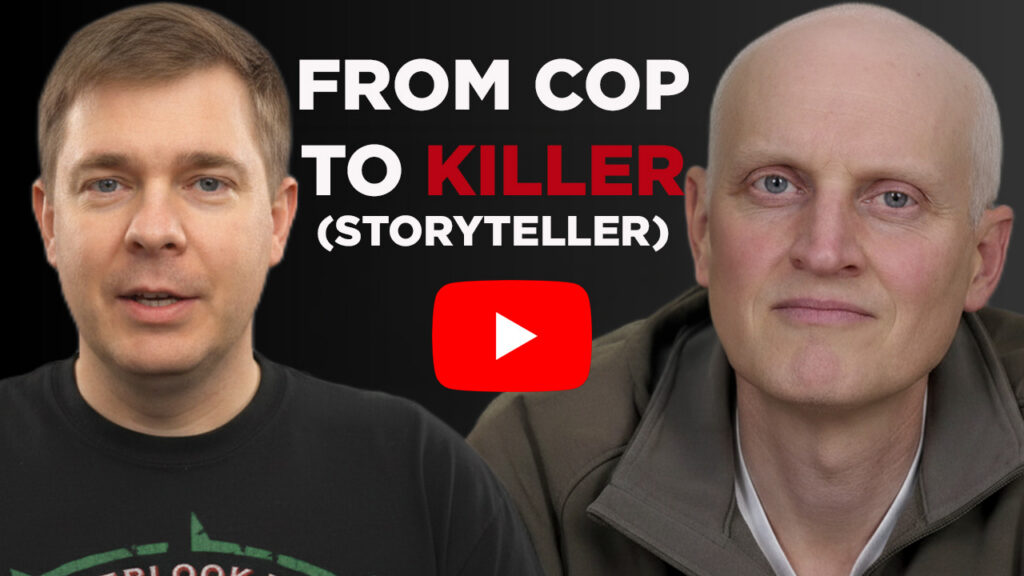
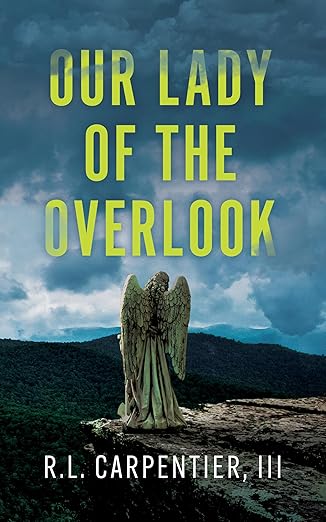
I sat down with Rodney Carpentier (R.L. Carpenter to his readers) and picked his brain for an hour. He’s an 18-year law enforcement professional, a lieutenant counting down the days to retirement, and somehow, in the middle of all that, he’s written and published two crime novels with a third on the way.
But the part that stuck with me wasn’t the résumé. It was the way Rodney talked about creativity with the same grounded practicality he brings to police work. No fluff. No tortured-artist mythology. Just discipline, curiosity, and a willingness to learn the business side of the craft.
And honestly? That’s exactly what struggling artists need to hear.
So let’s break down the lessons from Rodney’s journey—the ones that can help you stop struggling and start working as a creative.
1. Creativity Doesn’t Need Permission—But It Does Need Direction
Rodney grew up writing stories with his mom on Sunday afternoons. Locked-room mysteries. Clue-style puzzles. The kind of imaginative play that plants seeds without you realizing it.
But he didn’t become an author until decades later, after a career in corrections, patrol, investigations, and eventually leadership. The turning point wasn’t a sabbatical or a perfect moment. It was a night shift. An idea. And the realization that waiting for “the right time” was a trap.
“I’m not going to wait around for the time to be right. I have something—I’m going to chase it.”
So often, we all feel the same way.
Lesson:
Stop waiting for the universe to clear your schedule. Start with the idea you have today, not the perfect idea you hope will show up tomorrow.
2. Master the Rules Before You Break Them
Rodney said something that made me laugh because I’ve heard it a thousand times from young creatives:
“I don’t want to follow the rules. I want to do something avant-garde.”
And look—there’s nothing wrong with innovation. But Rodney hit the nail on the head:
“If you don’t master the old ways, how can you make something new?”
He’s right. You can’t subvert structure if you don’t understand structure. You can’t reinvent storytelling if you’ve never studied storytelling. You can’t build a career on vibes alone.
Rodney went back to his college books. He studied the Hero’s Journey. He read Robert McKee. He listened to podcasts. He experimented. And eventually, he found the framework that clicked: For him, it was: Save the Cat.
Not because it’s trendy. Because it worked for his brain.
Lesson:
Learn the craft. Learn the rules. Then twist them into something that feels like you.
3. Writing Isn’t Just Typing—Thinking Counts Too
One of my favorite moments was when Rodney talked about his 45-minute commute. He uses it to talk through scenes out loud, puzzle out plot problems, or let ideas simmer.
If you drove past him on the freeway, you’d probably think he was arguing with himself. And you’d be right.
But here’s the thing: that’s writing.
We forget that sometimes. We think writing only happens when our fingers are on the keyboard. But the subconscious is doing half the work long before we sit down.
Rodney leaves himself cliffhangers on purpose:
“And then she opened the door…”
Stop.
Let the brain chew on it.
That’s a pro move.
Lesson:
Give yourself space to think. Thinking is not procrastination—it’s part of the process.
4. Discipline Beats Inspiration Every Time
Rodney writes in sprints. Ten minutes. Twenty minutes. An hour. Then he gets up, hits his electronic drum kit, moves his body, resets his brain, and goes again.
It’s not glamorous. It’s not romantic. It’s not the tortured-artist stereotype.
It’s work.
And that’s why it works.
Lesson:
Build a system that fits your life. Don’t wait for inspiration—train it to show up on schedule.
5. Your Day Job Isn’t the Enemy of Your Art
Rodney’s job is demanding. Stressful. Bureaucratic. Emotional. And yet, it feeds his writing in ways he didn’t expect.
He understands procedure. He understands people. He understands fear, trauma, and the way small communities operate. All of that becomes texture in his fiction.
But more importantly, he doesn’t resent his job for “getting in the way” of his art. He uses it. He works around it. He lets it support the life he’s building.
And his coworkers? They’re some of his biggest fans.
Lesson:
Your day job doesn’t have to be the villain. It can be the scaffolding that lets your creative life grow.
6. Art Is Emotional—But the Business Is Practical
He didn’t just write a book. He learned how to publish it. How to market it. How to navigate KDP. How to hire a narrator. How to deal with ACX. How to attend conferences. How to network.
He didn’t romanticize any of it.
“Art is business. If you want people to read it, you have to think about the business side.”
That’s the line most struggling artists avoid. But it’s the line that separates hobbyists from working creatives.
Lesson:
If you want your art to reach people, you have to learn the business. There’s no shortcut.
7. Community Isn’t Optional—It’s Fuel
Rodney spent most of his adult life surrounded by cops, not creatives. So when he started attending writing conferences, something shifted.
He found people who spoke his language. People who understood story beats and character arcs and plot holes. People who could challenge him, inspire him, and push him forward.
And he lit up talking about it.
Lesson:
Find your people. Creativity grows faster in community than in isolation.
8. You Don’t Owe the World Perfection—But You Do Owe Your Readers Payoff
Rodney is writing a trilogy. And he said something that every storyteller needs to hear:
“I have checks I wrote three years ago that I need to pay off.”
That’s accountability. That’s respect for the reader. That’s the difference between “I wrote a book” and “I’m building a career.”
Lesson:
Your audience isn’t an afterthought. They’re part of the creative equation.
Final Thought: You Don’t Need to Struggle to Be an Artist
Rodney’s story isn’t glamorous. It’s not dramatic. It’s not the tortured-genius narrative we’ve been fed for decades.
It’s better.
It’s the story of a working creative—someone who shows up, learns the craft, respects the audience, builds systems, and treats art like a discipline instead of a destiny.
And that’s the path out of the “struggling artist” myth.
Not suffering, not waiting, not hoping, but working, learning. creating. And repeating.
If Rodney can write novels between night shifts, court papers, administrative meetings, and a 45-minute commute, then you can build your creative life too—one intentional step at a time.If you’d like to learn more, visit his website at: https://www.rlcarpentierwriter.com/
Leave a Reply