“I can’t keep living like this.”
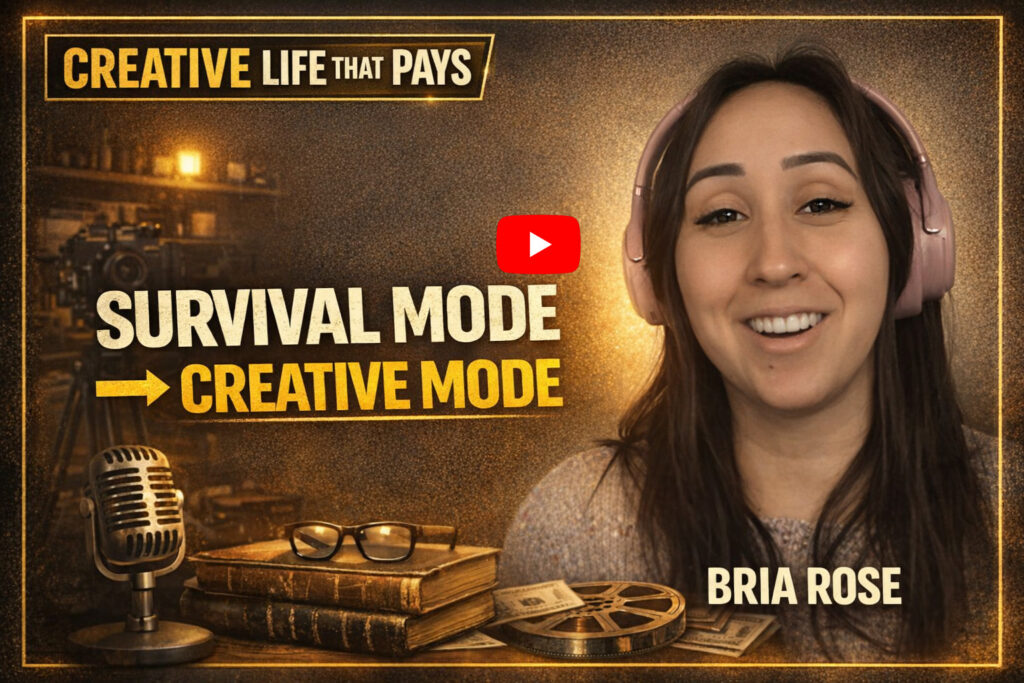
When I sat down with dark romance author Bria Rose, that moment showed up in a way I didn’t expect. She didn’t describe it as a breakthrough or an awakening or a spiritual download. She called it her “villain era.”
Now, before you picture her swirling a cape and plotting revenge, let me clarify: she wasn’t talking about becoming a bad person. She was talking about finally stepping out of survival mode, the version of herself that was always hustling, always pleasing, always pushing through and stepping into the version that actually creates.
The Lie of the “Good Creative”
Most creatives are raised on a quiet little myth:
Be agreeable. Be grateful. Don’t rock the boat.
We’re taught to be the “good creative,” the one who says yes, who doesn’t ask for too much, who stays small so everyone else stays comfortable.
Bria grew up in the most literal version of that myth: Disney.
Her nursery was Disney. Her childhood was Disney. She even worked at Disney for seven years. She lived inside the brand of optimism, magic, and moral clarity.
But real creative life isn’t a theme park.
It’s messy.
It’s contradictory.
It’s full of moments where you have to choose between who you’ve been and who you’re becoming.
For Bria, that choice showed up the moment she realized she wasn’t living — she was surviving.
Survival Mode Is Not a Creative Strategy
When Bria talked about being in survival mode, she didn’t sugarcoat it:
“I was doing everything myself… super independent… always in that masculine, get-it-done energy.”
If you’ve ever tried to create while your nervous system is on fire, you know exactly what she means.
Survival mode feels productive, you’re always moving, always grinding, but it’s the kind of movement that keeps you in the same place.
You’re not building, you’re patching leaks. But there’s something even more to survival mode… Its expensive. I don’t just mean financially, but also emotionally, and creatively.
When you’re constantly bracing for impact, you don’t have the bandwidth to take risks, explore ideas, or follow the weird little impulses that lead to your best work.
You’re too busy trying not to drown.
The Snap — And Why It Matters
At some point, Bria hit the wall.
She told me:
“I’m probably the villain in somebody’s story… but I’m the hero of mine.”
That line stuck with me.
Because what she’s really saying is this:
There comes a moment when you stop performing the version of yourself other people expect, and start becoming the version that actually creates.
It’s not about being rebellious, or edgy, or “bad,”, its about allowing yourself to choose yourself. That choice can be uncomfortable, especially if you’ve been a people pleaser your whole life. It can even cost you relationships, expectations, and the illusion that you can make everyone happy.
But it gives you something you might desperately need: your voice.
The Creative Rebirth
Once Bria stepped out of survival mode, something wild happened.
The ideas didn’t trickle back, they flooded.
She wrote, experimented, and stopped apologizing for wanting a creative life that actually worked. She didn’t reinvent herself, really, rather she returned to herself, or at least the version of her that loved stories, that wanted to create worlds, and that wasn’t afraid to take up space.
That’s the real “villain era.”
Not darkness, clarity.
The Hidden Cost of Creative Dreams
People see Bria’s success, the special editions, the TV segment, the 30+ podcasts, the book deals, and assume it just… happened.
But behind the curtain?
It’s spreadsheets, cold emails, paying for editors, covers, marketing, and hoping the invoice doesn’t land the same week as rent. It’s sending 90 messages to subscription boxes and hearing back from maybe three.
Even something as simple as a book signing isn’t simple. You’re paying for travel, inventory, displays, and praying the bookstore doesn’t stick you in the corner behind the scented candles.
Creative dreams have a price tag. Not because the dream is flawed, but because the world doesn’t automatically make space for artists. We carve that space ourselves.
The Real Lesson in Bria’s Story
The point of Bria’s “villain era” isn’t that creatives should tap into their dark side. It’s that creatives need to stop shrinking.
They should stop apologizing, or waiting for permission. Stop trying to be the “good creative” who never asks for too much, because the truth is simple:
You can’t build a creative life while pretending you don’t want one.
Bria didn’t become a different person. She stopped hiding the person she already was.
If You’re a Creative Stuck in Survival Mode…
You don’t need a villain era, or to burn everything down. You especially don’t need to become someone else. You just need to stop treating your creative life like a side quest.
Make space for it. Protect it. Let it matter.
Because the moment you stop surviving and start creating, that’s the moment your real story begins.
If you’d like to learn more about Bria Rose, check out her website at:
Leave a Reply