
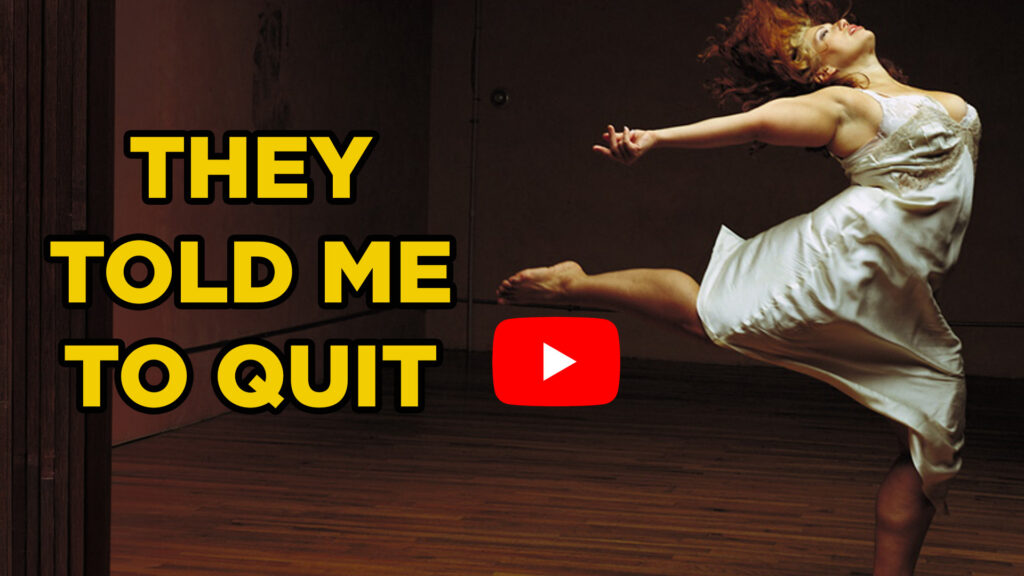
When I booked an interview with a professional dancer, I had one fear — that she’d ask me to clap on beat. If you’ve ever seen a baby deer try to stand for the first time, that’s me trying to find rhythm. But Alexandra Beller didn’t ask me to dance. Instead, she walked me straight into one of an honest conversation about creative identity, rejection, and the quiet ways artists accidentally sabotage their own careers.
And here’s the twist: her story isn’t just about dance. It’s about every creative who’s ever felt like the dream was rigged against them.
The Dream That Feels Rigged (Because Sometimes It Is)
Alexandra has been in the dance world for over 30 years — long enough to see the industry shift, mutate, and occasionally eat its young. Early in her career, she watched a tiny handful of “golden children” get every grant, every commission, every opportunity. Meanwhile, she was grinding away, making deeply personal work that didn’t fit the commercial mold.
She told me something that hit like a brick:
“It felt like I had been born into the wrong era in the dance world.”
Every creative knows that feeling.
You’re doing the work.
You’re improving.
You’re committed.
And still — the doors don’t open.
This is where so many creatives fall into the struggling-artist trap. Not because they lack talent, but because they assume the system’s rejection is a verdict on their worth.
The Pivot That Saved Her Career (And Could Save Yours)
After years of pouring her soul into dance pieces that ran for a weekend and cost her months of unpaid labor, Alexandra made a move that most creatives are terrified to make:
She left the traditional dance world and shifted into theater.
Suddenly, she wasn’t fundraising for every project.
She wasn’t producing everything herself.
She wasn’t performing for three nights after three years of work.
She was getting hired, paid, respected, and sustained.
“In theater, I get to come in and do my art. I don’t have to fund it.”
This is the part creatives don’t talk about enough: Sometimes the most artistic thing you can do is choose a path that pays you.
It doesn’t mean you’re selling out or compromising. Your just choosing a version of your craft that doesn’t require you to bleed for it.
The Most Personal Work Is the Most Universal
One of my favorite moments in the interview was when Alexandra talked about the difference between commercial art and deeply personal art.
She said something I think every creative should remember:
“The most personal material is the most universal.”
When you flatten your work to appeal to everyone, you end up appealing to no one.
When you chase trends, you become replaceable.
When you try to fit the mold, you disappear into it.
But when you make something so specific it almost feels embarrassing? That’s when people say, “Oh my gosh… that’s me.”
This is the antidote to the struggling-artist trap: Stop trying to be universal. Start trying to be honest.
The Inner Critic Isn’t the Enemy — It’s a Terrified Intern
One of the most surprising parts of the conversation was Alexandra’s take on the inner critic.
Most creatives treat their inner critic like a villain. She treats it like a teenager who needs boundaries.
“There’s a real message underneath what your inner critic is trying to say.”
It’s not saying “you suck.”
It’s saying “I’m scared.”
It’s saying “I don’t want you to get hurt.”
It’s saying “Can we please not embarrass ourselves again like last Tuesday?”
And instead of fighting it, she suggests acknowledging it:
“I can’t talk right now, but I’ll come back to you.”
This is emotional intelligence for creatives — and it’s the difference between burnout and longevity.
Because burnout isn’t caused by working too hard. Burnout is caused by working in fear.
The Real Currency of a Creative Career
When I asked Alexandra what meant the most to her over the years, she didn’t say awards, or reviews, or applause. She said trust.
The trust of collaborators.
The trust of students.
The trust of artists who let her shape their work.
That’s when it clicked for me:
The opposite of the struggling-artist trap isn’t fame. It’s community.
You don’t build a creative career by being the most talented person in the room. You build it by being the person people trust to show up, do the work, and stay human in the process.
So What Do We Learn From Alexandra?
If I had to boil it down:
- Your dream isn’t fragile — your expectations are.
- The system might be rigged, but your path doesn’t have to be.
- Pivoting isn’t failure; it’s strategy.
- Your weirdest, most personal work is your competitive advantage.
- Your inner critic isn’t the enemy — ignoring it is.
- Community is the real currency of a creative life.
And maybe most importantly:
You don’t have to choose between art and stability. You just have to stop assuming they’re opposites.
To learn more about her and her work, visit her at: https://www.alexandrabellerdances.org/
Leave a Reply