
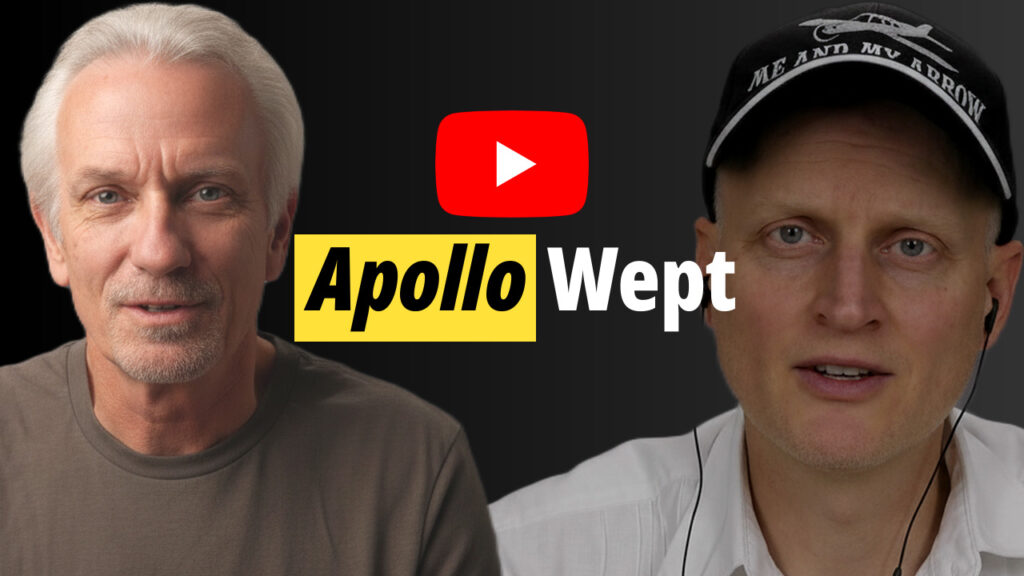
Every once in a while, I sit down with someone whose life feels like a movie script waiting to happen. And then, halfway through the conversation, I realize the script is already written — in the way they talk, the way they think, the way they’ve lived. That was my experience interviewing Christopher “Coyote” Choate, a retired U.S. Air Force colonel, weapons systems officer, strategic planner, and now… novelist.
Yes. Fighter jets to fiction. Afterburners to authorship. Apollo to Apollo Wept.
And if you’re a writer, filmmaker, or any kind of creative trying to build something meaningful, his story is one you’ll want to sit with for a minute.
- The Childhood Dream That Didn’t Go as Planned
When I ask guests what they wanted to be as a kid, I usually get answers like “astronaut,” “rock star,” or “someone who didn’t have to do math.” But Coyote? He knew from the beginning.
He wanted to fly.
His dad had been a gunner on the B-36 Peacemaker — the world’s first intercontinental nuclear bomber — and later became a pilot. Aviation wasn’t just a hobby in their home; it was the family language. So naturally, Coyote set his sights on the Air Force.
But life, as it tends to do, threw a curveball.
At his commissioning physical, he failed the eye test. The dream of being a pilot evaporated in a single moment. And in classic “be careful what you swear you’ll never do” fashion, he ended up in the very role he once said he’d never take: a navigator.
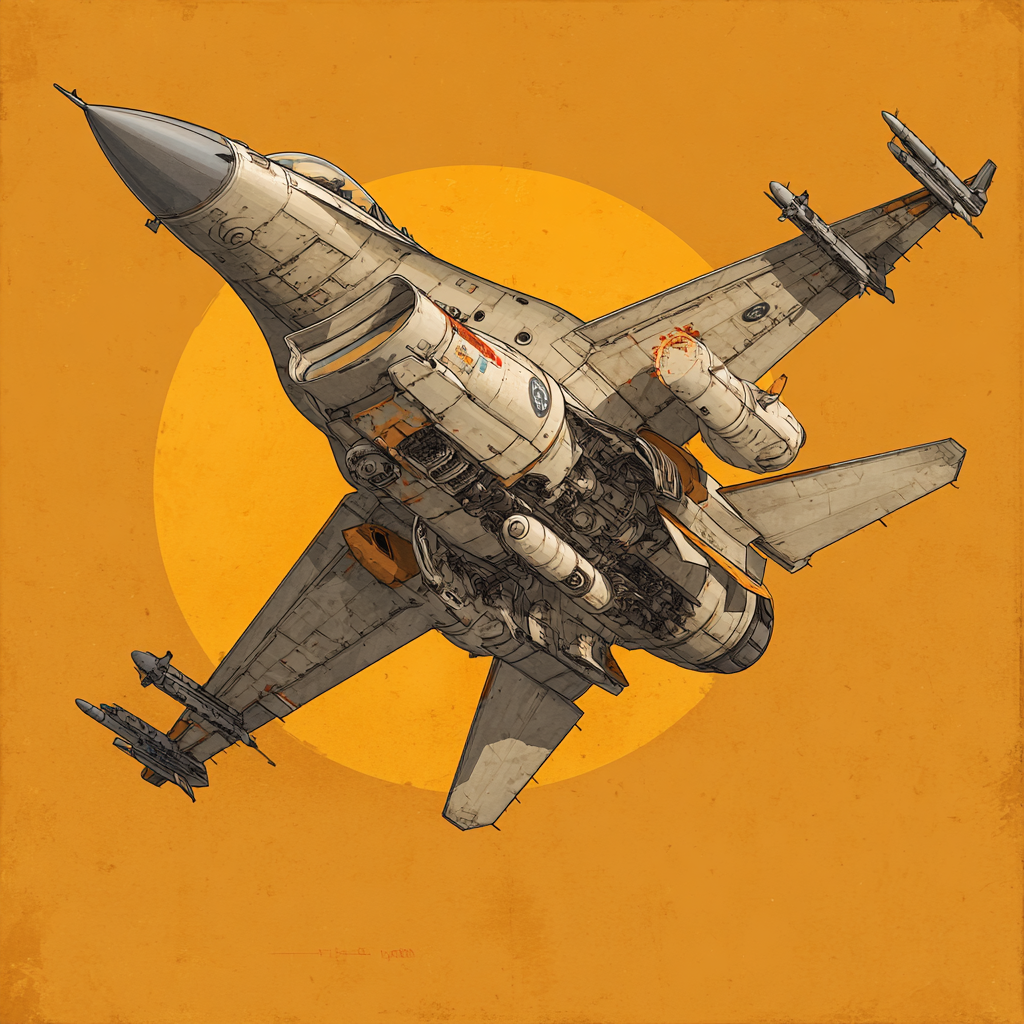
Except that “navigator” turned into weapons systems officer. And that turned into flying in the back seat of the legendary F-4 Phantom and later the F-15E Strike Eagle — two aircraft that shaped American airpower for decades.
Sometimes the dream doesn’t die. It just changes seats.
- What It Feels Like to Ride a Rocket
I asked him what it was like going from a little single-engine trainer to a machine that could break the sound barrier before you finished a sentence.
He didn’t hesitate.
The F-4’s afterburners, he said, were “a kick in the pants.” They weren’t digital. They weren’t polite. They were raw combustion and American engineering. When they lit, you knew it.
But the moment he remembers most vividly wasn’t the takeoff — it was when the afterburners shut off. The sudden drop in thrust felt like the plane was stopping mid-air.
That detail stuck with me. Because isn’t that exactly what creative life feels like? You get a burst of momentum — inspiration, opportunity, a lucky break — and then suddenly the burn stops. And you think you’re falling out of the sky.
But you’re not. You’re just adjusting to a new phase of flight.
- From Fighter Jets to Fiction
Coyote didn’t start writing because he had a grand literary vision. He started because of Christmas newsletters.
Yes, really.
He realized early on that nobody wants to read a bland “here’s what we did this year” letter. So he started telling stories — humorous, exaggerated, 10% true (which, according to him, is the official threshold for a war story to count).
People loved them. They expected them. And eventually, they pushed him to write a book.
But the real spark came in 2020 — a year that, for many of us, felt like the world had been knocked into a flat spin. He watched statues come down, history get rewritten, and cultural tensions rise. And he started asking a question:
- If this trajectory continues, where does it lead?
That question became the foundation for Apollo Wept, a dystopian novel set in 2104, where America has erased its own history and replaced the Constitution with something far more fragile. It’s satire, it’s social commentary, and it’s wrapped in a sci-fi adventure involving the Voyager probe, a new space mission, and a digital AI named Pop — modeled after his no-nonsense father.
And yes, there’s Star Trek in there. Because of course there is.
- The Lesson Every Creative Needs to Hear
When I asked Coyote what lessons have meant the most to him — in the military, in writing, in life — he didn’t give me a poetic answer.
He gave me a practical one.
“Just showing up is half of anything.”
It’s not glamorous. It’s not romantic. But it’s true.
You want to write a book? Show up at the keyboard.
You want to make a film? Show up with the camera.
You want to build a creative career? Show up when it’s boring, when it’s hard, when nobody’s watching.
He also talked about the importance of thinking beyond the immediate decision. Don’t just ask, “Should I do this?” Ask, “Where will this take me in five years?”
That’s strategic planning — the same mindset he used at the Pentagon, now applied to storytelling.
And honestly? It’s something most creatives never do. We think about the next project, not the next decade.
- The Hardest Part of Writing Isn’t Writing
This is where Coyote and I bonded instantly.
He said when he started writing his book, he thought the hard part would be… writing the book.
But once it was done, he realized the truth every author eventually learns:
Writing is the easy part.
Marketing is the war.
There are two million books published every year. If you want yours to matter, you can’t just release it and wait for the five-star reviews to roll in. You have to hustle. You have to build a brand. You have to keep writing.
His publisher told him something that every writer should tattoo on their forearm:
“Your later books will sell your earlier books.”
One-and-done is not a strategy. It’s a hobby.
And Coyote? He’s already writing book two.
- Why His Story Matters for Creatives
Here’s what struck me most about Coyote:
He spent forty years in a world defined by discipline, structure, and life-or-death stakes. And yet, when he stepped into the creative world, he approached it with the same mindset:
- Have a goal.
- Make a plan.
- Show up.
- Keep going.
- Think long-term.
Creativity isn’t chaos. It’s controlled flight.
And sometimes the people who seem the farthest from “artist” end up being the ones who understand the creative journey best.
- Final Thoughts
Talking with Chris “Coyote” Choate reminded me that creativity isn’t something you stumble into. It’s something you commit to. Whether you’re flying an F-15E or writing a dystopian novel about a future America that’s forgotten its past, the principles are the same:
Focus.
Discipline.
Curiosity.
Courage.
And a willingness to keep going even when the afterburners cut out.
If you’re a writer, filmmaker, or creator trying to build something meaningful, take a page from Coyote’s playbook:
Show up.
Do the work.
And think beyond the horizon.
Because the story you’re writing — on the page or in your life — might just be the one someone else needs to hear.
Leave a Reply