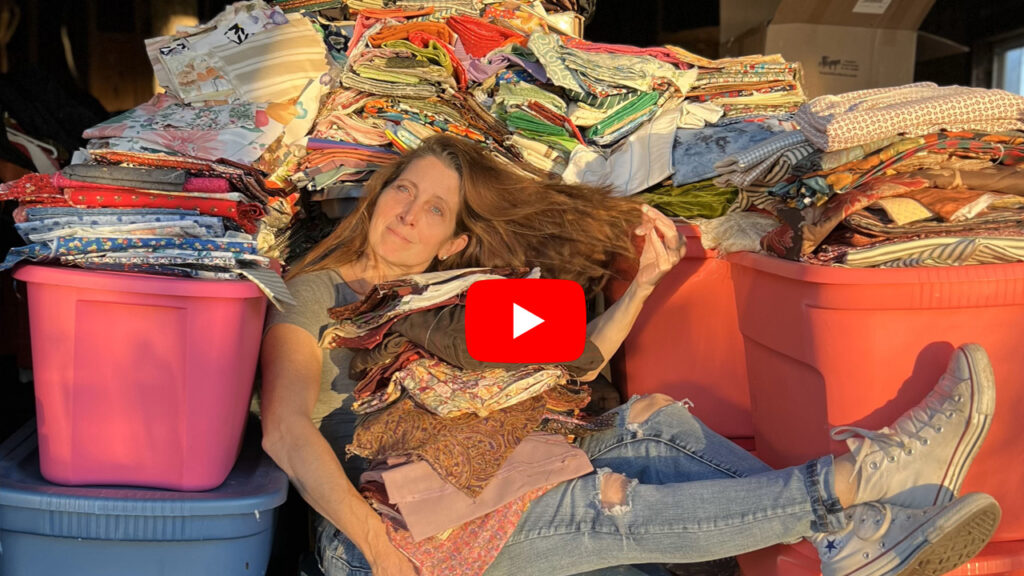
Every once in a while, I sit down with someone who reminds me why I started this whole “hammer to Hollywood” journey in the first place. Someone who embodies the messy, beautiful, stubborn heart of creativity. Someone who proves that the path from struggling artist to working creative is rarely straight, never predictable, and always worth walking.
That someone, this week, was Kira Hartley-Klinger.
If you don’t know Kira yet, she’s a longtime online shop owner, the author of the Fabric Wars series, a storyteller with four decades of writing behind her, and a woman who has lived enough life to fill a dozen memoirs. She’s also the kind of person who can make you laugh, make you think, and make you want to go build something meaningful — all in the same conversation.
This is the story of our conversation, and the lessons I walked away with.
The Writer Who Never Stopped Being a Writer
Some people spend their whole lives trying to figure out what they want to be. Kira wasn’t one of them.
From the time she could hold a typewriter (yes, a manual typewriter — the kind that punishes typos like a vengeful god), she knew she wanted to write. Her first masterpiece was a Nancy-Drew-inspired mystery about a strange light coming from the bathroom floor. She made it a page and a half before hitting her first case of writer’s block.
Relatable.
But the desire never left. Even as life pulled her in different directions — marriage, kids, work, survival — the writing stayed. It was the constant thread.
And honestly, that’s something I think a lot of creatives forget:
If the desire stays, the path is still open.
Rejection, Resilience, and Junk Mail Tuesdays
Kira’s early writing career reads like a masterclass in resilience.
She queried magazines by snail mail. She stalked the mailman like a hawk. She learned that Tuesdays were “junk mail days” — meaning no rejections, but also no acceptances. She wrote four full novels, landed an agent, and even got a manuscript in front of a major editor at Warner Books… who held it for a year before saying no.
A year.
Most people would have quit. Kira didn’t. She just kept adjusting.
And that’s one of the biggest takeaways from her story:
No doesn’t mean never.
Sometimes it just means not this way.
From Cleaning Houses to Selling Fabric to Writing Books
Life forced Kira to pivot more times than a YouTube algorithm.
She cleaned houses for 20 years while raising her kids. She worked playground duty at a school. She dabbled in eBay when eBay was still the Wild West. And then one day, she bought a pile of unwanted fabric at an estate auction.
That fabric changed everything.
She started selling textiles online. Then she opened a dedicated Etsy shop — Dodd Oddity, named after her grandfather — and suddenly she had a community. Quilters, sewists, crafters… people who cared about the stories behind the scraps.
And that’s when something clicked.
Kira realized she wasn’t just selling fabric.
She was selling stories.
She started writing little narratives in her listings — where the fabric came from, who owned it, what the auction was like. People loved it. They asked for more. They told her to write a book.
After 40 years of chasing publication, the audience she’d been searching for finally found her.
There’s a lesson in that too:
Sometimes your creative breakthrough doesn’t come from the direction you were aiming.
Sometimes it sneaks in through the side door.
The Power of Human Connection (and Why AI Can’t Replace It)
One of my favorite moments in our conversation was when Kira talked about a customer who bought a piece of fabric and said she could still smell the perfume of the woman who originally owned it.
Most sellers would panic.
Kira paused — and then realized something important:
People don’t just want products.
They want connection.
That’s why her books work.
That’s why her shop works.
That’s why her stories resonate.
And it’s why she refuses to use AI in her business — not because she’s anti-technology, but because she’s fiercely pro-human.
As someone who uses AI as a tool but still believes deeply in human creativity, I get that. Tools are tools. But connection? That’s the real currency.
Camp Klinger, Arlo the Bus, and the Legacy We Leave Behind
If you think Kira’s life is all auctions and Etsy, buckle up.
She and her husband run a five-acre hobby farm in rural Ohio. They host “Camp Klinger” every summer for their eight grandkids — complete with kayaks, horses, a pond, and a fully decked-out Scooby-Doo-style camp bus named Arlo.
And yes, she wrote a children’s book about the bus.
But what struck me most wasn’t the bus or the farm or the chaos of eight grandkids running around. It was this:
Kira is intentional about the legacy she’s building.
She’s not chasing money.
She’s not chasing fame.
She’s chasing meaning.
She told me something that stuck with me:
“The older I get, the more I think about what I’m leaving behind.”
That hit me. Hard.
Because isn’t that what all of us creatives are really doing?
Trying to leave something behind that matters?
Making Your Own Luck
Toward the end of our conversation, I asked Kira about creating your own luck — something I talk about a lot on my show.
Her answer was simple and brilliant:
Hold tight to your core wants.
Be flexible with everything else.
She never compromised on being present for her kids.
She never let go of writing.
But she was willing to pivot — again and again — to make life work.
That’s how she built her business.
That’s how she wrote her books.
That’s how she ended up with a reality-TV producer buying a $3 scrap of fabric and emailing her about a show.
Luck?
Maybe.
But also… not really.
Luck favors the persistent.
Luck favors the adaptable.
Luck favors the people who keep showing up.
Final Thoughts
Talking with Kira reminded me why I love doing this podcast. She’s proof that creativity isn’t a straight line — it’s a winding, unpredictable, sometimes ridiculous journey filled with detours, setbacks, and unexpected wins.
She’s also proof that:
- Stories matter
- People matter
- Persistence matters
- And the creative life is worth fighting for
If you haven’t checked out her books, her shop, or her children’s series, do it. Not because she needs the sales — but because her work is a reminder of what creativity looks like when it’s lived fully, honestly, and with heart.
And honestly?
We could all use a little more of that.
To hear the full interview, check out my podcast or visit me on YouTube.
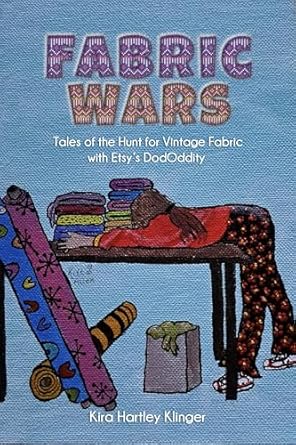
Don’t forget to pick up your copy of Fabric Wars by Kira Klinger, and you can visit her online shop at: https://www.etsy.com/shop/DodOddity
Leave a Reply