Light Minded Arts

Light Minded Arts

  • B-Roll
  • Books
  • Videos
  • About
  • Contact

Home | Archives for Lexi Adams

Every once in a while, I sit down with someone who reminds me why I started this whole “hammer to Hollywood” journey in the first place. Someone who embodies the messy, beautiful, stubborn heart of creativity. Someone who proves that the path from struggling artist to working creative is rarely straight, never predictable, and always worth walking.

That someone, this week, was Kira Hartley-Klinger.

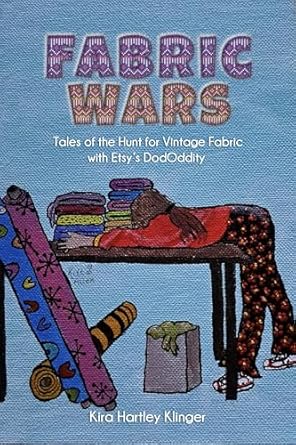
If you don’t know Kira yet, she’s a longtime online shop owner, the author of the Fabric Wars series, a storyteller with four decades of writing behind her, and a woman who has lived enough life to fill a dozen memoirs. She’s also the kind of person who can make you laugh, make you think, and make you want to go build something meaningful — all in the same conversation.

This is the story of our conversation, and the lessons I walked away with.

The Writer Who Never Stopped Being a Writer

Some people spend their whole lives trying to figure out what they want to be. Kira wasn’t one of them.

From the time she could hold a typewriter (yes, a manual typewriter — the kind that punishes typos like a vengeful god), she knew she wanted to write. Her first masterpiece was a Nancy-Drew-inspired mystery about a strange light coming from the bathroom floor. She made it a page and a half before hitting her first case of writer’s block.

Relatable.

But the desire never left. Even as life pulled her in different directions — marriage, kids, work, survival — the writing stayed. It was the constant thread.

And honestly, that’s something I think a lot of creatives forget:
If the desire stays, the path is still open.

Rejection, Resilience, and Junk Mail Tuesdays

Kira’s early writing career reads like a masterclass in resilience.

She queried magazines by snail mail. She stalked the mailman like a hawk. She learned that Tuesdays were “junk mail days” — meaning no rejections, but also no acceptances. She wrote four full novels, landed an agent, and even got a manuscript in front of a major editor at Warner Books… who held it for a year before saying no.

A year.

Most people would have quit. Kira didn’t. She just kept adjusting.

And that’s one of the biggest takeaways from her story:

No doesn’t mean never.
Sometimes it just means not this way.

From Cleaning Houses to Selling Fabric to Writing Books

Life forced Kira to pivot more times than a YouTube algorithm.

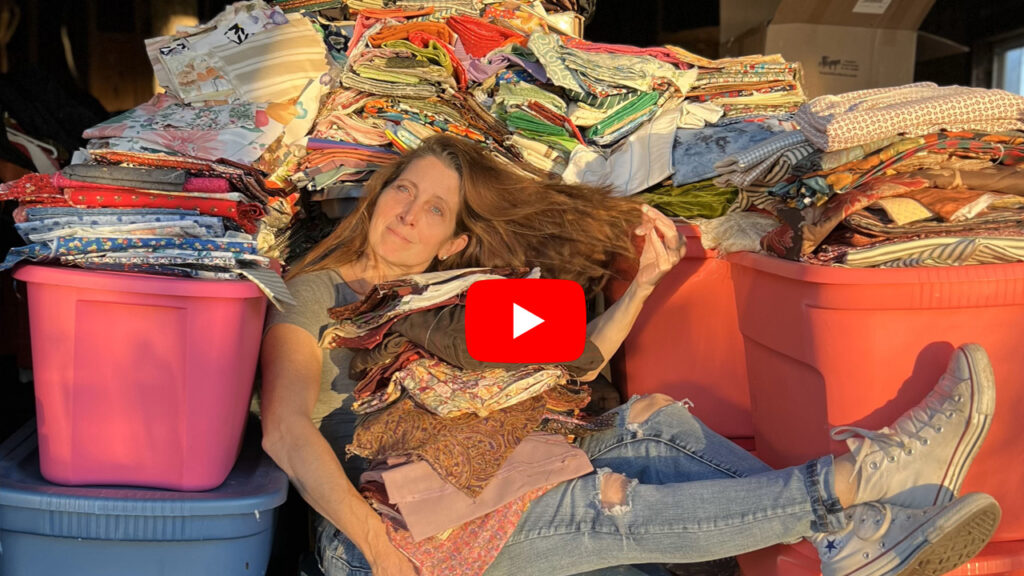
She cleaned houses for 20 years while raising her kids. She worked playground duty at a school. She dabbled in eBay when eBay was still the Wild West. And then one day, she bought a pile of unwanted fabric at an estate auction.

That fabric changed everything.

She started selling textiles online. Then she opened a dedicated Etsy shop — Dodd Oddity, named after her grandfather — and suddenly she had a community. Quilters, sewists, crafters… people who cared about the stories behind the scraps.

And that’s when something clicked.

Kira realized she wasn’t just selling fabric.
She was selling stories.

She started writing little narratives in her listings — where the fabric came from, who owned it, what the auction was like. People loved it. They asked for more. They told her to write a book.

After 40 years of chasing publication, the audience she’d been searching for finally found her.

There’s a lesson in that too:

Sometimes your creative breakthrough doesn’t come from the direction you were aiming.
Sometimes it sneaks in through the side door.

The Power of Human Connection (and Why AI Can’t Replace It)
One of my favorite moments in our conversation was when Kira talked about a customer who bought a piece of fabric and said she could still smell the perfume of the woman who originally owned it.

Most sellers would panic.
Kira paused — and then realized something important:

People don’t just want products.
They want connection.

That’s why her books work.
That’s why her shop works.
That’s why her stories resonate.

And it’s why she refuses to use AI in her business — not because she’s anti-technology, but because she’s fiercely pro-human.

As someone who uses AI as a tool but still believes deeply in human creativity, I get that. Tools are tools. But connection? That’s the real currency.

Camp Klinger, Arlo the Bus, and the Legacy We Leave Behind

If you think Kira’s life is all auctions and Etsy, buckle up.

She and her husband run a five-acre hobby farm in rural Ohio. They host “Camp Klinger” every summer for their eight grandkids — complete with kayaks, horses, a pond, and a fully decked-out Scooby-Doo-style camp bus named Arlo.

And yes, she wrote a children’s book about the bus.

But what struck me most wasn’t the bus or the farm or the chaos of eight grandkids running around. It was this:

Kira is intentional about the legacy she’s building.

She’s not chasing money.
She’s not chasing fame.
She’s chasing meaning.

She told me something that stuck with me:

“The older I get, the more I think about what I’m leaving behind.”

That hit me. Hard.

Because isn’t that what all of us creatives are really doing?
Trying to leave something behind that matters?

Making Your Own Luck

Toward the end of our conversation, I asked Kira about creating your own luck — something I talk about a lot on my show.

Her answer was simple and brilliant:

Hold tight to your core wants.
Be flexible with everything else.

She never compromised on being present for her kids.
She never let go of writing.
But she was willing to pivot — again and again — to make life work.

That’s how she built her business.
That’s how she wrote her books.
That’s how she ended up with a reality-TV producer buying a $3 scrap of fabric and emailing her about a show.

Luck?
Maybe.
But also… not really.

Luck favors the persistent.
Luck favors the adaptable.
Luck favors the people who keep showing up.

Final Thoughts

Talking with Kira reminded me why I love doing this podcast. She’s proof that creativity isn’t a straight line — it’s a winding, unpredictable, sometimes ridiculous journey filled with detours, setbacks, and unexpected wins.

She’s also proof that:

  • Stories matter 
  • People matter 
  • Persistence matters 
  • And the creative life is worth fighting for 

If you haven’t checked out her books, her shop, or her children’s series, do it. Not because she needs the sales — but because her work is a reminder of what creativity looks like when it’s lived fully, honestly, and with heart.

And honestly?
We could all use a little more of that.

To hear the full interview, check out my podcast or visit me on YouTube.

Don’t forget to pick up your copy of Fabric Wars by Kira Klinger, and you can visit her online shop at: https://www.etsy.com/shop/DodOddity

Filed Under: Blog

Here is a pretty simple analogy. If money is a battery, how does that change the way you look at it?

Before we get too deep into this, lets consider for a moment that you want money, and a lot of it. I think that’s a reasonable assumption. Who doesn’t want more money.

The question begs itself, how do we get it? But before we can get it, it helps to know, what money actually is.

Yes, I understand the definition of money, especially as it relates to fiat currency, and the up and coming decentralized currencies, but lets take one or two steps further back and get a real core understanding of money, because it will help us make more of it.

  1. How Can Re-Defining Money Help Us Make More Of It?

Money is funny, in that people assign value to pieces of paper, or bits of code and suddenly, it turns into something that some people would kill for. For that matter, and I know this will draw a bit of ire, but what is gold, if not a chunk of useless metal also, that we somehow decided is valuable.

Okay, here’s the raw truth, none of it, whether its dollars, yen, gold, bitcoin, or even arcade tokens are worth anything at all, period. Right? Well, herein is the thing, they are worth something, because, and only because, we trust that other people believe they are worth something. Lets break this down.

Dollar bills are just paper. The printing is fancy on them, but that’s hardly anything to write home about. People argue that now we’re off the gold standard, which means that the dollar isn’t pegged to any actual gold, that its even more worthless (that is assuming that you think gold has any real value). But people and nations still make a huge fuss over dollar bills, because we trust in them. We believe that our governments and our fellow citizens will honor them as a store of value, thus they have value.

Cryptocurrency is the same way. It has value, because a bunch of tech geeks told us that it has value. In the end though, it’s just a bunch of code that if the power went out, would be just about as worthless as cash, if the cash fell into a fire.

So, what about gold? Isn’t that “God’s currency” as some would have you believe. Well, lets look at gold. About the only thing gold is useful for, is jewelry, and only then, because it doesn’t turn your skin green. Aside from that, its soft, has no industrial value, and for all intents and purposes, its useless. But there is a scarcity to it, that long ago caused people to use it as currency, because it was so hard to counterfeit. You had to labor real hard in a mine if you wanted to get more of it without getting a regular job. The fact that gold has remained a currency of last resort for so long, is frankly a miracle. Maybe that miracle aspect of its longevity is why it could be termed “God’s currency.”

The alternative to any of these, is a barter system, which is incredibly inefficient. Who’s to say that your chicken is worth my corn, or that trading your car for my labor is fair? Yes you would come to some mutual agreement over time, but every deal would be subjective, and we’d waste a lot of time and effort appraising everyone’s goods for trade. Thus the need for some kind of money, in whatever form we decide to trust.

Money therefore, in whatever form it comes in, is nothing more than a way to store value—a lot like a battery is a way to store energy.

So if money is just a battery for things we value, making money, is like charging that battery.

  1. The Act Of Charging Our Fiscal Battery

Imagine that you have a battery, its good, its strong, it can be charged as often as you have electricity to put into it. Even more, it can hold as much power as you can put into it. So lets say that you have a hand-crank generator, and you use this to charge your battery, and you finally save a large enough charge in it to do something with. What do you do with it? You could stick it in an RC car and blow it all in a day of fun. You could plug it into your Tesla and go for a road trip. Or you could light up your house with it. There’s lots of things you could do with this stored energy. But whatever you do with it, means that its power is now gone, and you have to work at charging it again.

Now lets suppose that your friend doesn’t have any power stored in her battery, and so she wants to borrow yours for the day. You trust her, and so you agree, but you charge her for it. How does she pay you? By charging your battery back up, with a little extra energy to go with it, as payment for not having access to your battery for a day.

That is how you get more charge than maybe you could have charged it with on your own. But, and this is a big BUT, you do have to sacrifice not having that energy available to you for that day. In the financial world, this is called saving and investing.

Now lest say that you’ve gone without for some time, while others have been borrowing your battery and giving it back with extra charge. Now you have far more electricity than you could ever use in one day. Do you plug it in and just use what all is in there? Or do you still keep finding ways to charge it?

If it were me, I’d want to keep charging it as I use it, but I still have all that extra power that’s just sitting there, not being used. So I go out, and buy another battery, and I transfer that extra energy into it. Now I have my personal battery, that I keep charging each day for my usage needs, but I have another battery that I can loan out to others who need extra energy for whatever reason.

That extra battery can be lent out as often as I can find people who need it, and it’s power reserves just keep growing. The nice thing is, its also a good safety battery, in case I get sick, and can’t crank my generator for a day or two to charge my personal battery.

Eventually that extra battery brings in so much extra energy, that I can just stop using my personal battery all together and rely solely on the extra energy people give me to borrow the big one. This is akin to retirement.

  1. Here’s The Real Challenge

Now that you know that money is nothing more than a store of value, like a battery, the trick is finding ways to collect extra value, above what you might physically be capable of.

Does that mean that you have to rob someone of the value they’ve saved? Of course not. It means that you have to find extra ways of mining value. In this instance, we shared how loaning your energy or money to others helps bring you more value. It requires a little sacrifice in the beginning, but eventually grows bigger. That’s called investing. But its not the only way to provide value to others.

The more value you can learn to create, the more money you will naturally have.

Filed Under: Blog

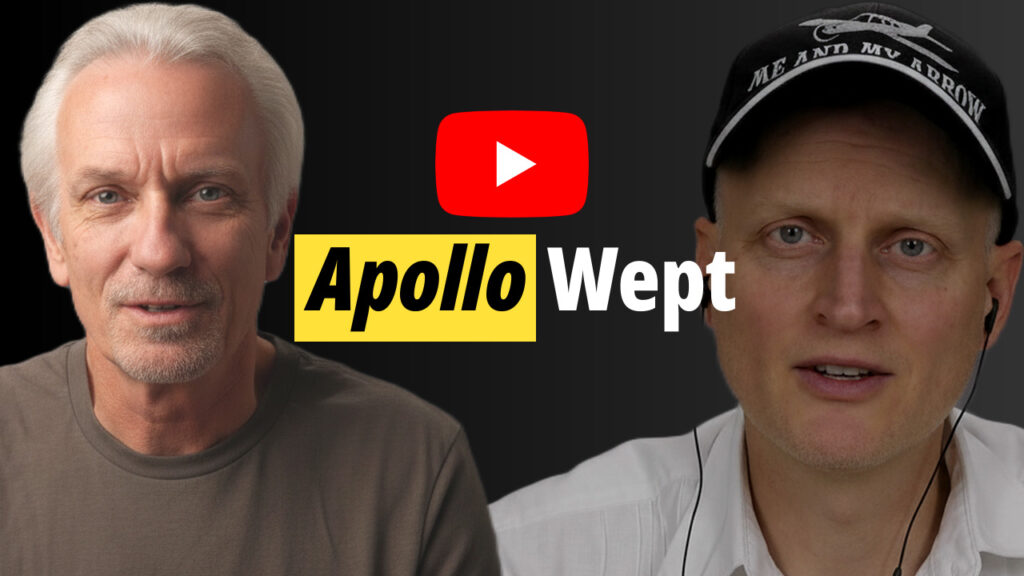
Every once in a while, I sit down with someone whose life feels like a movie script waiting to happen. And then, halfway through the conversation, I realize the script is already written — in the way they talk, the way they think, the way they’ve lived. That was my experience interviewing Christopher “Coyote” Choate, a retired U.S. Air Force colonel, weapons systems officer, strategic planner, and now… novelist.

Yes. Fighter jets to fiction. Afterburners to authorship. Apollo to Apollo Wept.

And if you’re a writer, filmmaker, or any kind of creative trying to build something meaningful, his story is one you’ll want to sit with for a minute.

  1. The Childhood Dream That Didn’t Go as Planned

When I ask guests what they wanted to be as a kid, I usually get answers like “astronaut,” “rock star,” or “someone who didn’t have to do math.” But Coyote? He knew from the beginning.

He wanted to fly.

His dad had been a gunner on the B-36 Peacemaker — the world’s first intercontinental nuclear bomber — and later became a pilot. Aviation wasn’t just a hobby in their home; it was the family language. So naturally, Coyote set his sights on the Air Force.

But life, as it tends to do, threw a curveball.

At his commissioning physical, he failed the eye test. The dream of being a pilot evaporated in a single moment. And in classic “be careful what you swear you’ll never do” fashion, he ended up in the very role he once said he’d never take: a navigator.

Except that “navigator” turned into weapons systems officer. And that turned into flying in the back seat of the legendary F-4 Phantom and later the F-15E Strike Eagle — two aircraft that shaped American airpower for decades.

Sometimes the dream doesn’t die. It just changes seats.

  1. What It Feels Like to Ride a Rocket

I asked him what it was like going from a little single-engine trainer to a machine that could break the sound barrier before you finished a sentence.

He didn’t hesitate.

The F-4’s afterburners, he said, were “a kick in the pants.” They weren’t digital. They weren’t polite. They were raw combustion and American engineering. When they lit, you knew it.

But the moment he remembers most vividly wasn’t the takeoff — it was when the afterburners shut off. The sudden drop in thrust felt like the plane was stopping mid-air.

That detail stuck with me. Because isn’t that exactly what creative life feels like? You get a burst of momentum — inspiration, opportunity, a lucky break — and then suddenly the burn stops. And you think you’re falling out of the sky.

But you’re not. You’re just adjusting to a new phase of flight.

  1. From Fighter Jets to Fiction

Coyote didn’t start writing because he had a grand literary vision. He started because of Christmas newsletters.

Yes, really.

He realized early on that nobody wants to read a bland “here’s what we did this year” letter. So he started telling stories — humorous, exaggerated, 10% true (which, according to him, is the official threshold for a war story to count).

People loved them. They expected them. And eventually, they pushed him to write a book.

But the real spark came in 2020 — a year that, for many of us, felt like the world had been knocked into a flat spin. He watched statues come down, history get rewritten, and cultural tensions rise. And he started asking a question:

  1. If this trajectory continues, where does it lead?

That question became the foundation for Apollo Wept, a dystopian novel set in 2104, where America has erased its own history and replaced the Constitution with something far more fragile. It’s satire, it’s social commentary, and it’s wrapped in a sci-fi adventure involving the Voyager probe, a new space mission, and a digital AI named Pop — modeled after his no-nonsense father.

And yes, there’s Star Trek in there. Because of course there is.

  1. The Lesson Every Creative Needs to Hear

When I asked Coyote what lessons have meant the most to him — in the military, in writing, in life — he didn’t give me a poetic answer.

He gave me a practical one.

“Just showing up is half of anything.”

It’s not glamorous. It’s not romantic. But it’s true.

You want to write a book? Show up at the keyboard.
You want to make a film? Show up with the camera.
You want to build a creative career? Show up when it’s boring, when it’s hard, when nobody’s watching.

He also talked about the importance of thinking beyond the immediate decision. Don’t just ask, “Should I do this?” Ask, “Where will this take me in five years?”

That’s strategic planning — the same mindset he used at the Pentagon, now applied to storytelling.

And honestly? It’s something most creatives never do. We think about the next project, not the next decade.

  1. The Hardest Part of Writing Isn’t Writing

This is where Coyote and I bonded instantly.

He said when he started writing his book, he thought the hard part would be… writing the book.

But once it was done, he realized the truth every author eventually learns:

Writing is the easy part.
Marketing is the war.

There are two million books published every year. If you want yours to matter, you can’t just release it and wait for the five-star reviews to roll in. You have to hustle. You have to build a brand. You have to keep writing.

His publisher told him something that every writer should tattoo on their forearm:

“Your later books will sell your earlier books.”

One-and-done is not a strategy. It’s a hobby.

And Coyote? He’s already writing book two.

  1. Why His Story Matters for Creatives

Here’s what struck me most about Coyote:

He spent forty years in a world defined by discipline, structure, and life-or-death stakes. And yet, when he stepped into the creative world, he approached it with the same mindset:

  • Have a goal. 
  • Make a plan. 
  • Show up. 
  • Keep going. 
  • Think long-term. 

Creativity isn’t chaos. It’s controlled flight.

And sometimes the people who seem the farthest from “artist” end up being the ones who understand the creative journey best.

  1. Final Thoughts

Talking with Chris “Coyote” Choate reminded me that creativity isn’t something you stumble into. It’s something you commit to. Whether you’re flying an F-15E or writing a dystopian novel about a future America that’s forgotten its past, the principles are the same:

Focus.
Discipline.
Curiosity.
Courage.
And a willingness to keep going even when the afterburners cut out.

If you’re a writer, filmmaker, or creator trying to build something meaningful, take a page from Coyote’s playbook:

Show up.
Do the work.
And think beyond the horizon.

Because the story you’re writing — on the page or in your life — might just be the one someone else needs to hear.

Filed Under: Blog

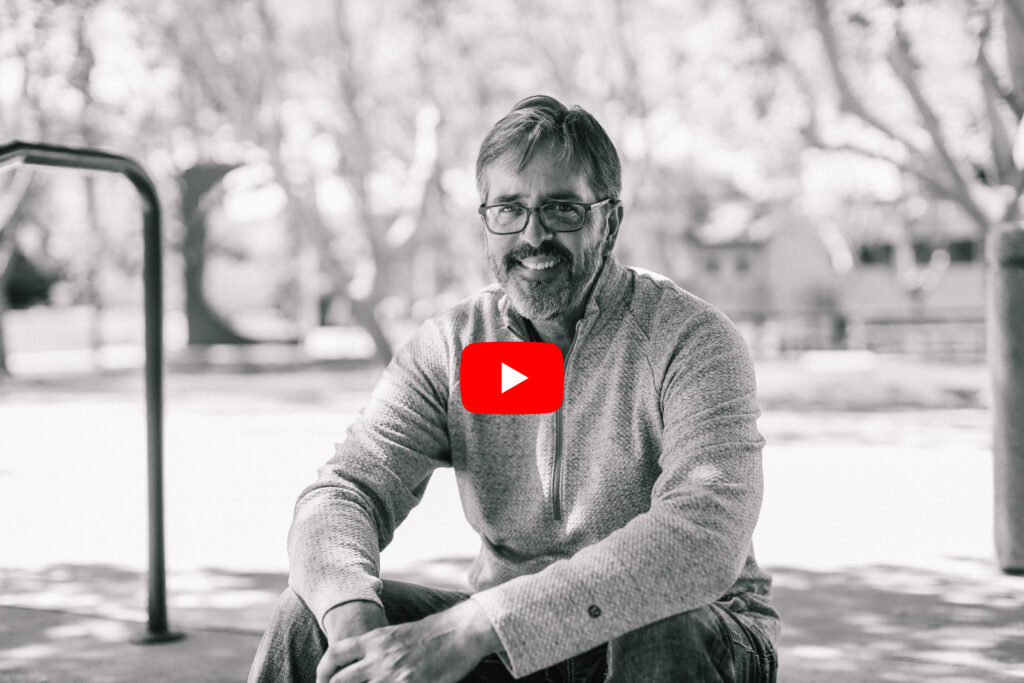
What do you get when you cross a marketer, musician, cancer patient advocate, and espionage novelist?

You get Ray Hartjen.

I had the pleasure of sitting down with Ray on the Light-Minded Arts podcast, and let me tell you—this guy has lived a few lifetimes. From investment banking to SaaS software, from writing about hockey to writing about hope, Ray’s journey is a masterclass in creative reinvention. And at the center of it all? Story.

Let’s dive into his story—and maybe find a little fuel for our own.

  1. The Soundtrack of a Life

Ray lives in Southern California, where the traffic is thick but the creative energy is thicker. He’s a father, a musician (one half of the acoustic duo The Chronic Padres), and a man who’s faced down cancer with grit and grace.

The band name, by the way? Not a reference to his diagnosis of multiple myeloma (a blood cancer, not to be confused with melanoma). It’s a nod to fatherhood—he and his bandmate are both “chronically” dads. Add in some Dia de los Muertos flair and a love for sugar skulls, and you’ve got a vibe.

But music is just one of Ray’s creative outlets. His true north has always been storytelling.

  1. From Bookshelves to Battlefields

Ray grew up in a house where books weren’t just decoration—they were DNA. His father, a career military officer, had over 20,000 books in his personal library. That’s not a typo. Twenty. Thousand.

Every room had floor-to-ceiling shelves. Every shelf was packed. And every book was an invitation to imagine something bigger.

As a kid, Ray dreamed of being a football player, a fighter pilot, a race car driver—whatever matched the season or the story he was reading at the time. That imagination, fed by a steady diet of history and heroism, would eventually find its way into his writing.

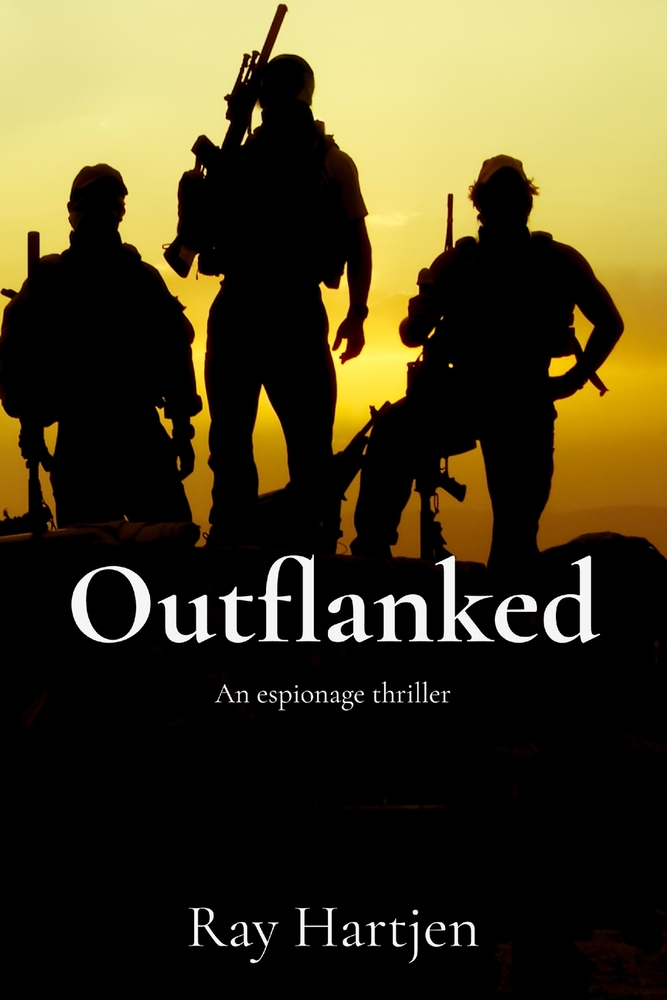
Especially in his debut novel, Outflanked, an espionage thriller laced with military precision. His dad, fittingly, was his first beta reader. And when Ray got a detail wrong—like the timing of a tactical maneuver—his dad didn’t hesitate to call it out. “If you wrote it that way,” he told Ray, “your character would be dead by chapter two.”

That’s the kind of feedback you don’t get from a writing workshop.

  1. If Not Now, When?

Ray didn’t start writing books until he was 56. It was the pandemic, and like many of us, he found himself with time—and questions.

What do I want to do with the time I have left?

That question hit harder than most. Ray had recently been diagnosed with multiple myeloma. It’s incurable, but treatable. And it lit a fire under him.

He remembered a conversation he’d had—many times—with his friend Tom Olenek, a proud Pittsburgh “Yinzer.” Tom had this theory: that the Pittsburgh Steelers saved the city during its darkest days, when the steel industry collapsed and the city was on the brink.

Ray grabbed Tom by the shoulders and said, “If not now, when?”

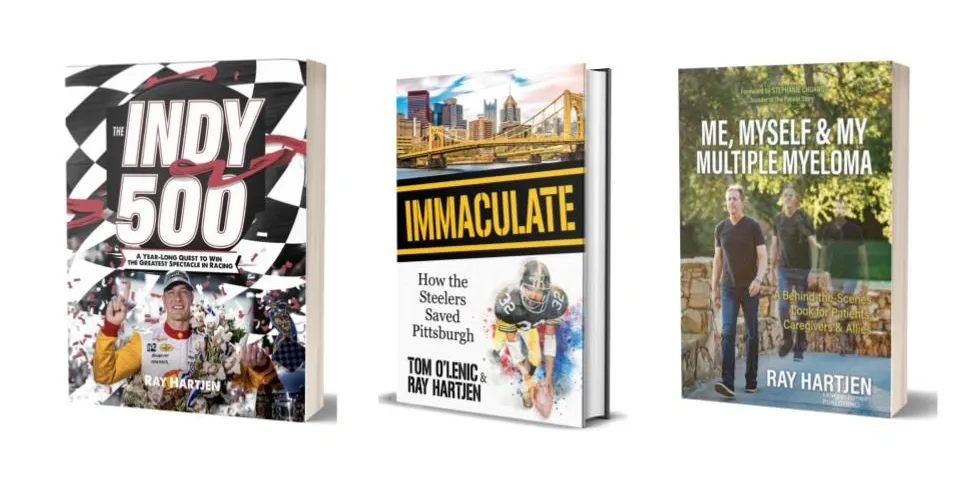
That question became a motto. And that motto became a book: Immaculate: How the Steelers Saved Pittsburgh.

It’s part sports story, part industrial history, and all heart. Even if you’re not a football fan (I’m not), Ray’s passion for the people of Pittsburgh—their grit, their resilience, their blue-collar pride—makes it hard not to care.

And here’s the kicker: Ray grew up a Cowboys fan. The Steelers were his childhood villains. Writing a book that celebrates them? That’s growth. That’s storytelling.

  1. The Power of Story

Ray’s career has zigzagged through industries—banking, pharma, tech, marketing—but the throughline has always been story.

Whether he was writing blog posts for a company, crafting a brand narrative, or building a novel from scratch, Ray knew one thing: people connect through stories. They always have.

“People remember what they feel,” he told me. “If you can pull on their emotions, they’ll stay with you.”

That’s not just good advice for writers. That’s gospel for anyone trying to make a dent in the noise—whether you’re building a brand, launching a podcast, or just trying to get someone to read your email.

  1. Writing Through the Pain

Ray’s second book, Me, Myself, and My Multiple Myeloma, is a memoir. It’s raw. It’s honest. And it’s not just about cancer—it’s about community.

After his diagnosis, Ray found himself answering the same questions over and over from newly diagnosed patients and their families. He wanted to scale that one-on-one support into something bigger. So he wrote the book.

It wasn’t easy. Writing about bone marrow biopsies and stem cell transplants isn’t exactly light work. But it was cathartic. And it’s made a difference.

People from all over the world—Australia, South Africa, Iran—have reached out to Ray because of that book. They’ve said things like, “I can’t talk to my spouse about this, but I can talk to you.”

That’s the power of vulnerability. That’s the power of putting your story out there.

  1. Fiction vs. Nonfiction (and Why Ray Writes Both)

Ray’s written five books—four nonfiction, one novel. And while he’s proud of all of them, Outflanked holds a special place. It was his test: Can I write fiction? Can I build a world from scratch?

Turns out, yes.

And now he’s working on the sequel.

But he’s not doing it alone. Ray reads every review, every comment. Not to chase five stars, but to learn. To listen. To build a better story next time.

“This is a collective effort,” he told me. “I need your feedback so I can be better.”

That’s a mindset I respect. And it’s one I try to bring to Light-Minded Arts too.

  1. Final Thoughts

Ray Hartjen is a reminder that it’s never too late to start. That storytelling isn’t just a skill—it’s a lifeline. And that sometimes, the best way to fight back against the hard stuff is to write your way through it.

Whether you’re writing novels, memoirs, or just trying to figure out what your next creative move is, take a page from Ray’s playbook:

  • Start now. Not later. 
  • Tell the truth, even when it hurts. 
  • Listen to your audience—but don’t let them steer the ship. 
  • And above all, keep telling stories. 

Because someone out there needs to hear yours.

To connect with Ray, Visit his website at: https://rayhartjen.com/

Don’t forget to check out his books and if you like them, leave a review!

For the full interview, check it out here: https://youtu.be/ahdGECHxuew

Filed Under: Blog

Our culture has weird ways of kicking us in the pants. Everything from toxic expectations to unhealthy relationships with people and everything around us.

One of those big challenges is when it comes to money.

Yes, money! Let me ask you this, do you want to be rich? If I polled a thousand people, I’m pretty sure the answer would be, without much dissension, YES!

However, if you’re not rich, how do you actually tend to view people who are raking it in? Especially if you know that they aren’t working half as hard as you are.

Money makes us like and hate the fact that others have it, and we don’t. Then if we do get it, we often feel guilty for having it.

Is Money Really Evil?

Let’s just put this out there to begin with, money is NOT evil. But on the flip side, money is not Righteous either.

The fact that someone has a lot of it does not say a single thing about that person’s morality, spirituality, personality, or mentality. I know rich people who are saints, sinners, a little crazy, and those who you’d never even suspect.

So why does our culture aggrandize money at the same time it vilifies it?

Often people with money, are perceived to have more power. And power, as many have heard does have a corrupting effect on people. So yes, there is a correlation between the negative perception of money as it relates to that. But remember, not all people who have money are seeking power.

There’s also the argument to be made, that we justify our lack of money as being more pious. We wear our poverty with a badge of honor. It’s an excuse we tell ourselves and our children so that they can feel good about their circumstances.

This mental conversation though, can lead us to guilt, if we do figure out the secrets to successful money accumulation. When we feel that guilt, we can find ourselves sabotaging our chances at making more money, or learning what we need to keep it.

But Money can have a negative affect on us. This is true. But not in itself. That negative effect is derived from us, which brings us to the heart of the matter:

THE LOVE OF MONEY – Is The Root Of All Evil

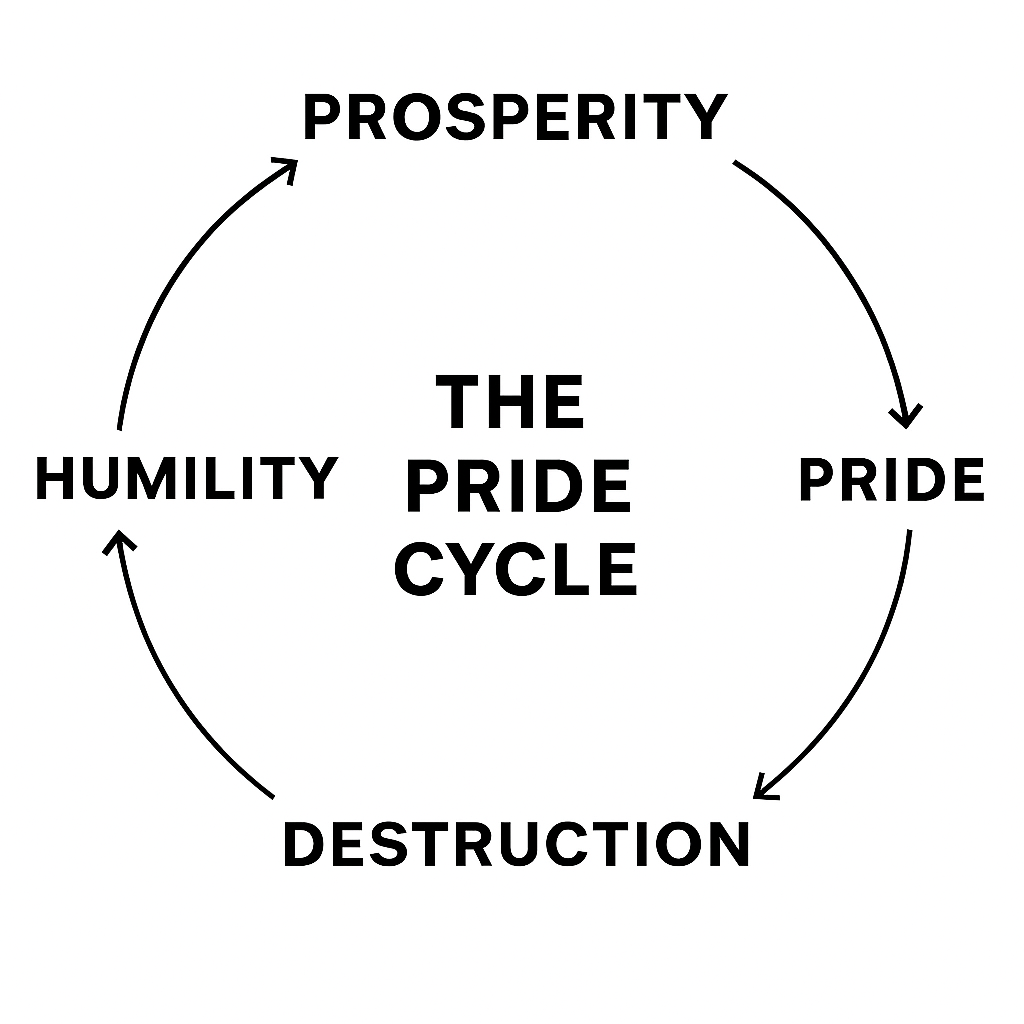
Am I splitting hairs here? I don’t think so. The love of money is directly correlated to our pride. There is something called the pride cycle, which repeats itself in individuals, families, cultures, and nations. This pride cycle is perhaps one of the easiest things to spot, and yet, it has been the downfall of entire peoples.

So what is the pride cycle, and how does it relate to money?

  • Lets assume we start off poor
    • Great, when we’re poor we’re humble. We’re looking for ways to better ourselves. We know we don’t have the answers, but we really want to get there.
  • Next, we find the answers, we start finding success.
    • Things are still looking good, but we’re not actively searching so much for answers, as we feel we’ve about made it.
  • Uh oh, now we’re at the point of the cycle.
    • Where we are on top of the world. We’re rich, we’re prideful, because we have all the answers, and we know it. We even start to look down on those around us who haven’t made it, and think less of them, because they were never able to escape the rat race.
  • Bam! How great was the fall thereof.
    • We eventually realize that we were nothing special, as everything is lost. How could this happen? But this fall from on high leads us back to the beginning of the cycle of being:
  • Humble again.

Money plays into this cycle in a very fundamental way. When we love money, we attach our self-importance to the accumulation of it. As our self-importance grows, so does our pride and thus our less desirable natures.

So how does one become rich, while avoiding this pride cycle?

A big part of this is for you to find ways of remaining humble. How do we stay humble?

Its tough, but there are some practices we can put into place while we’re still humble to keep ourselves on the right path.

  1. We serve those around us.
    1. Staying in touch with those less fortunate than us, keeps a sense of love within our hearts for all people.
  2. Give back.
    1. When we realize that everything we have is a gift from God, we don’t have to feel so stingy about it. We can donate to people or causes, and charities that help others. 
  3. Ask yourself, why you?
    1. If you believe in God, and that he has blessed you, then ask why? FYI, the answer is not because your just such a good person. The answer is often so that you can use your wealth to build up His kingdom. That can look like a lot of different things.

Note that all these things that keep you humble, go back to the root of the solution: Serve and love your fellow beings.

Its hard to elevate yourself and feel prideful when love is firmly rooted in your heart. And if you love your God and your neighbor more than you love your money, then you will find that money never was the evil part of your partnership with it.

Questionnaire

Here is a simple list of questions that you can use to evaluate what your relationship is with money. I’m not going to give you the answers to this, but use these to give yourself some introspection. Do a deep dive and see what your answers tell you about you and your money attitude:

Do you feel jealous around people who have more than you?

Do you believe that most people who have a lot of money, attained it by unethical means?

Do you play the lottery?

Do you spend more time each week clipping coupons than cleaning your house?

Do you have credit card debt?

Do you live paycheck to paycheck?

Do you find yourself needing the newest model of truck, even when you haven’t paid off your house?

Do you think the economy is unfair?

Check out my YouTube video, where I talk more about this. Leave a comment there and let us know if you found out anything new about your relationship to money, and what you might want to do about it.

Filed Under: Blog

At LightMinded Arts, we believe in creative freedom, not creative delusion. So when I sat down with Michele DeFilippo—publishing veteran and founder of 1106 Design—I knew we were about to bust some myths and drop some truth bombs about the wild world of self-publishing.

Michele’s been in the book biz for over 50 years. She started in traditional publishing at Crown in the ‘70s, survived the desktop publishing revolution, and now runs a company that helps indie authors publish like pros—without getting fleeced by vanity presses or hybrid hustlers.

  1. The Self-Publishing Trap: Don’t Pay to Lose Control

Here’s the brutal truth: most “self-publishing companies” aren’t helping you publish—they’re helping themselves to your wallet.

“Authors pay to produce the book, then lose control and revenue,” Michele said. “It doesn’t make sense.”

Real self-publishing means you’re the boss. You hire pros to edit, design, and format your book. You keep the rights. You keep the profits. Anything else is a dressed-up scam.

  1. DIY Isn’t Always Smart

Yes, you can format your book in Word. Yes, you can slap an AI-generated cover on it. But should you?

“The DIY message has led to a flood of terrible books,” Michele warned. “Authors have the creativity—but they need professional help to make it look like a bookstore-quality product.”

And don’t get her started on AI. While tools like Grammarly are handy, AI can’t replicate human emotion, nuance, or design instinct. It’s not ready to replace editors or cover designers—especially when it spits out low-res images and typography that screams amateur hour.

  1. Print, Ebooks, Audiobooks: Don’t Skip the Formats

Despite the hype, print isn’t dead. Audiobooks are booming. Ebooks are convenient. Michele’s advice?

“Start with print and ebook. Add audio if your audience demands it.”

Smart indie authors let the market decide. Fiction leans digital. Nonfiction sells better in print. Audio is growing fast—but it’s expensive, and narrators usually want upfront payment, not royalties.

  1. Retail Royalties vs. Real Revenue

Retail sales are the hardest way to make money. Amazon takes a cut. Printing costs eat your margin. You need to sell thousands of copies just to break even.

But business authors? Coaches? Speakers? They use books as tools—to land clients, book gigs, and build credibility. That’s where the real ROI lives.

  1. Marketing: The Part Nobody Wants to Do

Let’s be honest. Most authors would rather write than market. But if you think your book will magically sell itself on Amazon, you’re dreaming.

Michele pointed out that authors who write books based on their coaching businesses tend to do better than novelists just trying to sell their one-off stories. But without marketing, books are unlikely to get found, and your story will languish in the black hole of bookseller’s digital shelves for eternity.

1106 Design offers DIY marketing resources and vetted pros. But Michele’s advice is clear: learn the basics yourself. Especially if you’re writing more than one book. It’s a skill that pays dividends.

  1. Lightminded Takeaway

If you’re bootstrapping your creative career, don’t fall for shiny shortcuts. Publishing is a business. You need to think like a publisher, act like a marketer, and write like a human. Michele’s insights are a masterclass in keeping control, staying professional, and building something that lasts.

Want to publish like a pro? Start with Michele’s free guide: Publishing Like the Pros. Its free on her website at: https://1106design.com/

You can also check out the full interview on YouTube at:

Or you can also find it on podcast, wherever you get your podcasts.

Filed Under: Blog

Often, you’ve heard about self-mastery. Its one of those things that we all think we have, but we never sit down to actually self-evaluate.

It’s easy to see when other people have it, though depending on the focus of their mastery, it might look different and be completely subjective. For instance, someone might have great financial self-mastery, and be able to keep their spending under control, while they have terrible self-mastery over the junk food they consume.

But learning to master yourself is an inner strength that can lead to strong results, and continued improvement in many areas of your life.

Begin With A Single Goal

I think my journey of self-mastery, started at a very young age. I was in Junior high school, we had a student who had been caught masturbating in the mostly empty halls of the school, and in class. Granted, the boy had some issues, but when I told my mother about the incident later that day, she made it clear, in a very unassuming way that she hoped I would never debase myself with pornography and the like. I resolved then and there, that I would live a chaste life. Regardless of youthful temptations, I was able to keep my values that my mother and my God had instilled in me from childhood. This was my first experience with controlling my appetites and desires, and I strongly believe that it blessed me in so many ways. I’m now married, have children, and a very healthy relationship with my wife, a relationship that I don’t think I could have had, if I’d lived below my values growing up.

As I grew up, I learned the value of sacrificing my wants for now, for my goals in the future. I always wanted to serve a proselyting mission for my church when I turned 19 years old. So I worked hard and saved, and was able to pay my way to serve for two years, preaching the gospel of Jesus Christ in the Philippines. That was an incredibly enriching experience for me, and a place where I learned to love God more, love the people with all my heart, and learn valuable life lessons along the way.

In college, I had similar experiences of working hard so that I could pay for my apartments, tuition, and dates without going into debt. I would work hard all summer long, and part time during school in the construction industry to get all my expenses paid in advance. When I finally graduated with my bachelor’s degree, I had a new truck, a work trailer, and no financial obligations.

I didn’t kick back and relax though, no, I worked hard for two more years, bought and remodeled a condo, got my MBA, and found my wife. Shortly after being married, I had my cheap ghetto condo, paid off, schooling done without any debt, and a good job paying $45k a year (that was around 2012)

How did I do that on such a meager budget? Self-Mastery. I’d learned to control what I wanted now, with what I wanted later. For a guy who loved food, loved cooking, I survived most of my college life on rice and eggs, two of the cheapest foods available. Every penny I made, went into owning my condo free and clear, and making sure that I could live debt free.

Here’s the thing you might be wondering, if you’ve seen some of my other content, “Brent, don’t you use debt?” The answer is yes, I do. In fact, I went into some debt to buy and fix up my condo. In my work, I go into debt there also, but I view debt in a different way than many. I’ll explain that in another article. For now, you need to understand that by exercising mastery over my wants and my goals, I was able to achieve every goal I set out to accomplish, and that has carried through my whole life thus far.

Goals Without Self-Mastery Are Pointless Wishes

I know somebody that was struggling financially. They came to me and asked for help figuring things out. After looking at their finances and their goals, it was easy to see the disconnect. They were making 3 or 4 times the money that I was, but they were living paycheck to paycheck. There was no reason they should have been struggling they way they were. I was saving and investing, while they couldn’t even qualify for a mortgage.

When I showed them their credit card bill, and we walked through all the silly stupid expenses they were accruing every week, one of them got it. The other one, the one who was responsible for most of the reckless spending, clammed up. Not only did that person refuse to accept the hard truth of their destructive habit, but they refused to even talk to me for days following it. And guess what, that person did not make the changes needed to move forward. If anything, the problem got worse.

When we find ourselves in the clutches of a personal flaw that needs to be corrected to achieve our goals, it can be one of the hardest things to overcome. But overcome it, we can.

One of the hardest things to overcome, is not personal choices, like the examples above, but cultural choices, as those are the choices that have been made by us and for us for multiple generations and geographies. In those instances, you not only have to buck your personal habits, but also the social norms that are holding you back.

This is why honestly sitting down with yourself and meditating on your goals and what in your life is holding you back from those goals is so important. It’s the first step to achievement.

The next step is not to just change your habits, because that can be herculean. What you need to do is to see yourself as the new and improved version of you first. This in itself is tough. In the book, “The Richest Man In Babylon,” one of my all-time favorite books, there is a story about a rich man who started out as a slave. He had tried to escape his captivity, but failed. The reason he failed, and was easily caught, was because he did not see himself as his own master, he always saw himself as a slave, even if for a short time, when he’d escaped slavery, he had a slave mentality that was self-defeating. It wasn’t until he started seeing himself as a free man, a master of his own destiny, a rich and powerful leader, that he was able to find his freedom.

Once you see yourself as your own master, and not as a slave to the self-destructive habits that hold you back, then its time to go to work. Itemize all the good qualities you have as your best self, and here’s the trick, LIVE THEM!

By seeing yourself as the end goal before you start the journey, you can make the journey possible, no matter where you’re starting.

I’ve had to do this myself, multiple times. Growing up, I always saw me and my family as poor, and that we’d never be anything but poor. It wasn’t till I saw myself with a higher financial potential, than I made myself into that sort of person.

When I found out that I had heart and digestive problems, I had terrible eating and exercising habits. Not only that, but I prided myself in those destructive lifestyles. It wasn’t until I saw myself as a person who goes to the gym and has a mostly high-raw vegan diet, that I was able to turn my life around and start living a much healthier me.

Our circumstances in life may have put us in the places we are now, but there is nothing but your own self that is keeping you there. Learn to see yourself as the person you want to be, then go out there, and be that person.

Filed Under: Blog

At Light-Minded Arts, I’m sharing my creative journey, going from hammer to Hollywood—and I want you too to find your way into following your dreams.

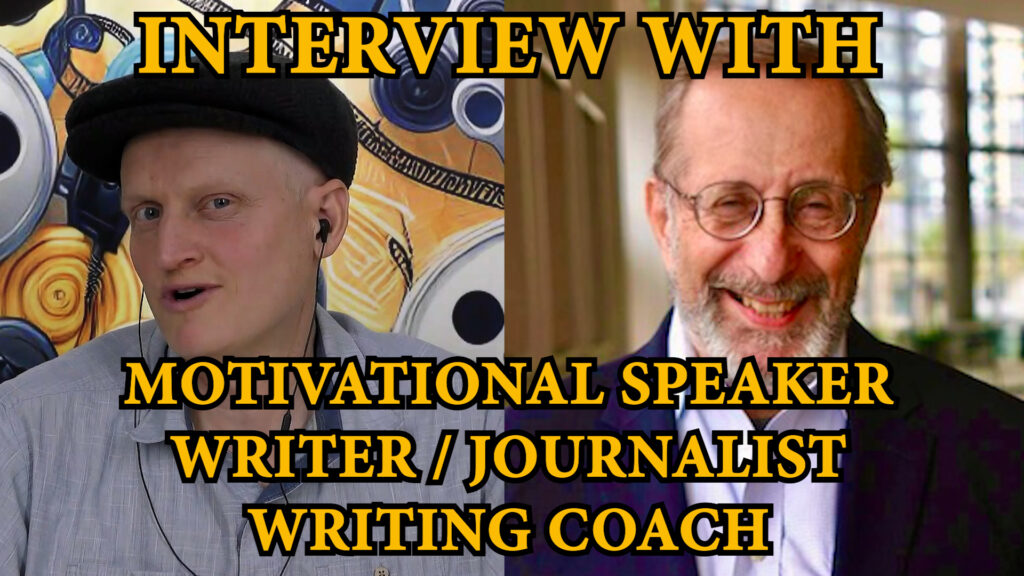
To help with that, I interviewed John DeDakis, a veteran journalist, novelist, writing coach, and motivational speaker whose career spans over four decades, including time as a White House correspondent and senior editor at CNN’s The Situation Room with Wolf Blitzer. But his real passion? Helping aspiring writers become published authors and using storytelling as a tool for healing.

  1. From Breaking News to Breaking Ground in Fiction

John didn’t set out to be a novelist. His writing journey began while working at CNN, where the grind of editing pushed him to seek a creative outlet. “It paid well, but I needed something more,” he said. That “something” became fiction—eventually leading to a six-book mystery series featuring Lark Chadwick, a young journalist navigating trauma, truth, and transformation.

His journalism background shaped his fiction writing in powerful ways. “In journalism, every word has to count,” John explained. “That’s true whether it’s a 30-second reader or an 80,000-word novel.”

  1. Interviewing Hitchcock and the Power of Listening

One of John’s most memorable experiences was a 40-minute one-on-one interview with Alfred Hitchcock. “He was gracious, approachable, and thoughtful,” John recalled. “I asked him about life after death, and he riffed for two minutes about how all thought is energy. It was surreal.”

John’s ability to go deep in interviews—whether with icons or everyday people—is rooted in his belief that listening is a superpower. “When you’re listening, you’re learning,” he said. “Guys could really benefit from listening to the women in their lives.”

  1. Writing the Other and Stretching Your Voice

John’s protagonist, Lark Chadwick, is a 20-something woman—a bold choice for a male author. But he embraced the challenge. “Emotions aren’t gender-specific,” he said. “I was surrounded by young women at CNN who shared their stories. They became my beta readers.”

This approach echoes a broader philosophy: write what you know, but don’t be afraid to stretch. “Every experience fuels your creative well,” John said. “Even the jobs you hate can introduce you to unforgettable characters.”

  1. Publishing Realities and the Rise of AI

John’s path to publication wasn’t easy. His first novel took 10 years, 14 major revisions, and 39 agent queries. “Take good notes,” he joked. “It’ll save you nine years.”

He’s traditionally published, but even with that credential, marketing falls squarely on the author. “It’s not selling—it’s telling,” he said. “You’re just letting people know your book exists.”

As for AI-generated books? John’s take is clear: “Without editorial oversight, it’s flabby and riddled with problems. Who wants to read that?”

  1. Advice for Aspiring Writers

John’s advice for young creatives is refreshingly grounded: “Get a day job. Do what you love, but support yourself. Every experience is grist for your fiction.”

He’s now expanding his work into grief recovery, helping people use writing to process loss—whether it’s a loved one, a job, or even a sense of identity. “Grief is universal,” he said. “Writing can be a way through.”

Whether you’re a contractor-turned-creative or a student with a story to tell, John’s journey reminds us that writing isn’t just about words—it’s about listening, living, and learning. And sometimes, the plot twists in life are the best material of all.

  1. Contacting John DeDakis

John is very interested in helping people through the journey of processing their grief. He’s keenly passionate about it, and if you have a group that could benefit from his help, he loves being part of speaking events to help. Learn more about how he can help you from his website at: https://johndedakis.com/

You can also catch the whole interview on my YouTube channel at: https://youtu.be/DjjhfTiUYSQ

 or on my podcast, which you can find on my website here, or where-ever you get your podcasts.

Filed Under: Blog

Before you click away from this, listen up, whether you’re a believer or not, God actually plays a huge role in your career as an artist and business owner. Don’t believe me? Well, read on.

Ok, so this might sound a little bizarre. Why would I bring God into the discussion about how I’ve gone from nothing to being a financially independent artist?

I get the skepticism: After all isn’t the love of money the root of all evil? So why would He help me make more of it? Or doesn’t religion stifle creative freedom? How about this one, wouldn’t He rather have people read His scriptures than rot their brains on my fiction?

All valid arguments, but lets dive a little deeper, and see why bringing God into the equation can make all the difference in your artistic career.

  1. Why Would God Care About My Business As An Artist?

Ok, first off, if you didn’t already catch on to this, I believe in the christian God. My opinions are not meant to be evangelical, nor are they meant to reflect specifically on the position of my church (The Church of Jesus Christ of Latter-Day Saints). They are merely the convictions that I’ve developed over the years, and I feel strongly about them.

As those beliefs relate to my artistic and financial endeavors, let me preface this by stating that I believe God considers me to be one of his children. As such, I believe that He wants the best for me. Granted the best for me may not always feel like it in the moment, as his aim is grander and more eternally reaching than my narrow views. So while He’s trying to help me grow and return to live with Him some day, I also believe that He wants me to be happy while I’m here on this Earth.

But its not just my happiness He wants to help me with. Plenty of people find that their lives are anything but. Here’s where He really comes to play. When you’re running a business, you need to develop certain leadership traits that make you a better businessman. Among those things are Salesmanship, relating to people, confidence, public speaking, vision, integrity, resilience, endurance, humility. All of these traits are things we learn as we become more like Christ.

In my life, I spent two years of my life as a full time missionary in the Philippines. I wasn’t technically a salesman, but many of the same principles of being a good missionary still carried over from my proselyting such as: building relationships of trust, help them feel the spirit, help them to act. In sales we do something similar, we build a relationship of trust, we help them feel the need for our products, and then we invite them to act by purchasing our goods.

In my church, I’ve volunteered my time in leadership positions, and in general service positions. I’ve been humbled when I’ve taught, I’ve been empowered when I’ve taught.

Consistent attendance has instilled a culture of learning, growing, caring, and working with teams. The best part is, this training you receive to live your best life possible carries over into all aspects of your life, including your career.

When you’re at your best, you’re more likely to succeed in all you do. Can you see the correlation between your career aspirations and being a disciple of God?

Well, what about the art?

  1. How Does He Help Me Be A Better Artist?

Assuming you already believe in God, or that you know enough of Christian beliefs to answer this, I pose this question: Who created everything?

Bam!

If we are the children of God, and he is the ultimate creator, are we not entitled to inherit some of His creativity?

Its already in us. By being more Christlike, we also become more creative, unlocking our true potential. Not only that, but as our will aligns with His will, we start to unlock some of his grace to create things that inspire people to good.

There is a lot of art out there that is brain rot. Some of it is even called “Brain Rot.” I can only imagine that God would want us filling our minds with something a little less degrading.

But what if we’re fiction writers?

Yeah, I get it, there’s plenty of people publishing inspirational content out there, but I’m doing fiction. And lets be honest, my fiction isn’t preachy. If there’s a message to bring anyone to a higher power, I think I missed that myself. But here’s where I feel that my efforts are still valued:

My values put me in a position where the fiction I create is more wholesome than the majority of the fiction out there. My goal, and I’ve stated this over and over on my website, is to write fiction that the whole family can enjoy.

If mom or dad reads one of my books, and their pre-teen picks it up, I don’t want the God-fearing parents to be embarrassed by why their kids just discovered about their reading habits. I want to make entertainment that brings clean reads into peoples homes.

In that, I feel that my goals towards art and entertainment aren’t at odds with God’s will for me in my life.

  1. Where Is God In Your Life?

As an artist, we all draw inspiration from somewhere. I’ve seen art that lifts me up, I’ve seen art that takes me to dark places. I’ve seen art that makes me question everything. Sometimes I just like art that makes me laugh.

Whether that art is put into us by some higher power or not, is not what I’m trying to place before you right now. What I’m trying to say, is that when you make the effort to align your life with God’s will, you’re more likely to tap into His enabling power to help you along the way.

Life is hard enough without God in our lives. Why shut Him out when He might make all the difference in helping us get through all the hard times that will inevitably come our way.

Plus what’s the worst that can happen? Say you choose to follow Him and he turns out to not be real, so you ended up living a better, more charitable life and will be remembered by future generations as being a really good person. Or you choose not to follow Him, and he turns out to be real, then you’re stuck, eternally kicking yourself for your folly.

Filed Under: Blog

On Storytelling, Marginalization, and the Power of Fiction

What happens when a self-published teen author grows into a visionary editor championing marginalized voices? You get Ceylan Gunduz—pronounced “Jay-lon Goon-dooz,” with a duck face if you want to nail the Turkish accent.

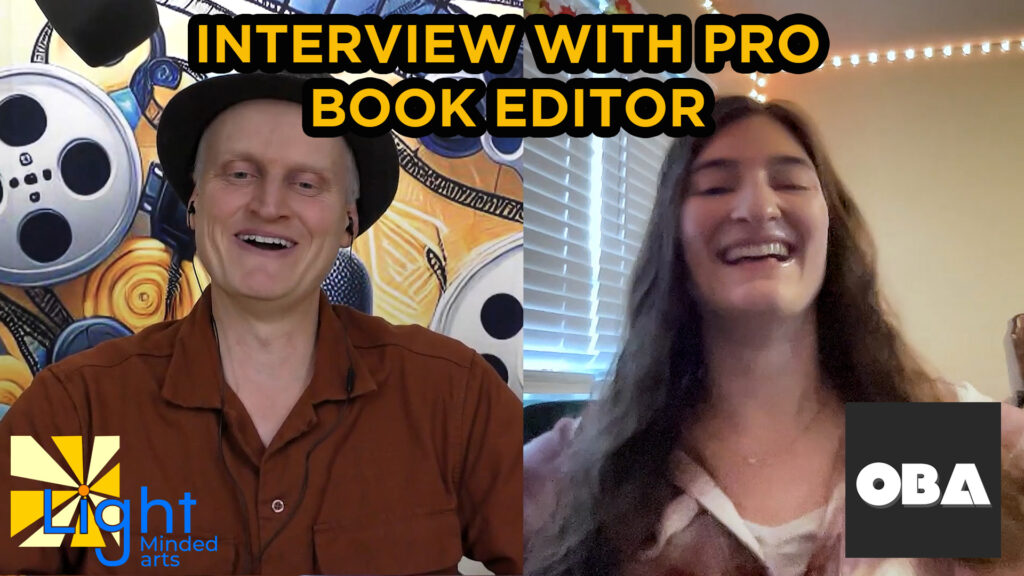
In this episode, we dive deep into her journey from glue-stick books to Editor in Chief at One Brilliant Arc, a story studio startup that is helping authors, especially marginalized voices amplify their authentic voices.

Why Storytelling Matters

As always, Light-Minded Arts is about helping creatives shift from struggling artists to working creatives. Ceylan’s story is a masterclass in that transformation. She started young—memorizing books before she could read them, sketching her own stories, and eventually self-publishing a novella that “grabbed her by the throat” and demanded to be written.

But her path wasn’t linear. Like many of us, she faced burnout, societal pressure to conform, and the tension between marketability and authenticity. That tension, she says, is where story structure becomes a gift—not a cage.

“Story structure is just the proven pattern of beats that resonate with people. When you bring your emotional truth to that framework, you get something both marketable and deeply authentic.”

Marginalized Stories and the Lie of Polish

Ceylan’s mission is clear: help creatives tell stories that don’t fit the commercial mold. She argues that mainstream storytelling often demands a “polished lie”—a version of reality that’s digestible, sanitized, and stripped of nuance.

“Performance polish is a mask. It’s a lie. And marginalized voices are often forced to shrink themselves into someone else’s version of the story.”

Whether it’s a Navajo elder sharing oral history or a Japanese-American woman recounting internment camp trauma, Ceylan believes the raw, unfiltered truth is what connects us. And fiction, she says, often holds that truth better than reality.

Fiction vs. Nonfiction: Which Tells the Truth?

Ceylan leans toward fiction—not because it’s escapist, but because it’s soul-deep.

“The objection to fairy stories is that they tell children there are dragons. But children have always known there are dragons. Fairy stories tell children that dragons can be killed ” —G.K. Chesterton 

Still, she works with nonfiction writers too, helping them apply story structure to real-life narratives. Her editing process is collaborative, intuitive, and deeply human. She’s not just polishing grammar—she’s co-creating emotional resonance.

Act II: Where She Is Now

If Ceylan’s life were a three-act structure, she’s in Act II. The call to action has happened. She resisted it at first, but now she’s in the thick of the journey—facing tests, challenges, and the slow grind of building something meaningful.

She’s not writing her own stories right now. Instead, she’s helping others find theirs. And while she hasn’t had another story “grab her by the throat” lately, she’s open to the possibility.

“If a story ever comes knocking again, I’ll answer that call.”

AI and the Soul of Storytelling

We couldn’t end the episode without tackling the elephant in the creative room: AI. Ceylan’s take? Balanced and brutally honest.

AI can generate content. Fast. But it lacks soul. It commodifies creativity, and while it’s a powerful tool, it’s not a substitute for human truth.

“There’s a difference between art and content. Artists are now seen as content creators, but our stories are not a commodity.”

She urges creatives to use AI responsibly—learn the tools, stay relevant, but don’t lose the human heartbeat of storytelling.

🎤 Final Thoughts

This episode was a reminder that storytelling isn’t just a craft—it’s a calling. Whether you’re in Act I, resisting the call, or deep in Act II, facing the grind, your story matters. And if you’re lucky enough to find your people—those who resonate with your truth—you’ve already won.

Stay light-minded. Stay creative. And remember: dragons can be beaten.

To learn more about the services that Ceylan and One Brilliant Arc can offer you as a storyteller, visit their website at: https://www.obaconnect.com/

Filed Under: Blog

  • « Previous Page
  • 1
  • 2
  • 3
  • 4
  • …
  • 8
  • Next Page »

Recent Posts

  • Escaping the “Struggling Artist” Trap: What Authors (and Creatives) Can Learn from 25 Years in Publishing
  • How Russell Van Brocklen Turned Dyslexia Into a Creative Superpower: Tactical Lessons for Creatives
  • If Life Has Felt a Little Too Weird Lately… You Might Need This Book
  • What a Cop-Turned-Author Taught Me About Not Being a Struggling Artist
  • From Hammer to Hollywood: What Max Shippee Taught Me About Story, Survival, and the Creative Life

About Me

The art of storytelling has always fascinated me. When I think back and imagine a world before modern media, I imagine a parent entertaining their kids around the hearth with fantastic tales true and/or whimsical. Never mind the accuracy of this vision, it’s the way I choose to think of it. It’s also the inspiration for my work, to tell stories that captivate, stories that the whole family can enjoy together.

Contact Us

Menu

  • B-Roll
  • Books
  • Videos
  • About
  • Contact

Recent Posts

  • Escaping the “Struggling Artist” Trap: What Authors (and Creatives) Can Learn from 25 Years in Publishing
  • How Russell Van Brocklen Turned Dyslexia Into a Creative Superpower: Tactical Lessons for Creatives
  • If Life Has Felt a Little Too Weird Lately… You Might Need This Book
  • What a Cop-Turned-Author Taught Me About Not Being a Struggling Artist
  • From Hammer to Hollywood: What Max Shippee Taught Me About Story, Survival, and the Creative Life

Blog Updates


  • YouTube

Copyright © 2025. All Rights Reserved. Light Minded Arts

2026

Light Minded Arts

All Rights Reserved

Site by PDM